

 Travel Essentials
 Travel Essentials

Learn proven strategies to pack your carry-on luggage correctly, comply with airline regulations, and travel with confidence while avoiding common packing pitfalls.
 Travel Essentials
The journey to becoming a savvy traveler begins long before you step foot in the airport. One of the most critical phases involves preparing your carry-on luggage strategically. Whether you’re embarking on a weekend getaway or a cross-country business trip, the decisions you make about what and how you pack can significantly impact your entire travel experience. From navigating security checkpoints to ensuring your belongings remain intact throughout your journey, mastering carry-on packing is an invaluable skill that every traveler should develop.
Before you even consider what items to pack, it’s essential to familiarize yourself with your specific airline’s carry-on requirements. While many carriers follow similar dimensional guidelines, variations exist across different airlines and even between domestic and international routes on the same airline. Most domestic carriers in the United States permit carry-on bags measuring approximately 22 inches by 14 inches by 9 inches, but this can differ significantly. Some airlines maintain stricter specifications, while others offer slightly more generous allowances.
The consequences of arriving at the gate with an oversized bag can range from inconvenient to expensive. Gate agents may require you to check your bag at the last minute, forcing you to wait at baggage claim upon arrival and potentially exposing your belongings to damage during the checking process. Additionally, some airlines impose fees for oversized carry-on luggage, turning an oversight into a financial burden.
Taking five minutes to visit your airline’s official website and verifying their specific requirements is a simple yet often overlooked step that can prevent unnecessary stress. Consider bookmarking this information on your phone or saving a screenshot so you have it readily available when shopping for luggage or packing for future trips.
Packing a carry-on bag requires a delicate balance between maximizing available space and avoiding the trap of overstuffing. Each approach presents distinct challenges that can compromise your travel experience.
Many travelers fall into the habit of forcing too many items into their carry-on bags. This common mistake stems from wanting to have everything potentially needed during travel or attempting to avoid checked baggage fees. However, overpacking creates multiple problems that extend beyond the initial inconvenience of struggling to close your bag.
When your carry-on is stuffed beyond capacity, several issues emerge: clothing becomes wrinkled and damaged, zippers face excessive stress and may break, and the bag becomes difficult to maneuver through crowded airports and overhead compartments. Furthermore, an obviously overpacked bag may trigger additional scrutiny from TSA agents at security checkpoints. If security personnel cannot easily view all contents during X-ray screening, they may request that you completely empty your bag for manual inspection, significantly delaying your progress through the security line.
For trips longer than a few days, utilizing checked baggage for bulky items like shoes and multiple clothing changes is the practical solution. This approach allows your carry-on to contain essentials and items you’ll need immediate access to during your flight.
Conversely, some travelers pack too sparingly, leaving substantial unused space in their carry-on bags. This approach wastes the valuable allowance provided by the airline and forces you to make last-minute decisions at security or during boarding. Leaving empty pockets and compartments means you’re not utilizing your full baggage allowance efficiently.
The solution involves creating a comprehensive packing checklist that categorizes items into essential and non-essential groups. This helps you visualize what you’re bringing and identify items that genuinely warrant a place in your bag versus those that can be eliminated or transferred to checked luggage.
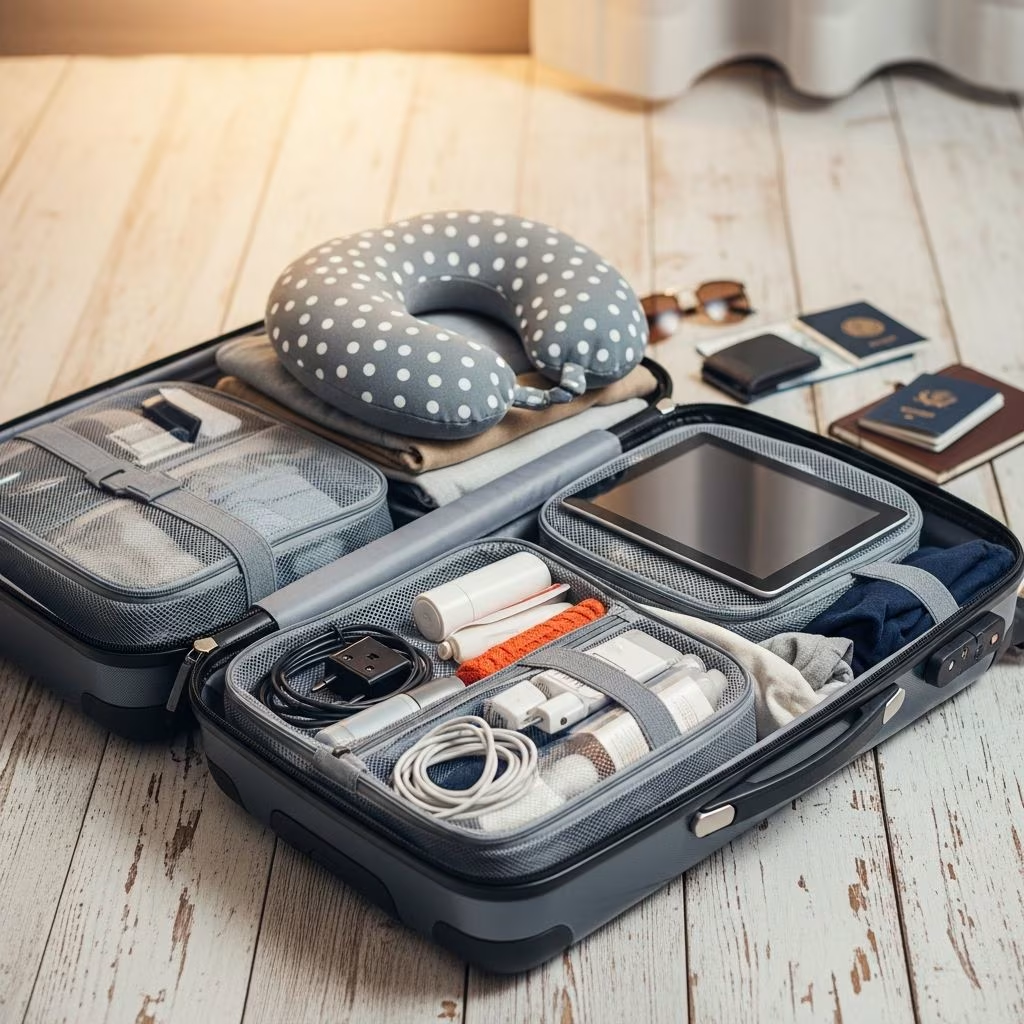
Efficient organization transforms your carry-on from a chaotic jumble into a functional travel companion. Disorganized packing leads to lost items, difficulty accessing what you need, and unnecessary stress during layovers or airport connections.
One of the most consistently misunderstood TSA regulations involves liquid and gel restrictions in carry-on luggage. This rule surprises travelers regularly, with confused passengers reaching TSA checkpoints carrying full-sized bottles of shampoo, conditioner, sunscreen, and other liquid products that must be discarded or surrendered.
The regulation specifies that all liquid and gel products must be contained in bottles no larger than 3.4 ounces (100 milliliters), and every bottle must fit within a single quart-sized zip-top plastic bag. This collection of containers becomes a recognizable sight at security checkpoints, where discarded toiletries accumulate in designated bins.
Before packing any liquid products in your carry-on, ask yourself whether you truly need that item immediately upon boarding or arrival. Most liquid toiletries can be safely packed in checked luggage, arriving safely without occupying precious carry-on real estate. Travel-sized versions of your preferred products are widely available and designed specifically for carry-on compliance.
Additionally, liquids require special protection during flight. Pressure changes at altitude cause air inside containers to expand and contract, potentially causing leaks. Whether packing liquids in carry-on or checked luggage, wrap each container individually in zip-top bags or plastic wrap to prevent potential damage to your clothing and belongings.
Beyond size and liquid restrictions, TSA maintains a comprehensive list of items prohibited in carry-on baggage for safety reasons. Familiarizing yourself with these restrictions prevents confiscation at security checkpoints and potential legal complications.
Common prohibited items include:
If you’re uncertain whether a specific item is permitted, the TSA website provides a searchable database where you can check individual items. This proactive approach prevents unpleasant surprises at the security checkpoint.
Your carry-on strategy should distinguish between items you want immediately accessible and those you can retrieve after boarding. Once your bag is stowed in the overhead compartment, you won’t easily access it until landing. Therefore, separate your in-flight essentials from other belongings.
Items to keep in your personal item (stored under the seat in front of you) include headphones, reading material, entertainment devices, medications, eyeglasses, and any documents you’ll reference during the flight. This arrangement prevents the frustration of waiting for the seatbelt sign to turn off before accessing items you need immediately after takeoff.
Conversely, items like souvenirs, bulky clothing, and checked documents can be stored in your overhead carry-on, as you won’t need them until after landing.
Travel experiences often culminate in selecting souvenirs and mementos. However, many travelers forget to allocate space for these acquisitions during the packing phase. The result is either purchasing items and having nowhere to store them or missing out on meaningful purchases due to space constraints.
As you pack, intentionally reserve 10-15% of your carry-on’s capacity for potential souvenirs. This forward-thinking approach allows you to bring back meaningful items without creating a last-minute storage crisis. If you don’t purchase souvenirs, you’ve simply maximized your baggage space efficiently.
While dimensional restrictions receive most attention, some airlines also impose weight limits on carry-on baggage. Airlines like Qantas and Air New Zealand enforce 15-pound weight restrictions (approximately 7 kilograms), while Air France allows up to 26 pounds for combined carry-on and personal item weight.
Investing in a small luggage scale allows you to verify your bag’s weight at home before departing for the airport. This precaution enables you to redistribute items or remove unnecessary belongings in private rather than discovering weight issues at the airport counter, which may result in unexpected fees or forced checked baggage situations.
Your travel documents, identification, and important papers require secure storage separate from your main luggage contents. Burying your passport deep within your suitcase or stashing copies of critical documents under clothes creates accessibility problems when you need them quickly.
Maintain important documents in an easily accessible exterior pocket or your personal item bag throughout your journey. This positioning ensures you can produce identification and boarding passes promptly at checkpoints and gates without excavating your entire bag.
Yes, laptops are permitted in carry-on bags. However, you must remove them from your bag during TSA security screening for X-ray inspection. Consider using a bag with a dedicated laptop compartment that allows removal without disturbing other contents.
Standard phone chargers and most power banks are permitted in carry-on bags. However, lithium batteries have specific restrictions based on capacity. Check with TSA guidelines if you’re unsure about specific devices.
Keep medications in their original labeled containers and store them in an easily accessible location within your personal item. TSA does not require you to separate medications for inspection if they remain properly labeled.
Solid food items are generally permitted. However, items with gel or liquid consistency (yogurt, peanut butter, honey) fall under liquid restrictions. Pack solid snacks freely, but check guidelines for creamy or spreadable items.
Strategic carry-on packing combines knowledge, organization, and intentional decision-making. By understanding your airline’s specific requirements, respecting TSA regulations, and organizing your belongings thoughtfully, you transform the packing process from a source of travel stress into a manageable preparation phase. These foundational practices position you for smoother airport experiences, faster security checkpoint transitions, and greater confidence in your travel preparations.
