

 Travel Essentials
 Travel Essentials

Learn expert techniques to maximize carry-on space using compression cubes, strategic folding, and space optimization strategies for efficient travel.
 Travel Essentials
Traveling with only a carry-on bag requires strategic planning and smart packing techniques. Whether you’re a frequent traveler or embarking on your first trip, understanding how to optimize your luggage space can eliminate stress and make your journey more enjoyable. This comprehensive guide explores proven methods used by travel professionals to pack more efficiently while maintaining organized access to your belongings.
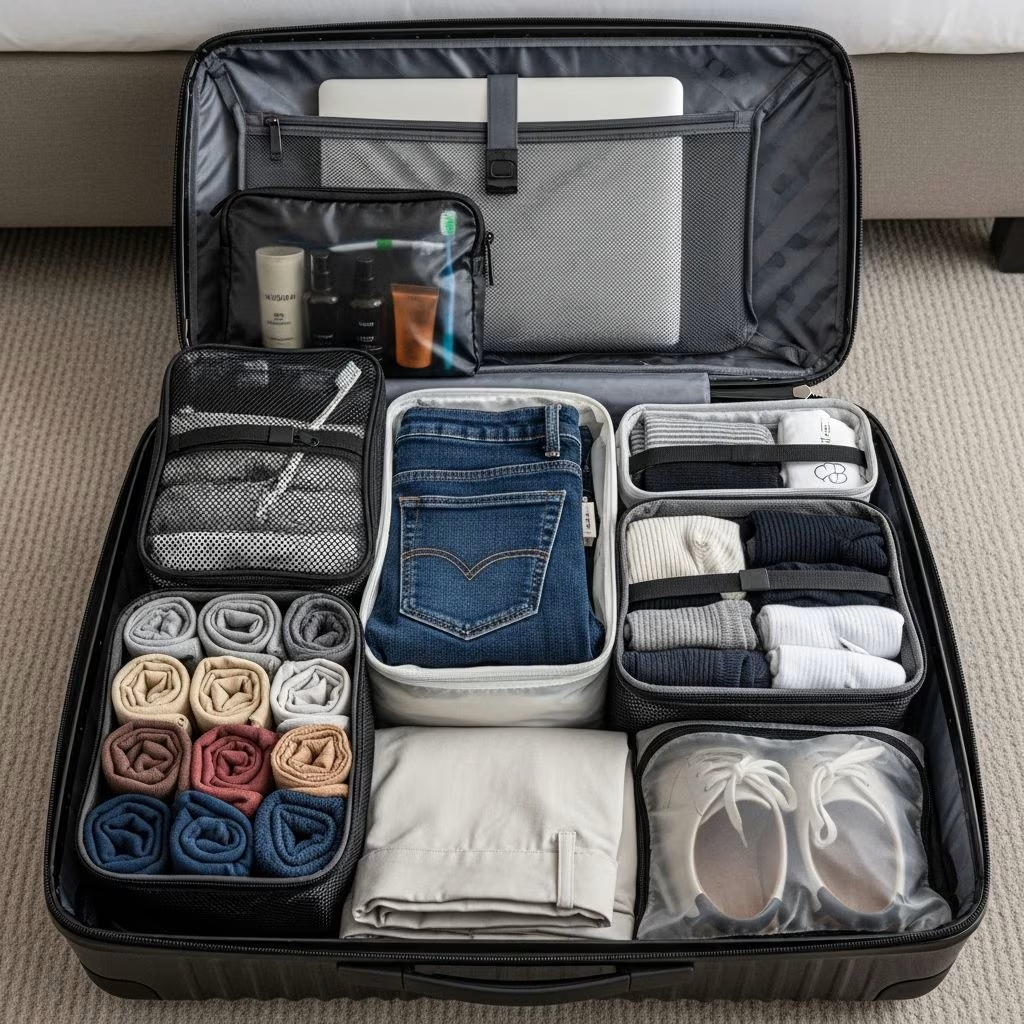
Before implementing any packing strategy, investing in the right equipment makes a substantial difference. Packing cubes have revolutionized how travelers organize their belongings, offering both organizational benefits and compression capabilities. When selecting packing cubes, prioritize those featuring compression zippers, which allow you to squeeze air out of the cubes and reduce their overall bulk significantly.
The compression feature proves particularly valuable because it enables you to stack multiple cubes on top of each other within your carry-on, something that would be impossible with standard cubes. Additionally, consider incorporating slim packing cubes into your collection, as these specially designed containers fit perfectly in the spaces between your suitcase’s trolley handles, utilizing otherwise wasted real estate in your luggage.
Different packing approaches offer distinct advantages depending on your preferences and travel duration. Professional packers often employ a hybrid strategy that combines elements from multiple techniques rather than relying on a single method.
Folding clothes to match the exact width and dimensions of your packing cube creates a compact, organized structure. This approach involves laying each clothing item flat, then folding it to align perfectly with your cube’s dimensions. The result is a neat, stackable arrangement that maximizes space and allows for easy identification of items without unpacking everything.
Rolling clothes individually and placing them into packing cubes offers advantages in terms of compactness and flexibility. This method works particularly well for softer fabrics and creates a cylinder shape that can nestle efficiently around other items. However, rolling typically results in slightly higher bulk than the pure folding method, making it ideal as part of a hybrid approach.
Combining folding and rolling techniques within the same packing cube allows you to take advantage of both methods’ benefits. You might fold heavier items like jeans while rolling lighter layers such as t-shirts and tank tops. This flexibility enables you to fill odd spaces more effectively and maintain structure while maximizing usable volume.
How you arrange items within your packing cubes dramatically affects the total capacity of your carry-on. Several professional approaches have proven effective for maximizing space utilization.
This technique, sometimes called the Jenga method, involves stacking folded clothing items while alternating the direction of heavy seams and fold lines. Rather than having all folds bunch together in one location, rotating the direction of each layer creates an even distribution of bulk. This prevents compression in specific areas and maintains a balanced, stable structure throughout the cube.
For this method, place your heavier base layers flat on the cube’s bottom, then roll your softest items on top. This creates a structured foundation while maintaining flexibility in the upper portions of the cube, resulting in an organized yet efficient arrangement that accommodates various clothing weights and textures.
Stack each folded piece of clothing like building blocks, pushing them firmly into the cube as you add more items. After creating several layers, shift them toward the back and continue adding more clothing layers. This creates a stable, compact structure that maximizes vertical space.
Where you position different items within your suitcase impacts both accessibility and weight distribution. Professional organizers emphasize that bag placement isn’t random—it’s purposeful.
Place heavier items near the wheels of your carry-on, including shoes, electronics, and chargers. This positioning ensures your bag balances properly when upright and prevents tipping, which is particularly important during airport navigation and overhead bin storage.
Utilize the handle gap—the space between your suitcase’s handles when they’re retracted—to store thin, flexible items. This often-overlooked space can accommodate folded t-shirts, compression bags, or other flat items, creating a stable foundation upon which to build your remaining packing structure.
Dead space represents lost opportunity in carry-on packing. Several strategies help you reclaim this valuable area:
Rather than mixing different clothing types in the same cube, maintain separate containers for distinct categories. This organizational strategy offers multiple benefits:
| Packing Cube Category | Suggested Contents | Cube Type |
|---|---|---|
| Tops | Shirts, blouses, t-shirts | Standard compression cube |
| Bottoms | Pants, skirts, shorts | Standard compression cube |
| Undergarments | Socks, underwear, bras | Small compression cube |
| Accessories | Scarves, belts, jewelry | Slim cube or pouch |
| Outerwear | Jackets, sweaters, cardigans | Large compression cube |
This approach makes unpacking at your destination dramatically easier since you already know exactly where each item category is located. You won’t need to tear through your entire bag searching for a specific shirt or pair of socks.
Limiting your clothing quantity before packing establishes the foundation for efficient carry-on travel. The 5-4-3-2-1 method provides a customizable framework for wardrobe selection.
Pack five tops, four bottoms, and then customize the remaining categories based on your specific trip. For a beach vacation, you might choose three swimsuits, two pairs of shoes, and one jacket. For a business trip, reverse this to three pairs of shoes, two accessories, and one swimsuit. This flexible approach ensures you have sufficient variety while maintaining strict quantity limits.
Delicate, wrinkle-prone garments require special attention during packing. Rather than placing these items on the edges where pressure and friction cause creasing, create a protective sandwich. Place wrinkle-prone pieces in the center of a folded stack, then surround them with heavier items that distribute pressure evenly across the fabric.
This technique preserves the appearance of dress clothes, linen pieces, and other delicate fabrics, ensuring they emerge from your luggage ready to wear without requiring extensive steaming or ironing.
Carry-on packing regulations restrict liquid quantities, but strategic organization makes the most of allowed items. Use laundry detergent sheets instead of liquid detergent if you plan to do sink laundry during your trip, saving significant space compared to traditional bottles.
Consolidate toiletries into travel-sized containers and group them in a dedicated small packing cube or TSA-approved bag. This prevents leaks from affecting clothing and makes airport security screening faster and easier. Keep this toiletry cube accessible, as you’ll need to remove it during security checks.
Before filling your packing cubes, lay them inside your carry-on in their intended positions. This visualization technique helps you understand exactly how everything will fit together and reveals any potential space conflicts before you pack. You can experiment with different cube configurations—some laying flat, others stacked on their edges—to discover the optimal arrangement for your specific luggage.
Beyond basic packing techniques, several sophisticated strategies help squeeze additional items into your carry-on:
Effective carry-on packing combines multiple techniques tailored to your specific needs and preferences. Experiment with different methods to discover what works best for your travel style. Some travelers prefer strict folding systems, while others favor rolling or hybrid approaches. The key is developing a consistent methodology that you can replicate for every trip, eventually enabling you to pack efficiently without conscious thought.
Professional packers emphasize that mastering carry-on packing is a skill that improves with practice. Your first attempt may feel time-consuming, but as you refine your process and become familiar with your packing cubes and luggage dimensions, you’ll pack faster while fitting more items. This efficiency translates directly into reduced travel stress and greater enjoyment of your journey.
By implementing these professional strategies—from selecting appropriate tools to understanding advanced folding techniques to strategic item placement—you’ll transform your carry-on packing from a source of frustration into a streamlined, efficient process that maximizes space while maintaining organized access to your belongings throughout your travels.
