

 Travel Essentials
 Travel Essentials

Dive into Carthage's archaeological wonders: from grand Antonine Baths to sacred Tophet sites, Punic harbors, and Roman villas, with practical tips for your visit.
 Travel Essentials
Perched on a hill overlooking the Gulf of Tunis, the archaeological site of Carthage stands as a testament to one of antiquity’s most formidable civilizations. Founded by Phoenician settlers around the 9th century BC, this once-mighty city rose to power as a maritime empire, clashing with Rome in epic conflicts before its dramatic fall. Today, visitors wander through layers of history spanning Punic origins, Roman reconstruction, Byzantine influences, and beyond, all preserved within a UNESCO World Heritage site.
Carthage’s story begins with Phoenician traders from Tyre who established a colony that grew into a dominant force in the Mediterranean. By the 3rd century BC, under leaders like Hannibal, it challenged Roman supremacy, leading to the three Punic Wars. The city’s utter destruction in 146 BC by Roman forces left little of the original Punic structures intact. However, the Romans rebuilt extensively, turning Carthage into a provincial capital with grand public works.
Over centuries, layers of Vandal, Byzantine, and Arab occupations added to the site’s complexity. Excavations since the 19th century have revealed a palimpsest of cultures, making Carthage a key site for understanding North African history. Despite the destruction, impressive Roman-era remains dominate, offering glimpses into daily life, religion, and engineering prowess.
The Carthage site sprawls across multiple zones, each revealing unique facets of its past. A single ticket grants access to most areas, encouraging exploration on foot or by the efficient TGM train from Tunis.
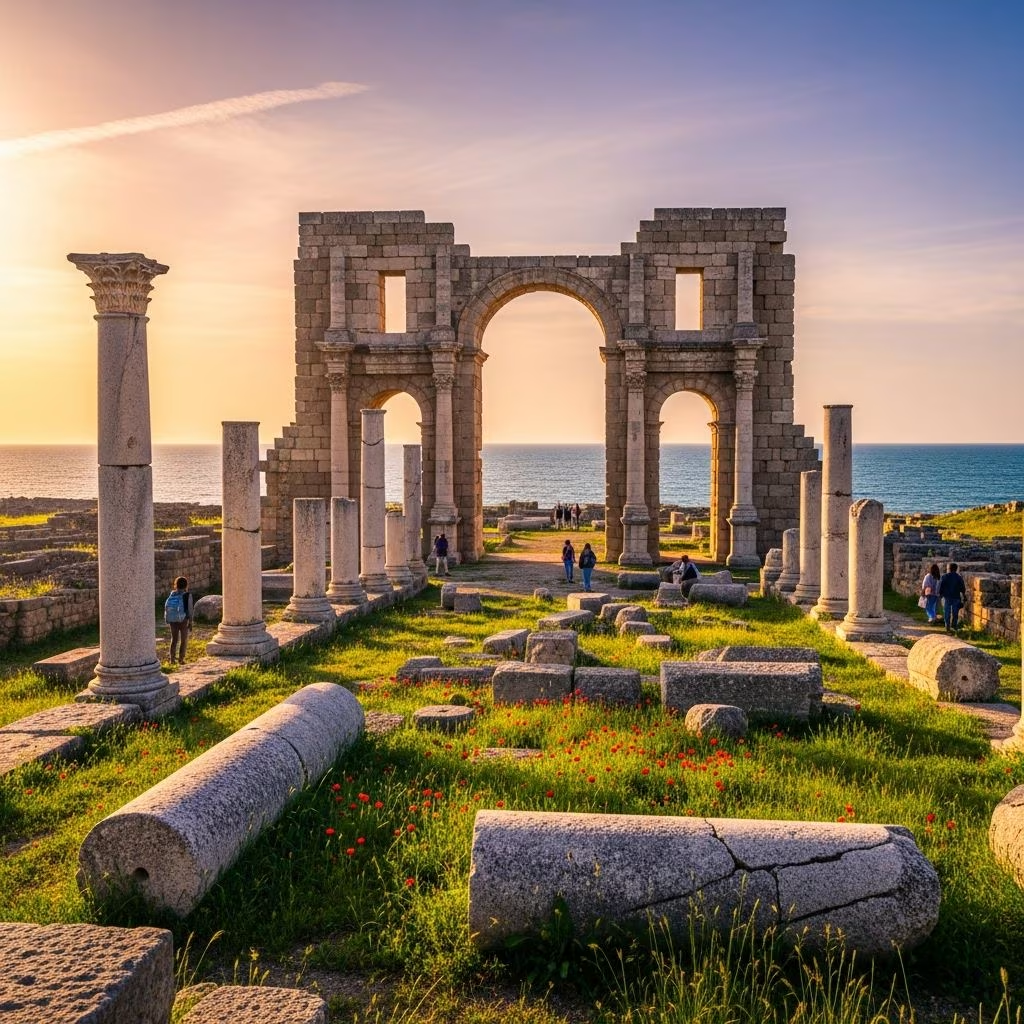
The **Antonine Baths** (Thermes d’Antonin) are the crown jewel of Carthage’s ruins, rivaling the grandest complexes in Rome. Constructed in the 2nd century AD under Emperor Hadrian and finished by Antoninus Pius, this seaside terme was the largest outside Italy. Visitors stroll through vast foundations, towering columns, and hypocaust heating systems, imagining steam-filled halls where citizens socialized.
Overgrown gardens lead to the beachfront layout, with frigidarium, tepidarium, and caldarium chambers clearly delineated. The site’s prime location highlights Carthage’s status in the empire. Free-standing arches and marble fragments evoke its former splendor.
Carthage’s commercial success stemmed from its innovative harbors. The **Punic Ports**, including a rectangular commercial basin and a circular military one (Cothon), accommodated hundreds of ships. Circular design allowed efficient maneuvering for warships, underscoring the city’s naval dominance.
Today, submerged and partially excavated, these ports reveal stone quays and slipways. Nearby, the Quartier Magon offers residential insights with gridded streets and shops from Hannibal’s era.
The **Tophet of Salammbo** intrigues with its stelae-covered precinct, a Punic sanctuary possibly dedicated to deities like Tanit and Baal. Excavations uncovered thousands of urns with infant remains, sparking debates on ritual sacrifice versus natural burials.
This poignant site, one of the largest child cemeteries of antiquity, invites reflection on Phoenician religious practices. Over 20,000 urns were found, emphasizing its scale.
**Byrsa Hill** formed the acropolis, site of the citadel and later a cathedral. The Carthage National Museum atop the hill houses mosaics, statues, and Punic artifacts. Panoramic views stretch across the site.
Roman Villas on Odeon Hill preserve mosaics, cisterns, and sewers from elite residences, showcasing 2nd-5th century luxury.
The Roman **amphitheater** and **theater** hosted spectacles, with the circus for chariot races nearby. The **Damous El Karita Basilica**, a vast Byzantine complex, included churches and crypts, once North Africa’s premier Christian site.
Malaga cisterns demonstrate sophisticated water management, feeding the city via aqueducts.
Carthage is an easy day trip from Tunis, 15km northeast.
Most sites are walkable (3-5km loop), though hilly terrain requires sturdy shoes. Allow 4-6 hours.
| Site | Price (TND) | Notes |
|---|---|---|
| Carthage Archaeological Park (multi-site ticket) | 12-15 | Valid 1 day, covers 10+ sites |
| National Museum of Carthage | Included/Extra | Check for renovations |
| Antonine Baths, Tophet | Included | Open access areas free |
Buy at main entrances; students/seniors discounts available.
Spring (March-May) or fall (Sept-Nov) offer mild weather. Avoid midday summer heat. Bring water, hat, sunscreen. Sites open ~8:30am-6pm; museums may close Mondays.
Ongoing digs continue to reshape our understanding. Recent finds include Punic necropolises and Byzantine hypogeums. Mosaics depict sea creatures, gods, and daily scenes, preserved in museums.
Carthage challenges narratives of ‘barbarian’ foes, revealing advanced urban planning: sewers, markets, and multi-ethnic society. Its legacy endures in modern Tunisian identity.
4-6 hours on foot; full day with museum and lunch.
Not essential but recommended for context; audio guides available.
Limited; uneven paths and hills pose challenges.
Yes, perfect day trip via TGM train.
A Punic ritual site with urns containing child remains, debated as sacred precinct.
Conservation efforts by UNESCO and Tunisian authorities combat erosion, tourism wear, and urban encroachment. Visitor numbers surged post-2020, prompting sustainable management. Support by following paths and not touching artifacts.
Carthage transcends ruins—it’s a bridge to antiquity, where echoes of Hannibal, emperors, and saints mingle with sea breezes.
