

 Travel Essentials
 Travel Essentials

Plan a 7–10 day road trip through Castile and León’s medieval cities, UNESCO sites, vineyards, and dramatic landscapes.
 Travel Essentials
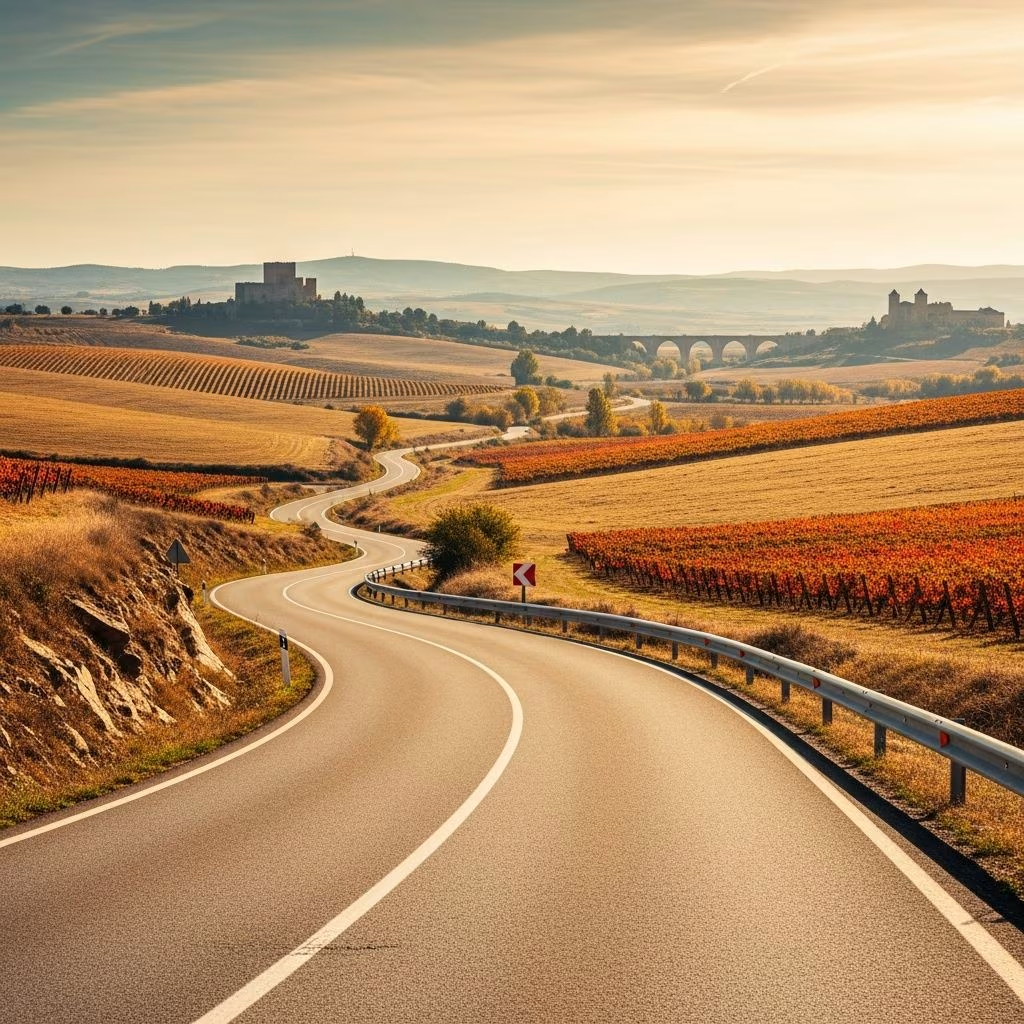
Castile and León, the vast central region of Spain, offers an ideal backdrop for a road trip that immerses travelers in medieval history, Renaissance architecture, Roman engineering marvels, and rolling vineyards. Spanning nine provinces, this area rewards drivers with uncrowded roads, dramatic landscapes, and cities packed with UNESCO sites. A 7-10 day journey covers approximately 500-1000 km, allowing time to savor local cuisine like roast suckling pig, morcilla sausage, and robust Ribera del Duero wines.
This region stands out for its concentration of cultural treasures relative to its sparse population, making it less touristy than coastal Spain. Expect wide open plains (meseta), dotted with castles, cathedrals, and thermal springs. Driving here is straightforward on well-maintained highways like the A-6 and N-601, with opportunities for scenic detours into natural parks. The flexibility of a car lets you chase tapas routes, winery tours, and sunset views at your pace.
Start from Madrid for easy access (2-3 hours to first stops). Rent a compact car for narrow old-town streets; opt for automatic if manual shifting fatigues you on hills. Fuel costs average €1.70/liter; tolls add €50-100 round-trip. Best months: April-June or September-October to avoid extremes. Book accommodations in advance for Salamanca and Burgos during festivals.
A flexible 8-day loop: Day 1-2 Segovia/Ávila, Day 3 Valladolid/Peñafiel, Day 4-5 Burgos, Day 6 León/Las Médulas, Day 7 Salamanca/Zamora, Day 8 return via Arribes del Duero. Total distance: ~800 km.
| Day | Destinations | Drive Time | Highlights | Stay |
|---|---|---|---|---|
| 1-2 | Ávila & Segovia | 1.5 hrs | Medieval walls, Roman aqueduct, Alcázar castle | Segovia |
| 3 | Valladolid & Peñafiel | 1.5 hrs | Plaza Mayor, wine castles, Vega Sicilia bodega | Peñafiel |
| 4-5 | Burgos & Lerma | 1 hr | Gothic cathedral, Ducal Palace, El Cid statue | Burgos |
| 6 | León & Las Médulas | 1.5 hrs | Pulchra cathedral, Roman gold mines | León |
| 7 | Salamanca & Zamora | 2 hrs | Golden sandstone plazas, Roman bridge | Salamanca |
| 8 | Arribes del Duero to Madrid | 3 hrs | Canyons, villages like Fermoselle | – |
Begin in Ávila, encircled by Europe’s best-preserved medieval walls (2.5 km long, 88 towers). Walk the ramparts for panoramic views, then visit the sturdy Gothic cathedral, one of Spain’s oldest. Nearby, Segovia dazzles with its towering Roman aqueduct (167 arches, 28m high, built 1st-2nd century AD). Ascend the fairy-tale Alcázar, inspiration for Disney’s Cinderella castle, and detour to La Granja de San Ildefonso for Versailles-like gardens and fountains.
Head to Valladolid, former Spanish capital (1601-1606), featuring Spain’s largest Plaza Mayor. Explore the National Museum of Sculpture and Casa-Museo de Colón, marking Christopher Columbus’s final days. Nearby Peñafiel boasts a hilltop castle housing a wine museum amid Ribera del Duero vineyards—tour Protos or Vega Sicilia for bold Tempranillo tastings.
Burgos captivates with its UNESCO-listed Gothic cathedral (13th-16th centuries), boasting star-vaulted ceilings and El Cid’s tomb. Stroll the Arco de Santa María gateway, Plaza Mayor, and Espolón promenade. Side trip to Lerma for the massive Ducal Palace (now parador hotel) and Renaissance collegiate church. In Aranda de Duero, underground bodegas (cuevas) reveal wine-making history.
Gastronomy shines: Try morcilla de Burgos (blood sausage), coxinudos (mushroom-wrapped bites), and yemas (egg yolk sweets). Pair with local reds at tapas bars.
In León, the light-flooded Gothic cathedral (Pulchra) rivals Burgos with 125 stained-glass windows. The adjacent Romanesque Basilica de San Isidoro hides a pantheon with frescoed tombs. Drive 1.5 hours to Las Médulas, UNESCO Roman gold mines transformed into surreal red-rock pyramids by ancient hydraulic engineering—hike trails for otherworldly vistas.
Detour through El Bierzo: Astorga’s Palacio de Gaudi (chocolate museum), Ponferrada’s Templar castle, and Villafranca del Bierzo vineyards.
Salamanca‘s sandstone buildings glow golden at dusk. Marvel at Plaza Mayor (Europe’s most beautiful?), Casa de las Conchas (shell-adorned palace), twin cathedrals, and ancient university (oldest in Spain). Join a tapas route for free bites with drinks.
Nearby Zamora offers a Romanesque cathedral and 24 churches. End with Arribes del Duero natural park: Deep canyons, miradores, and border villages like Fermoselle for dam views and tranquility.
Castile and León excels in hearty fare: Segovia’s cochinillo (crispy roast piglet), Burgos’ queso de Burgos (fresh cheese), León’s botillo (cured meats stew). Wine regions shine—Ribera del Duero (Vega Sicilia pinnacle), Bierzo’s Mencía reds. Seek DO certifications; visit Protos in Peñafiel or Arzuaga Navarro.
7-10 days ideal for highlights; extend to 15 for deeper exploration.
Spring (April-June) or fall (Sept-Oct) for mild weather and fewer crowds.
Yes—public transport skips rural gems like Las Médulas.
Segovia Alcázar, Las Médulas hikes, Salamanca’s playful plazas.
Charging stations growing in cities; plan via Electromaps app.
For 10+ days, add Covarrubias (medieval village), Frómista (Romanesque church), or Riaño (Picos de Europa gateway). Cyclists can parallel on Vía Verde trails. History fans: Follow El Cid route from Burgos.
This road trip unveils Spain’s soul—timeless, unpretentious, profound. Pack your bags and hit the road.
