

 Travel Essentials
 Travel Essentials

A comprehensive guide to visiting Channel Islands National Park, featuring activities, wildlife, transportation, and tips for exploring California's remote island ecosystem.
 Travel Essentials
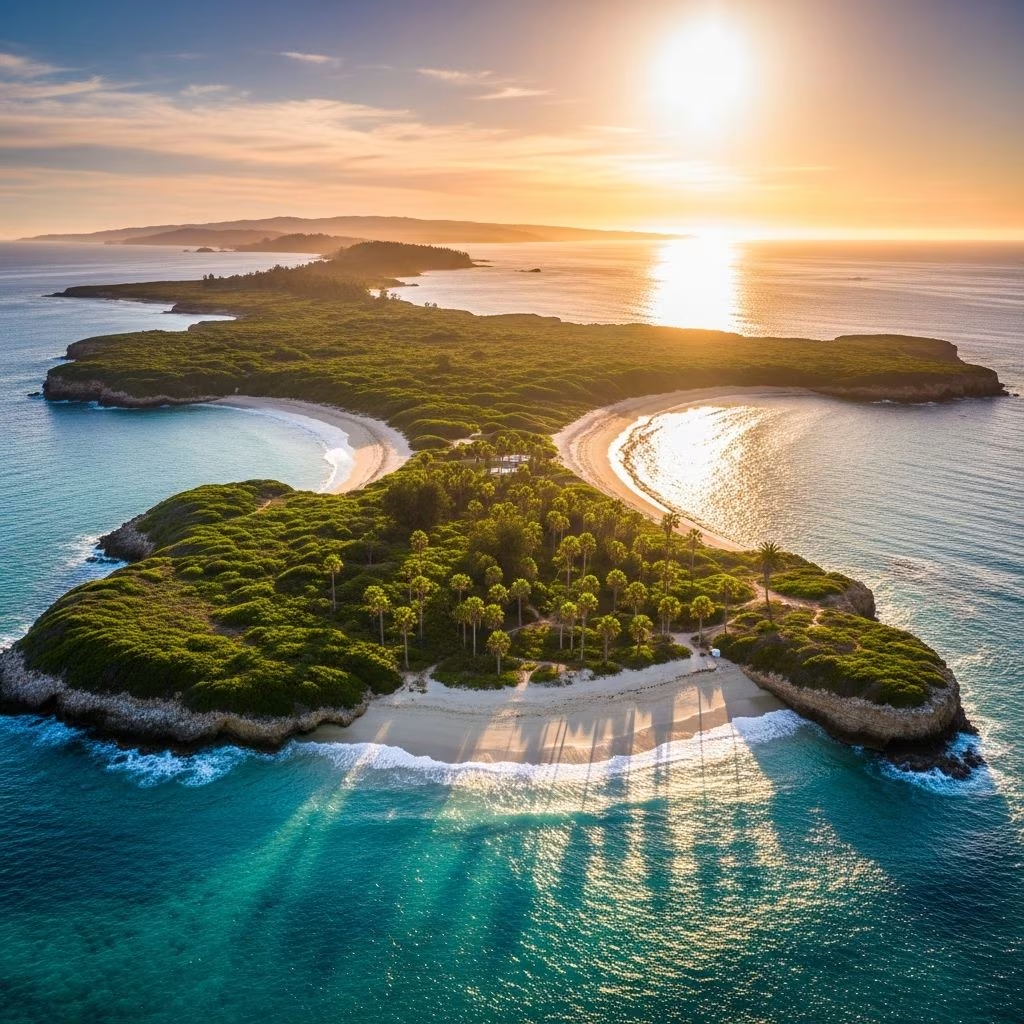
Located off the coast of Southern California near Ventura, the Channel Islands National Park comprises five distinct islands that remain largely untouched by modern development. This archipelago—Santa Cruz, Anacapa, Santa Rosa, Santa Barbara, and San Miguel—offers visitors an extraordinary escape from mainland crowding, featuring rugged terrain, diverse wildlife, and opportunities for adventure ranging from leisurely day trips to extended backcountry expeditions.
The transformation of these islands into a protected national park began in 1938 when Anacapa and Santa Barbara were designated as a national monument. The park achieved its current form in 1980, expanding to include all five islands and establishing one of California’s most ecologically significant destinations. Today, these islands attract visitors seeking authentic natural experiences, pristine hiking trails, and close encounters with marine and terrestrial wildlife.
The Channel Islands present a distinctive ecological landscape shaped by powerful Pacific winds and maritime influences. The islands are characterized by minimal tree coverage and sparse vegetation, creating an exposed environment where weather plays a significant role in the visitor experience. However, this apparent barrenness masks remarkable biodiversity and visual appeal, particularly during spring months when wildflowers blanket the hillsides with vibrant colors.
Hiking opportunities abound throughout the year, though seasonal variations affect accessibility and comfort levels. The most favorable conditions for water-based activities like kayaking, snorkeling, and diving occur during warmer months when ocean conditions are calmer and more predictable. Spring through fall represents the optimal window for comprehensive island exploration, while winter visits require greater flexibility due to unpredictable weather patterns and reduced boat service frequency.
Weather consideration remains paramount for trip planning. San Miguel Island, in particular, experiences exceptionally harsh conditions with typical wind speeds reaching 30 mph, necessitating appropriate protective clothing even during favorable seasons.
Reaching the Channel Islands requires strategic planning, as no bridges or direct vehicle access connect them to the mainland. The journey itself constitutes part of the island experience, with travel times ranging from 30 minutes by plane to three hours by commercial ferry.
The ferry journey itself offers wildlife viewing opportunities, with passengers frequently observing whales, dolphins, and flying fish during transit. This scenic passage prepares visitors mentally and emotionally for the transition from urban mainland to pristine island wilderness.
Encompassing 96 square miles, Santa Cruz Island stands as the largest Channel Island and the most versatile destination for diverse visitor interests. The island’s geography comprises two rugged mountain ranges, including Mount Diablo at 2,450 feet—the park’s highest peak—alongside a scenic central valley and 77 miles of dramatic coastal cliffs.
Santa Cruz Island supports abundant native flora and fauna, making it particularly attractive to hiking enthusiasts and wildlife photographers. The island contains approximately 15 distinct trails ranging from moderate day hikes to challenging multi-day backcountry routes. Trail conditions vary seasonally, with spring offering wildflower-lined paths and fall providing clearer sightlines across the island’s interior valleys.
The island’s most celebrated waterside feature is Painted Cave, an exceptional sea cave distinguished by striking chromatic patterns created by algae deposits, lichen growth, and varied rock mineral compositions. Accessible primarily through guided kayaking excursions, this cave represents one of California’s largest sea caverns and exemplifies the islands’ unique marine geology.
Scorpion Anchorage serves as the primary landing point, requiring slightly more than one hour of transit from Ventura. This site functions as the island’s administrative hub, with established campgrounds and ranger facilities. Alternative landing access occurs at Prisoners Harbor, providing visitors with options depending on weather conditions and boat scheduling.
For visitors prioritizing accessibility and limited time availability, Anacapa Island presents an ideal entry point into the Channel Islands experience. This three-islet formation ranks among the most frequently visited locations within the national park due to its proximity to mainland departure points and robust boat service frequency.
Despite its smaller scale compared to Santa Cruz, Anacapa offers meaningful hiking experiences, most notably a trek to an operational lighthouse—one of the few human-constructed structures visible throughout the entire national park. The journey to the lighthouse provides elevated vistas of surrounding marine territories and opportunities for seabird observation.
Santa Rosa Island attracts visitors primarily through its distinctive geological features and paleontological significance. Lobo Canyon represents the island’s premier hiking destination, showcasing dramatic sandstone formations and providing opportunities to observe pygmy mammoth fossils embedded in canyon walls.
This island also supports populations of island foxes—endemic wildlife species found nowhere else on Earth—making it a priority destination for wildlife enthusiasts and conservation-minded travelers. Encounters with these diminutive carnivores represent memorable experiences that underscore the islands’ unique ecological status.
Water Canyon Camp functions as the island’s primary overnight accommodation, featuring established campground facilities for backcountry enthusiasts.
San Miguel Island serves as the Channel Islands’ most extreme and demanding destination, reserved for experienced visitors capable of managing harsh environmental conditions. The island experiences the archipelago’s most severe weather patterns, with 30-mph winds representing typical rather than exceptional conditions.
Access logistics reflect San Miguel’s remote status. Journey duration from Ventura extends to approximately 3.5 hours, with limited dedicated day-trip services—only two annually—and seasonal camping boat service running two to three times weekly during specific months. The absence of developed pier infrastructure means visitors should anticipate wet landings, requiring appropriate footwear and waterproof gear.
Despite these challenges, San Miguel offers rewards for committed explorers, including exceptional solitude, dramatic coastal landscapes, and wildlife viewing opportunities rarely available on more accessible islands.
Covering merely one square mile, Santa Barbara Island ranks as the national park’s smallest landmass and receives the fewest annual visitors—fewer than 750 people yearly. This minimal visitation guarantees experiences of near-total solitude, a characteristic increasingly rare in contemporary travel.
The island contains five miles of rolling trails appropriate for various fitness levels, with Signal Peak offering the most panoramic vistas. At 634 feet elevation, Signal Peak provides views extending to Sutil Island and represents an optimal location for spotting resting peregrine falcons.
Santa Barbara Island supports three endemic land bird subspecies found nowhere else, establishing it as a priority destination for ornithological enthusiasts. The island’s steep coastal cliffs provide excellent vantage points for observing pinnipeds—seals and sea lions—in their natural marine habitat.
The Channel Islands’ marine environment rivals their terrestrial features in ecological significance and visitor appeal. Water-based activities enable visitors to experience the islands from perspectives impossible from land, revealing sea caves, kelp forest ecosystems, and marine wildlife populations.
Kayaking represents the premier methodology for experiencing the islands’ maritime dimensions, providing intimate access to sea caves and kelp forests while maintaining minimal environmental impact. Professional outfitters like Santa Barbara Adventure Company provide comprehensive packages including ferry transportation, kayak equipment, guidance, and marine ecology interpretation.
Scorpion Anchorage on Santa Cruz Island serves as the primary kayaking destination, featuring marine protection status, diverse ocean wildlife, and extensive giant kelp forest formations. Paddling excursions range from 90-minute introductory trips to full-day comprehensive explorations, accommodating various skill levels and time constraints.
Underwater exploration enables visitors to observe kelp forest ecosystems, colorful reef fish species, and marine invertebrates within their natural habitats. Professional guide services facilitate safe, educational snorkeling experiences combining recreational enjoyment with ecological understanding.
Scuba diving opportunities require advanced certification and specialized operator arrangements, with experienced divers accessing deeper marine environments and observing species inaccessible to casual snorkelers.
Each island features distinctive trail systems suited to varied fitness levels and interests. National Park volunteer naturalists conduct guided hikes synchronized with boat arrivals, providing interpretive context while ensuring visitor safety in remote terrain.
The Cavern Point and Potato Harbor loop on Santa Cruz Island comprises a classic five-mile circuit departing from Scorpion Canyon campground, offering panoramic views and manageable difficulty levels for intermediate hikers. Smugglers Road provides an alternative route featuring scenery with reduced visitor crowding.
Multi-day hiking expeditions enable comprehensive island traversal, connecting campgrounds through backcountry routes. These experiences demand proper preparation, including adequate water supplies, navigation equipment, and physical conditioning appropriate to terrain demands.
Conventional hotel accommodations do not exist on the Channel Islands, requiring visitors planning overnight stays to embrace backcountry camping experiences. Each island maintains established campgrounds designed to manage visitor impact while providing essential facilities.
Scorpion Anchorage on Santa Cruz Island represents the most developed campground, offering the greatest site density and most comprehensive visitor services. Water Canyon Camp on Santa Rosa Island provides alternative overnight options.
Alternatively, full-service sailing expeditions operated by Santa Barbara Sailing Center enable multi-day trips ranging from one to seven days, accommodating visitors preferring maritime accommodations. These trips include onboard sleeping quarters, meal preparation services, and daily activities such as stand-up paddleboarding, snorkeling, surfing, and scuba diving.
The Channel Islands support dozens of wildlife species found nowhere else globally, establishing their status as internationally significant ecological areas. Endemic species including island foxes, specialized bird populations, and unique marine fauna reflect millions of years of isolated evolution.
Whale and dolphin sightings occur frequently during ferry transits and water-based excursions, particularly during migration seasons. Seabird colonies, pinnipeds resting on rocky outcrops, and kelp forest organisms contribute to the islands’ extraordinary biodiversity.
Successful island experiences require thoughtful advance planning addressing transportation logistics, activity selection, and weather preparation. The National Park Service maintains visitor centers in both Ventura and Santa Barbara, providing park maps, weather forecasts, water condition updates, and closure notifications.
Individual islands also maintain visitor center facilities staffed by knowledgeable rangers capable of directing visitors toward off-the-beaten-path locations and ensuring safe exploration practices.
Regardless of whether visitors pursue day trips or extended camping expeditions, the Channel Islands offer transformative experiences revealing California’s wild maritime heritage and the ecological complexity existing within proximity to urban populations.
