

 Travel Essentials
 Travel Essentials

Compare Charleston and Savannah: history, food, vibe, costs, and more to decide your next Lowcountry adventure in these iconic Southern cities.
 Travel Essentials
Two coastal jewels of the American South, Charleston and Savannah, captivate travelers with their preserved architecture, rich histories, and vibrant cultures. Just under two hours apart by car, they offer distinct experiences that make choosing between them a delightful dilemma. This guide breaks down their unique appeals to help you decide which city—or both—deserves a spot on your itinerary.
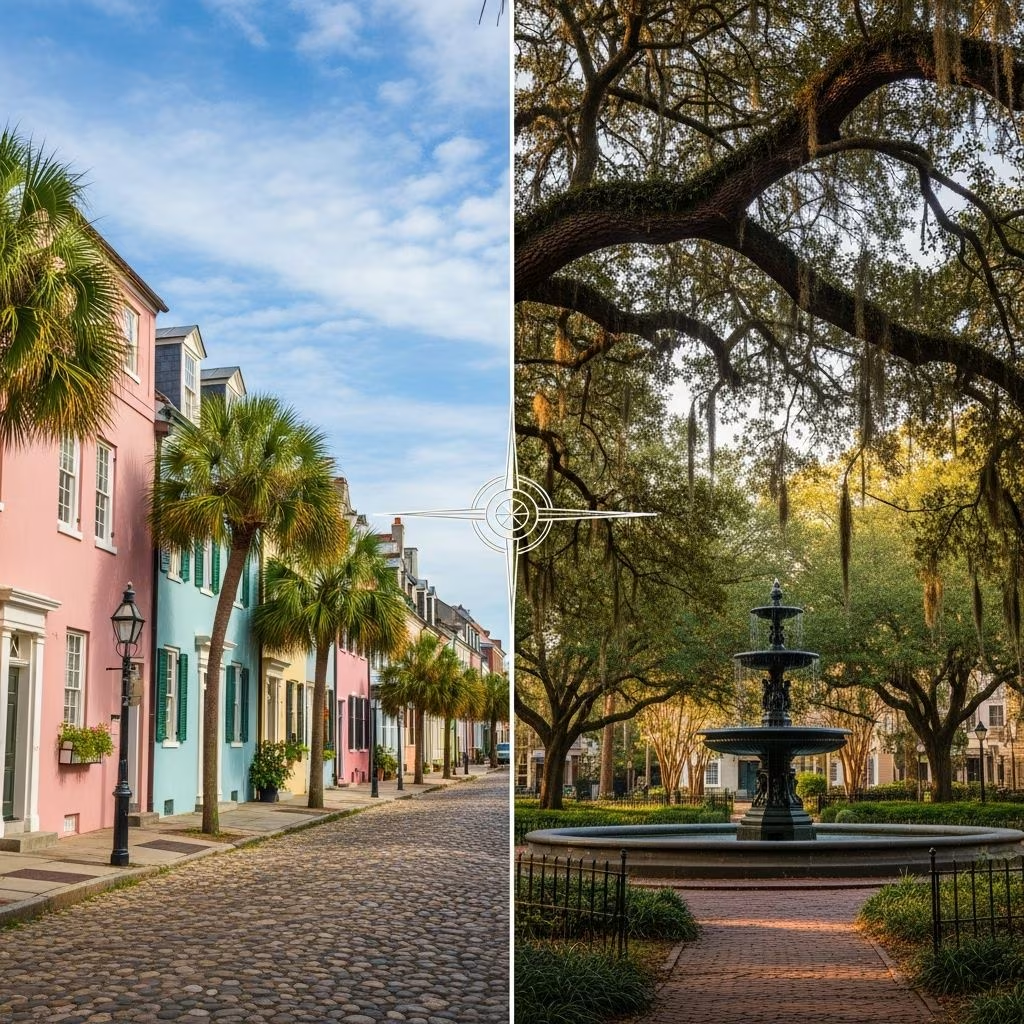
Both cities boast deep roots in America’s colonial past, but their historical narratives and architectural styles diverge significantly. Charleston, South Carolina’s oldest city, was founded in 1670 and played pivotal roles in the Revolutionary War, Civil War, and the slave trade. Its architecture blends Georgian, Federal, and Victorian influences, evident in landmarks like the Pineapple Fountain and Rainbow Row’s pastel-hued homes.
Savannah, Georgia’s coastal gem established in 1733, is renowned for its planned grid layout featuring 22 picturesque squares. Oglethorpe’s design emphasized open spaces and symmetry, creating a walkable oasis of live oaks draped in Spanish moss. While Charleston pulses with tales of rebellion and resilience, Savannah whispers stories of Southern gothic intrigue and preservation efforts that saved its core from modern development.
Savannah exudes a relaxed, bohemian charm. Its streets feel less crowded, with a quieter hum that invites lingering in shaded squares or riverside parks. The air carries a subtle inland coziness, perfect for those seeking an unhurried escape. Neighborhoods like Starland District buzz with indie energy—think food truck yards in shipping containers and vinyl shops—without overwhelming the senses.
Charleston, by contrast, thrums with coastal energy. Palm-fringed promenades and ocean breezes remind you of nearby beaches, fostering a vibrant, upscale vibe. King Street pulses with energy, blending historic elegance with modern buzz. It’s ideal for travelers craving a mix of sophistication and seaside flair, though it can feel busier with tourists and traffic.
| Aspect | Charleston | Savannah |
|---|---|---|
| Vibe | Vibrant, coastal, upscale | Relaxed, bohemian, quiet |
| Crowds | Busier, more traffic | Calmer, less congested |
| Ambiance | Palm trees, beach proximity | Tree-lined squares, mossy oaks |
Charleston’s neighborhoods revolve around its historic peninsula. The French Quarter dazzles with wrought-iron balconies and galleries, while South of Broad showcases antebellum mansions. Battery and White Point Garden offer harbor views and Civil War cannons. Beyond the core, areas like Mount Pleasant provide suburban charm with access to Ravenel Bridge walks.
Savannah’s strength lies in its diverse districts. The Historic District spans 2.5 square miles of squares, mansions, and Forsyth Park’s iconic fountain. Starland District appeals to creatives with arcades, breweries, and eclectic eats. Victorian District charms with ornate homes and glassblowing studios, while River Street’s cobblestones host open-container fun and cargo-ship views.
Both reward pedestrians, but Savannah’s layout makes strolling addictive—its squares act as natural pauses for picnics or people-watching.
Charleston’s food scene is polished and renowned, earning James Beard accolades. Husk pioneered vegetable-forward Southern cuisine, while FIG offers tasting menus. Seafood shines with she-crab soup and shrimp and grits. King Street’s mix includes trendy spots and chains, but local gems like Leon’s Oyster Shop deliver fresh bivalves in a lively setting.
Savannah keeps it approachable and inventive. The Grey in a Greyhound bus station reimagines soul food with collards and biscuits. Starland Yard’s food hall features global fusion from shipping containers. River Street offers casual crab shacks, and Broughton Street hides bakeries and brew pubs. Open containers encourage bar-hopping without pretension.
Both are pedestrian paradises, but nuances matter. Charleston’s downtown is compact yet congested—street parking costs $2-3/hour (9am-6pm weekdays), with garages pricier. Ubers abound, and airport shuttles ease arrivals. A car helps for plantations or beaches like Folly Beach (20 minutes away).
Savannah trumps on walkability with its square-grid and free DOT trolleys looping the historic core. Street parking runs $1.50-2/hour (8am-8pm), free Sundays. Chatham Area Transit buses cost $1.50, and the Belles Ferry ($1) crosses to Hutchinson Island. Airport is 20 minutes out; parking is less punishing than Charleston’s.
| Feature | Charleston | Savannah |
|---|---|---|
| Walkability | Good, but busier | Exceptional, square-based |
| Parking Cost | $$, shorter hours | $, longer hours |
| Public Transit | Buses, rideshares | Free trolleys, ferry |
Charleston’s coastal edge shines with Sullivan’s Island (20 minutes), Folly Beach (25 minutes), and Isle of Palms. These spots offer surfing, kayaking, and lighthouse climbs amid dunes. Kiawah Island (45 minutes) provides upscale resorts and golf.
Savannah’s Tybee Island (30 minutes) blends lighthouse history, dolphin tours, and lazy sands. Less developed, it’s great for biking or North Beach solitude. Both cities offer nearby marshes for birding and kayaking, but Charleston’s palms and exposure feel more beachy.
Charleston edges pricier: hotels average $250-400/night downtown, meals $20-50/person. Attractions like carriage tours run $30+. Savannah is milder—lodging $200-350, dinners $15-40. Parking and open containers save pennies. Both spike in spring/fall; book early.
Spring (March-May) and fall (Sept-Nov) rule for mild weather (60-80°F), festivals, and fewer crowds. Summers swelter (90°F+ humidity); winters are mild but quiet. Azaleas bloom in Charleston; Savannah’s SCAD events peak fall.
2-Day Charleston: Day 1: Historic core, market, dinner. Day 2: Plantations, beach.
3-Day Savannah: Days 1-2: Squares, River Street, Starland. Day 3: Tybee.
Combine: Drive I-95, split 4-5 days.
Charleston’s rooftop bars overlook steeples; ghost tours roam alleys. Savannah’s open-container policy fuels pub crawls; voodoo shops and pinball arcades add edge. Both host food festivals—Charleston’s is fancier.
Savannah: Squares for play, free trolleys, beaches. Charleston suits older kids with history.
No for cores; yes for beaches/plantations.
Charleston for fine dining; Savannah for casual flair.
Yes! 1.5-hour drive; ideal road trip.
Savannah’s Broughton for local; Charleston’s King for variety.
