

 Travel Essentials
 Travel Essentials

Complete first-time traveler's guide to Chiang Rai covering temples, accommodations, local cuisine, transportation, and ideal visit duration.
 Travel Essentials
Nestled in the mountainous northern region of Thailand, Chiang Rai presents a compelling alternative to more heavily trafficked tourist destinations. This serene northern Thai town combines architectural marvels with cultural authenticity, offering first-time visitors a chance to experience Thailand beyond the conventional tourist trail. The region’s distinct character, shaped by its Lanna heritage and dramatic mountain landscapes, makes it an increasingly popular choice for travelers seeking both exploration and tranquility.
Chiang Rai functions as Thailand’s northernmost provincial capital, positioned strategically along the Kok River with towering mountains framing its borders. The city serves as a gateway to multiple geographical and cultural zones, including ethnic hill tribe communities and the famous Golden Triangle region where Thailand, Laos, and Myanmar converge. Despite its growing popularity, Chiang Rai maintains a distinctly laid-back atmosphere compared to Chiang Mai, its larger neighbor located approximately 200 kilometers to the southwest. The region’s population of roughly 200,000 residents contributes to its manageable scale, allowing first-time visitors to navigate attractions without feeling overwhelmed by crowds.
The cultural landscape reflects centuries of Lanna influence, evident in local customs, cuisine, and architectural styles. This distinctive heritage distinguishes Chiang Rai from southern Thai regions and provides visitors with genuine cultural immersion opportunities.
Seasonal considerations significantly impact the Chiang Rai experience. The region experiences three distinct seasons, each offering different advantages for travelers:
First-time visitors often wonder how long to allocate for a Chiang Rai experience. The appropriate duration depends on your travel style and available time:
| Duration | Best For | What You’ll Experience |
|---|---|---|
| 1 Day | Day trippers from Chiang Mai or time-limited travelers | White Temple, lunch in the city center, Blue Temple, Black House |
| 2-3 Days | Most first-time visitors | Major temples, night markets, tea plantations, one mountain excursion |
| 5 Days | Adventurous travelers seeking comprehensive exploration | All major attractions, multiple hill tribe encounters, diverse day trips |
For most first-time visitors, three days provides an optimal balance. This timeframe allows thorough exploration of the city’s most significant temples, participation in evening night market experiences, and at least one meaningful day excursion into surrounding mountains or to tea plantations. Those with tighter schedules can accomplish a respectable overview in 24 hours by prioritizing the most iconic sites.
Chiang Rai’s reputation rests substantially on its remarkable collection of temples, each featuring distinctive architectural styles and artistic visions:
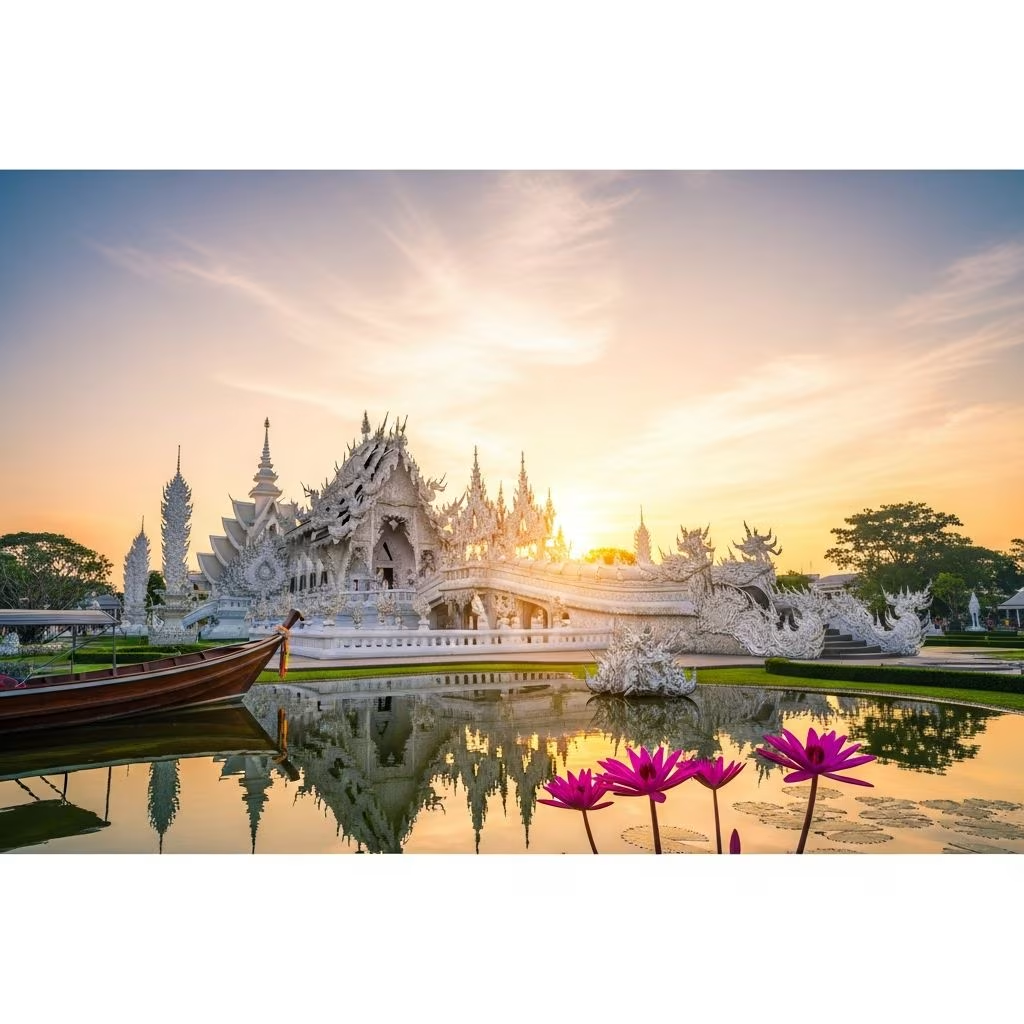
This striking white temple stands as Chiang Rai’s most internationally recognized attraction. Constructed entirely in white, with intricate mirror inlays that catch and reflect sunlight, the temple creates an ethereal, almost otherworldly atmosphere. The architecture fundamentally departs from traditional Thai temple designs, incorporating contemporary artistic elements that challenge conventional expectations. Beyond the main white structure, the temple complex features thought-provoking installations including suspended sculptural heads, ghostly skeletal imagery, and hands emerging from the ground—artistic statements intended to provoke reflection on spiritual themes.
Constructed between 2005 and 2016 under the artistic direction of local creator Phuttha Kabkaew, this temple presents an entirely different aesthetic experience from its white counterpart. Brilliant cobalt blue and turquoise hues dominate the architectural palette, creating a serene yet visually striking environment. The temple’s psychedelic design elements generate an immersive atmosphere that proves deeply meditative for some visitors and entertainingly surreal for others. Notably, this temple offers free admission, making it accessible regardless of budget constraints.
Offering a striking contrast to Chiang Rai’s predominantly golden and white temples, Baan Dam functions as a contemporary art museum within a series of predominantly black structures. Artist Thawan Duchanee conceived this complex as a museum housing contemporary art pieces throughout interconnected buildings. The predominant use of dark wood and black materials, combined with modern artistic installations, creates an atmosphere distinct from traditional temple experiences. This venue appeals to visitors seeking artistic and cultural depth beyond conventional religious architecture.
This expansive temple complex effectively consolidates three distinct temples within a single location. The impressive Guan Yin statue, known locally as the Big Buddha, dominates the hilltop position and becomes particularly striking when illuminated after sunset. The complex includes a vibrant red and green pagoda alongside an ornate white temple featuring elaborate interior decorations and a pristine white Buddha statue. Dragon-guarded staircases connect different temple levels, creating photogenic pathways throughout the property.
Beyond temple visits, Chiang Rai’s urban center provides authentic local experiences unavailable in more sanitized tourist zones. The Clock Tower area functions as the effective city center, surrounded by shops, restaurants, and guesthouses. Though potentially appearing somewhat chaotic to first-time visitors, this district offers genuine opportunities for observing daily local life and sampling authentic Northern Thai cuisine.
The Chiang Rai Night Bazaar operates daily from 6:00 PM to 11:00 PM, functioning as a bustling marketplace offering jewelry, handicrafts, clothing, and prepared foods. This evening market provides excellent opportunities for casual shopping, culinary experimentation, and social interaction with locals and fellow travelers. The vibrant atmosphere and diverse vendor offerings make this market an essential first-time visitor experience.
Chiang Rai offers accommodation options spanning from budget guesthouses to mid-range hotels, with relatively few luxury properties compared to larger Thai cities. The Clock Tower area concentrates many guesthouses within walking distance, making this district ideal for first-time visitors preferring centralized locations. Accommodation prices remain remarkably reasonable, with quality rooms available in the 500-1,500 THB nightly range. Budget travelers can find adequate rooms below 500 THB, while those seeking additional amenities should expect to spend 1,500-3,000 THB per night.
Several transportation options connect Chiang Rai with other major Northern Thai cities:
Surrounding Chiang Rai offers numerous worthwhile day trip destinations:
Several practical factors merit consideration when planning your Chiang Rai visit. The town’s relative lack of English signage outside tourist areas necessitates either learning basic Thai phrases or downloading translation applications. Currency requirements align with Thailand generally, with Thai Baht as the official currency. ATMs operate throughout the city center, and larger establishments accept credit cards, though smaller vendors prefer cash.
Respectful temple behavior proves essential. Visitors should wear modest clothing covering shoulders and knees, remove footwear when entering sacred spaces, and maintain reverent conduct. Photography restrictions may apply in certain temple areas, so observe signage carefully.
Northern Thai cuisine distinguishes itself through unique flavor profiles emphasizing fresh herbs, sticky rice, and distinctive spice combinations. First-time visitors should prioritize trying regional specialties at local restaurants and night market food stalls. The Chiang Rai Night Bazaar particularly offers accessible culinary exploration opportunities with multiple food vendors presenting diverse options.
For first-time visitors, Chiang Rai represents an accessible introduction to Northern Thailand’s distinctive character without the overwhelming tourism infrastructure of Chiang Mai. The combination of remarkable temples, genuine cultural authenticity, manageable city scale, and reasonable pricing creates compelling reasons for including this destination in Thailand itineraries. Whether prioritizing temple photography, cultural immersion, mountain adventures, or simple relaxation, Chiang Rai accommodates diverse travel preferences while maintaining its characteristic peaceful charm.
Yes, day trips from Chiang Mai are possible and popular. Tours typically depart at 8:00 AM and return late evening, encompassing major temples including the White Temple, Blue Temple, and Black House. However, this compressed schedule limits genuine exploration opportunities.
The White Temple (Wat Rong Khun) holds this distinction due to its distinctive white architecture and contemporary artistic installations.
Absolutely. Accommodation, food, and attractions in Chiang Rai remain exceptionally affordable by international standards, making this destination ideal for budget-conscious travelers.
Thai is the primary language. While English is increasingly available in tourist areas, learning basic Thai phrases and carrying translation applications enhances navigation and cultural interaction.
