

 Travel Essentials
 Travel Essentials

Comprehensive guide to Chichen Itza: history from Maya origins to Toltec influences, top structures like El Castillo, practical visiting tips, and cultural insights for an epic Yucatan adventure.
 Travel Essentials
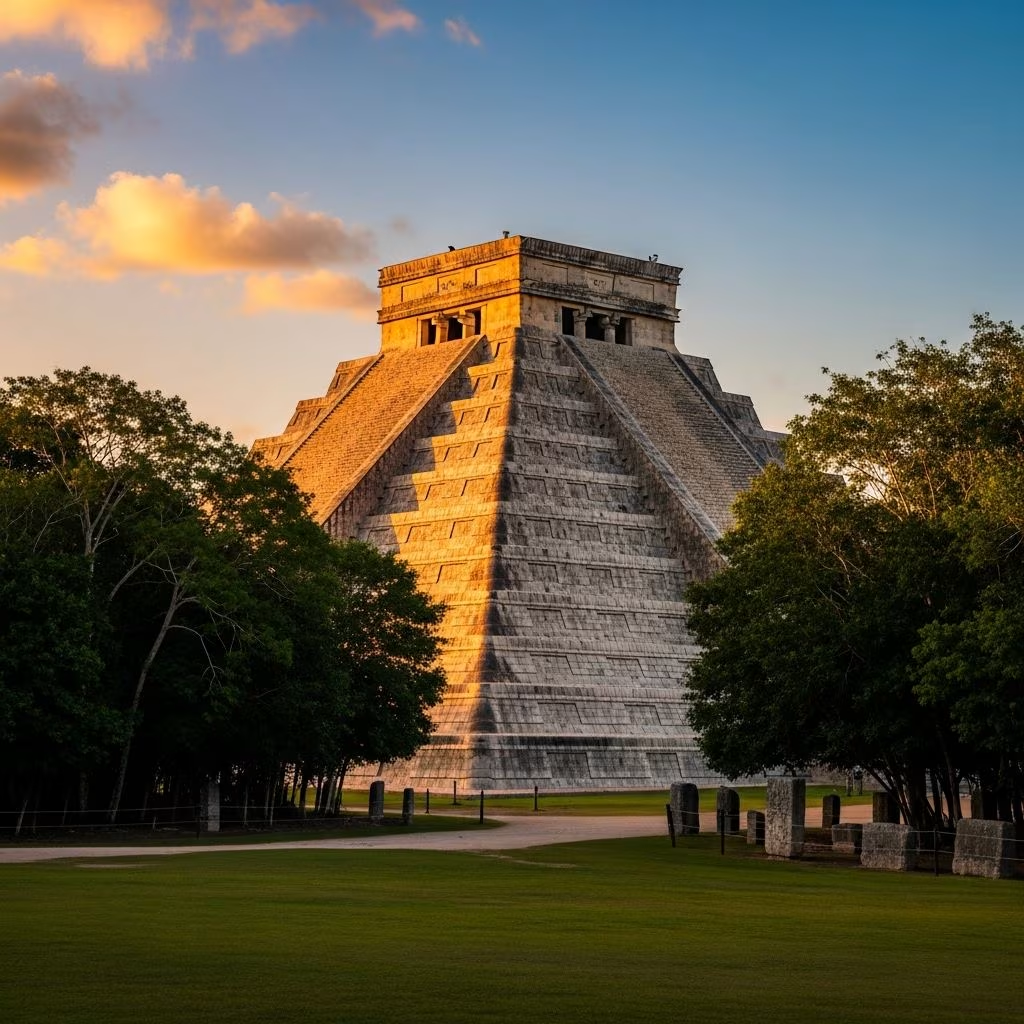
Chichen Itza stands as one of the most breathtaking archaeological sites in the world, a testament to the ingenuity of the Maya civilization in Mexico’s Yucatan Peninsula. This sprawling complex, built over centuries, blends architectural brilliance with astronomical precision, drawing millions of visitors annually to witness its grandeur.
Chichen Itza emerged as a pivotal center in the Northern Maya Lowlands during the Late Classic period, around 600-900 AD, evolving into a dominant regional capital by the Terminal Classic era (800-900 AD). Its strategic location facilitated control over trade routes and political influence extending from central Yucatan to the coasts.
Initially settled as early as 750 AD, the site’s core layout took shape with structures reflecting Puuc and Chenes styles indigenous to the region. By 900 AD, influences from central Mexico appeared, marking a fusion of Maya and Toltec elements that defined its Postclassic phase (900-1200 AD). This period saw the construction of iconic monuments, solidifying Chichen Itza’s role in religious, economic, and military spheres, with an estimated peak population of 35,000.
Archaeological debates persist regarding timelines, particularly Toltec conquest around the 10th century, which introduced militaristic motifs and grander scales to the ‘new section’ of the city. Despite decline after 1200 AD and abandonment by 1440 AD, the site retained sacred status among local Maya communities.
The site’s northern group boasts masterpieces of Mesoamerican architecture, celebrated for their proportions, sculpted details, and engineering feats.
Southern structures like the Nunnery (Casa de las Monjas), Akabtzib, and Iglesia showcase earlier Puuc-style facades with latticework and masks.
Located in Tinum Municipality, 120 km west of Cancun and 2 km east of Piste town, Chichen Itza is easily reachable. From Cancun Airport (1.5-2 hours), options include ADO buses (direct from Cancun terminal, ~$15 USD round-trip), private transfers (~$100 USD), or rental cars via toll highway 180D.
Merida offers buses (2 hours, ~$10 USD). Valladolid (45 minutes) serves as a charming base with cenote swims. Taxis from Piste cost ~$5 USD one-way. Upon arrival, entry is via a modern visitor center with parking (100 MXN/~$5 USD), shops, and restaurants.
| From | Distance/Time | Options | Cost (USD approx.) |
|---|---|---|---|
| Cancun | 2 hours | Bus/Private/Rental | $15-150 |
| Merida | 2 hours | Bus/Private | $10-120 |
| Valladolid | 45 min | Bus/Taxi | $5-40 |
Avoid peak heat (10am-3pm); arrive at opening (8am) for cooler temps and fewer crowds. Dry season (Nov-Apr) is ideal (25-30°C), though equinoxes (Mar/Sep 21) draw massive crowds for the serpent shadow. Rainy season (May-Oct) offers lush scenery but mud.
Tickets: 648 MXN (~$32 USD) for foreigners includes site access (no re-entry); audio guides (200 MXN) or certified guides (~500 MXN/group) enhance experiences. Site spans 4 sq km; allow 3-4 hours. No climbing since 2006 for preservation.
Dress in light clothes, hat, sunscreen, closed shoes. Bring water (no outside food/drink past entrance). Drones and tripods banned.
Combine with Valladolid’s Convent of San Bernardino, Cenote Zaci, or Ik Kil Cenote (10km away, 200 MXN entry). Ek Balam ruins (30km north) offer climbable pyramids and fewer crowds. Coba (2 hours south) features bike rentals amid jungle.
Mayakoba or Tulum beaches (2-3 hours) for beach-ruin combos. Stay in all-inclusive resorts near Cancun or boutique hotels in Valladolid/Piste for authenticity.
Chichen Itza embodies Maya-Toltec fusion, with rituals centered on Kukulkan (feathered serpent god). It was a pilgrimage hub into colonial times, as DNA from cenote remains shows diverse origins. Designated UNESCO site in 1988, ongoing excavations preserve its legacy.
Respect Maya heritage: no touching structures, follow paths. Evening light-and-sound shows (post-4pm ticket, ~450 MXN) narrate history in Spanish/English.
No, climbing banned since 2006 after accidents; preserves the structure.
Yes, 3-4 hours minimum; pair with cenotes for full day.
December-February: mild weather, post-holiday calm.
Yes, near entrance and key areas; limited shade—bring hat.
Free for under 13; seniors INAPAM card discounts.
State-owned since 2010, conservation combats tourism wear. Visitor limits and restoration ensure endurance. Your mindful visit contributes to safeguarding this wonder.
