

 Travel Essentials
 Travel Essentials

China retires its distinctive purple 50 yuan notes, blending nostalgia with digital payment dominance. Explore history, designs, and tips for visitors.
 Travel Essentials
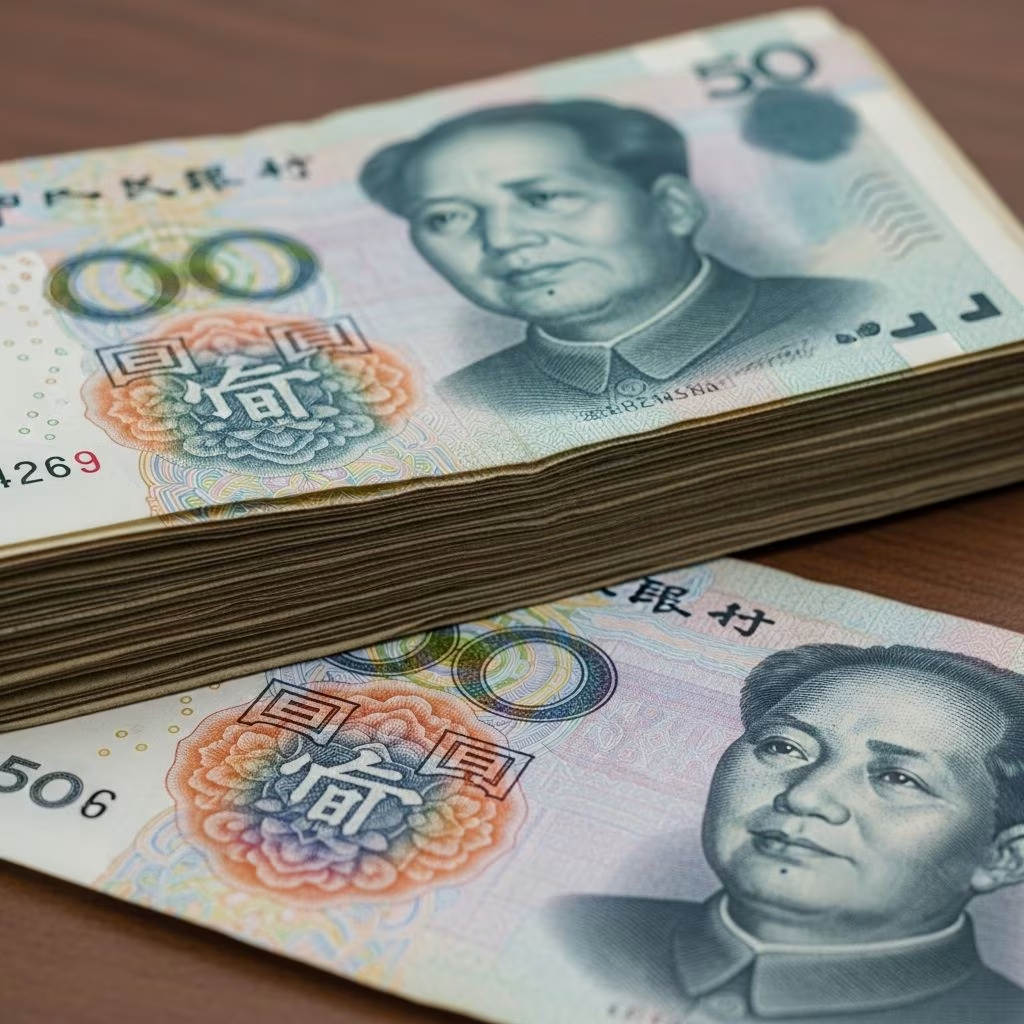
China’s central bank has announced the gradual withdrawal of the familiar purple 50 yuan banknotes, a staple of the Renminbi (RMB) for over two decades. These notes, featuring ethnic minority motifs and advanced security elements, will no longer be printed, signaling the end of an era in the country’s monetary history.
The 50 yuan note, introduced in its fifth series in 1999, became instantly recognizable due to its vibrant purple hue and intricate designs celebrating China’s diverse cultures. One side depicts a Uighur family in traditional attire against the backdrop of Xinjiang’s Grape Valley, while the reverse showcases the Potala Palace in Lhasa, Tibet. This artistic choice highlighted national unity and cultural richness.
Over the years, these banknotes circulated widely, from bustling street markets in Beijing to remote villages in Yunnan. Travelers relied on them for mid-range purchases like meals or taxi fares, appreciating their durability and anti-counterfeiting features such as color-shifting ink and microprinting.
China’s paper currency journey spans centuries, evolving from ancient jiaozi notes in the Song Dynasty to modern RMB. Post-1949, the People’s Bank of China standardized designs across series I through V, each incorporating technological advancements and thematic shifts.
Earlier, foreign exchange certificates (FECs) issued by the Bank of China from 1979 served foreigners exclusively, convertible only for specific services like hotels. These phased out in 1994 with economic liberalization.
The People’s Bank of China (PBOC) cites multiple factors for ceasing production: enhanced counterfeiting risks with aging designs, the rise of digital payments, and the need for uniform currency aesthetics in the sixth series launched in 2015 and expanded since.
Newer notes boast superior security like optically variable ink and raised printing, reducing forgery incidents by over 30% since introduction. Meanwhile, platforms like Alipay and WeChat Pay handle 80% of urban transactions, diminishing cash’s role.
| Aspect | Old 50 Yuan (Series V) | New Series (VI+) |
|---|---|---|
| Color | Purple | Gray tones |
| Main Design | Uighur family & Potala Palace | Offshore oil rig & Three Gorges |
| Security Features | Basic holograms | Advanced 3D imagery |
| Circulation Peak | Early 2000s | Ongoing |
For locals, the change is seamless; existing 50 yuan notes remain legal tender indefinitely. ATMs and merchants accept them without issue. However, collectors lament the loss of a cultural icon, with numismatists snapping up pristine examples on secondary markets.
Tourists face minimal disruption but should prepare for a cash-scarce environment. In megacities like Shanghai, QR code scans dominate, but smaller towns and attractions still require cash. Carry a mix of 50s, 100s, and smaller denominations, as some vendors shun large bills due to change shortages.
The retiring 50 yuan surges in appeal among hobbyists. Uncirculated Series V notes fetch premiums, especially error varieties or consecutive serials. Historical precedents abound: discontinued provincial banknotes from the 1920s, like those from Shantung Province with vertical layouts and “Wan” motifs, command high prices today.
PMG-graded specimens from recent auctions highlight demand, with 1949 revolutionary notes realizing thousands. Online forums buzz with preservation advice: store in albums away from light to maintain vibrancy.
Beyond banknote changes, China pioneers a digital economy. By 2025, mobile payments exceed 300 trillion yuan annually, per PBOC data. This shift boosts efficiency but challenges the unbanked in rural areas, prompting government subsidies for digital literacy.
Vendors at night markets now sport tablet stands over cash boxes, while street food carts accept face scans. Travelers benefit from seamless transactions but must navigate occasional connectivity hiccups in remote spots.
China’s move aligns with global trends. The eurozone refreshed notes in 2019 for security; the US dollar eyes new designs amid inflation debates. Hong Kong’s Bank of China branch continues issuing local dollars, a nod to colonial legacies.
Upcoming series may incorporate eco-themes or AI-generated art, reflecting sustainability goals. The PBOC emphasizes inclusivity, potentially featuring more underrepresented regions. Digital yuan (e-CNY) pilots expand, blending physical and virtual currencies.
Yes, they remain legal tender with no expiration date.
Banks and PBOC branches nationwide; no rush needed.
Gradually phasing out, but available short-term.
Check watermark of Mao Zedong, feel raised ink on denominations.
Alipay International and WeChat Pay for foreigners.
As purple notes fade, they symbolize China’s rapid modernization. Museums like the China Banknote Museum in Beijing showcase evolutions from Da Qing Bank eras to today. Visitors gain insights into economic milestones through tangible artifacts.
For enthusiasts, this retirement sparks hunts for rarities like 1979 FECs or vertical provincial issues. Engaging with numismatic communities fosters appreciation for these paper ambassadors of history.
In sum, while cash bows to pixels, the 50 yuan’s legacy endures in albums and memories, underscoring China’s blend of tradition and innovation.
