

 Travel Essentials
 Travel Essentials

Explore personal accounts of crossing into 1980s China as a travel writer, navigating bureaucratic hurdles, rare encounters, and the dawn of modern tourism in a once-isolated nation.
 Travel Essentials
In the early 1980s, China stood at the threshold of profound change. After decades of isolation under Mao Zedong’s policies, Deng Xiaoping’s reforms cracked open the door to the world. For travel writers, this was a golden era of discovery—a time when guidebooks like those from Lonely Planet became essential maps for intrepid explorers. These pioneers faced uncharted territories, where every border crossing was an odyssey of bureaucracy, curiosity, and cultural immersion. This article delves into the experiences of those who first documented China’s awakening, offering insights into the logistics, challenges, and unforgettable moments that defined overland entry into the Middle Kingdom.
The late 1970s marked a pivotal shift. Following Mao’s death in 1976, Deng Xiaoping initiated the ‘Reform and Opening Up’ policy in 1978, transitioning China from a closed socialist state to one embracing foreign investment and tourism. By 1980, international visitors could enter via limited land borders and select airports, but the process was far from streamlined. Travel writers, tasked with scouting routes for future guidebooks, often arrived overland from neighboring countries like Pakistan, Nepal, or Vietnam, enduring journeys that tested their resolve.
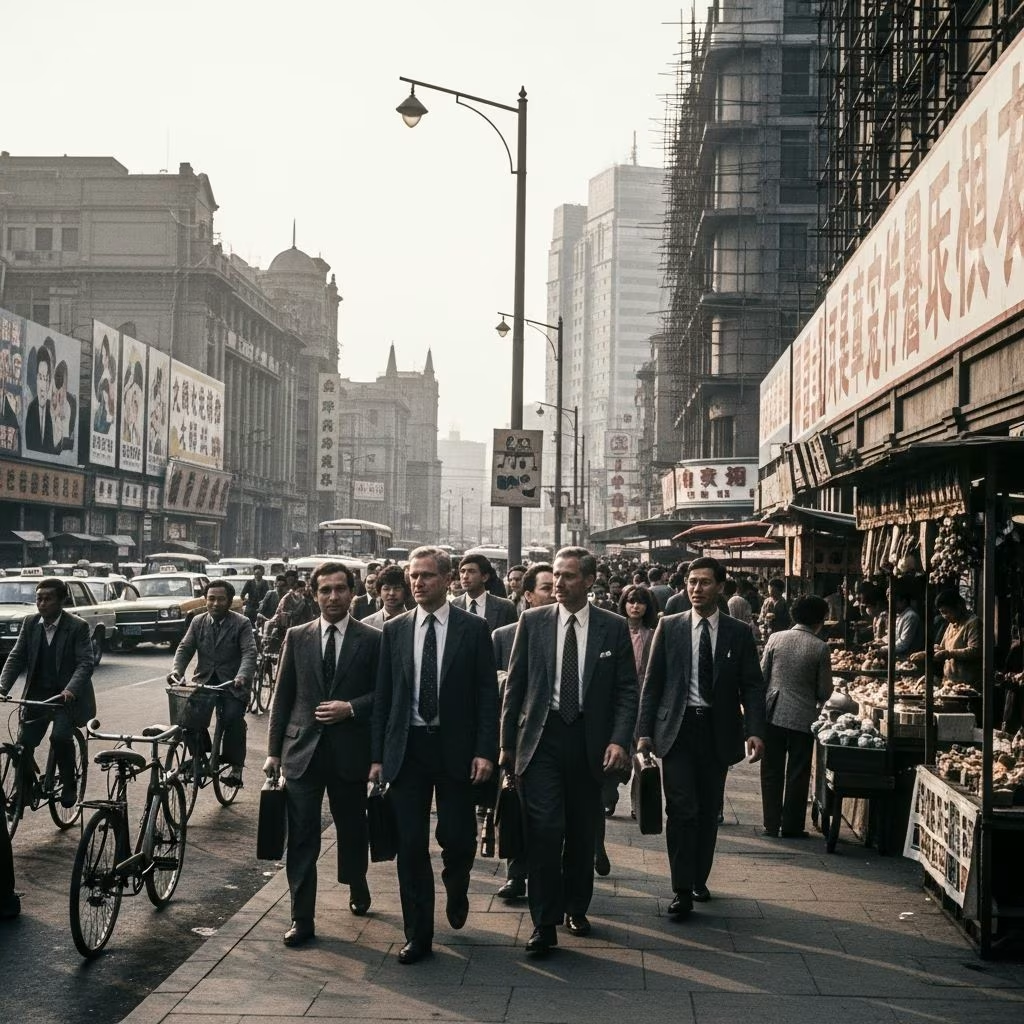
These early entrants witnessed a nation in flux. Cities like Beijing and Shanghai were modernizing rapidly, yet rural areas clung to traditional ways. Infrastructure was rudimentary: roads were potholed, trains overcrowded, and hotels scarce. Yet, this raw authenticity fueled the allure, drawing writers who captured the essence of a billion-person society stepping onto the global stage.
Securing entry was the first battle. Unlike today’s streamlined e-visas, 1980s applications required navigating embassies with stacks of invitations, itineraries, and fees. Overland travelers often applied in Kathmandu for the Friendship Highway route or in Islamabad for the Karakoram Highway. Processing times stretched weeks, with rejections common due to political sensitivities.
Writers recount endless queues at consulates, where a single missing document could derail months of planning. Once approved, the visa—often a single-entry stamp valid for 30 days—came with strings: foreign exchange certificates for purchases and mandatory registration at Public Security Bureaus upon arrival.
Actually crossing into China was theatrical. Take the dramatic Nepal-Tibet border at Zhangmu (then Dram). Travelers descended from the arid plateau into misty valleys, handing over passports to stone-faced guards. Customs inspections were thorough, confiscating ‘undesirable’ items like certain books or electronics. From there, a bumpy bus ride to Lhasa revealed breathtaking monasteries amid political undercurrents.
The Karakoram Highway entry at Khunjerab Pass, the world’s highest border at 4,693 meters, offered stark beauty: snow-capped peaks and yaks grazing beside checkpoints. Pakistani porters ferried gear across no-man’s-land before Chinese jeeps collected arrivals. Delays from weather or official whims were routine, turning crossings into multi-day ordeals.
| Border Crossing | Key Challenges | Highlights |
|---|---|---|
| Nepal (Kodari) | Monsoon landslides, strict inspections | Himalayan vistas, first glimpses of Tibet |
| Pakistan (Khunjerab) | High altitude sickness, seasonal closures | Karakoram scenery, Uyghur hospitality |
| Vietnam (Hekou) | Language barriers, sporadic openings | River ferries, southern rice terraces |
| North Korea (Dandong) | Highly restricted, guided only | Yalu River views, rare DPRK insights |
Once inside, the real work began. Guidebook authors hiked markets at dawn, noting prices in foreign exchange certificates (FECs), interviewed locals through interpreters, and mapped unmarked streets. Accommodation ranged from state-run guesthouses with shared squat toilets to rare Western-style hotels in Beijing. Food was a highlight: steaming dumplings in Xi’an, spicy Sichuan noodles, but hygiene concerns loomed large.
Transportation was an adventure unto itself. Long-distance buses rattled over dirt roads, stopping for military checks. Trains, like the Beijing-Guangzhou line, packed hundreds into hard-seat cars for days-long hauls. Hitchhiking with truck drivers offered camaraderie and offbeat routes. Writers meticulously logged distances, fares, and reliability, forging paths for future travelers.
Beyond logistics, these journeys were rich in human stories. In Kashgar’s Sunday market, Uighur traders bartered carpets amid donkey carts. Tibetan pilgrims circumambulated the Jokhang Temple, their prayer wheels spinning. In Shanghai’s Bund, locals gawked at foreigners, sparking conversations about the outside world.
Challenges abounded: the Cultural Revolution’s scars lingered, with elders wary of Westerners. Photography required permits, and sensitive sites like Tiananmen were off-limits. Yet, warmth prevailed—invitations to family dinners, shared cigarettes at teahouses. These interactions formed the heart of guidebooks, blending practical advice with vivid anecdotes.
Not all was smooth. Political incidents, like the 1983 ‘Spiritual Pollution’ campaign, tightened scrutiny on foreigners. Budget constraints forced creative solutions: trading cigarettes for rides, sleeping on station benches. Health issues—dysentery, altitude sickness—were constant foes, treated with smuggled antibiotics.
Women writers faced extra hurdles, from leering officials to solo travel stigma. Theft was rare but impactful, with lost notes meaning rewrites from memory. Despite this, resilience defined them, turning obstacles into compelling tales.
By the mid-1980s, changes accelerated. More borders opened, trains modernized, and joint-venture hotels sprouted. Lonely Planet’s China guides, first published in 1985, captured this pivot, warning of rapid development while celebrating timeless wonders like the Great Wall and Yangtze cruises.
Comparing eras: today’s high-speed rail and apps contrast sharply with 1980s grit. Yet, the spirit endures—China’s scale and diversity remain unmatched.
These pioneers teach adaptability, respect, and curiosity. Learn basic Mandarin, embrace delays, and seek local interactions. Overland routes still thrill via the Karakoram or Silk Road trains.
Yes, via select borders like Nepal and Pakistan, though visas and permits were arduous to obtain.
Bureaucracy, poor infrastructure, and cultural barriers topped the list.
Many are, with improved facilities; check current visa rules.
They popularized routes, boosting visitor numbers exponentially.
Absolutely, with tours or independent travel, blending nostalgia and modernity.
