

 Travel Essentials
 Travel Essentials

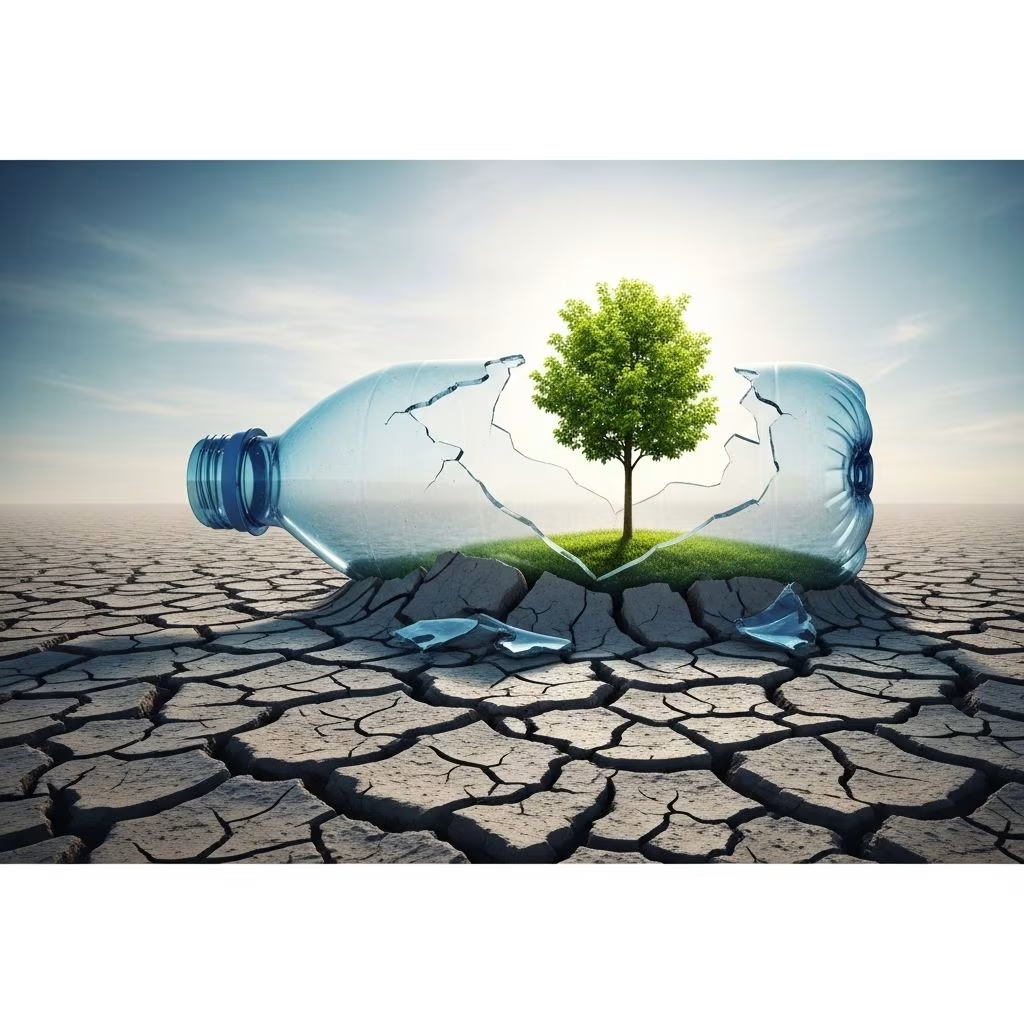
China’s plastic waste import ban reshaped global recycling, reducing pollution at home while disrupting waste trade worldwide and forcing new circular economy solutions.
 Travel Essentials
China’s decision to halt plastic waste imports marked a pivotal shift in global environmental policy. Implemented in 2018, this ban addressed domestic pollution concerns but triggered widespread changes in international waste trade.
For decades, China served as the primary destination for the world’s plastic scrap, importing nearly 600,000 metric tons in 2017 alone. As the largest producer and consumer of plastics, the country processed vast quantities of foreign waste, often with inadequate controls leading to environmental harm.
The policy, known as the National Sword initiative, took effect on January 1, 2018, effectively banning imports of most plastic waste categories. Just months later, stricter contamination limits were imposed, virtually eliminating scrap plastic inflows. By year’s end, solid waste imports halved, and plastic scrap nearly vanished from customs records.
Further measures followed: in 2021, the Ministry of Ecology and Environment ceased issuing import licenses, aligning with a five-year plan to phase out single-use plastics. This included curbs on shopping bags and disposable items in restaurants, promoting recycling and alternatives.
Within China, the ban shortened transport distances for domestic plastic waste, cutting environmental impacts like marine eco-toxicity by up to 84.8%. However, it spurred a rise in virgin plastic production, particularly coal-based PET fibers, increasing air pollution emissions.
Local recycling rates for materials like PET improved as opportunities emerged, though challenges persisted with waste electrical and electronic equipment (WEEE) plastics, where over 95% require specialized handling beyond mechanical recycling.
The ban displaced an estimated 111 million tonnes of plastic waste by 2030, affecting over 676,000 metric tons valued at USD$278 million annually. Nations dependent on China faced immediate crises, with stockpiles growing and recycling rates plummeting.
In the United States, post-National Sword landfilling of plastic scrap surged by 23.2%, despite controls for economic factors like oil prices. EU exports redirected to alternative markets, sometimes with adverse environmental outcomes.
| Region | Pre-Ban Plastic Exports to China | Post-Ban Changes |
|---|---|---|
| United States | High volumes | 23.2% increase in landfilling |
| European Union | Major exporter | Redirected exports, mixed environmental impacts |
| Global Estimate | ~600,000 MT (2017) | 111 MT displaced by 2030 |
Turkey became a key recipient of diverted plastic waste from high-income countries. Economic analysis reveals importers there gained short-term benefits, but domestic suppliers suffered revenue losses, and mismanagement emissions rose.
The ban’s trade destruction effect reduced China’s mismanagement emissions but unevenly burdened third countries. Exporters and new importers like Turkey faced worse outcomes, highlighting unequal global distribution of environmental costs.
Beyond imports, China targeted single-use plastics (SUPs) through a 2020 opinion banning non-biodegradable types. Restaurants and packaging firms shifted to biodegradables, but lacking composting facilities, these often ended up incinerated or landfilled.
Experts advocate reuse systems as superior alternatives, backed by strict regulations. Taiwan’s model—banning SUPs in venues by 2022 and targeting all bags/utensils by 2030—offers lessons, emphasizing clear phaseout targets.
Short-term global fallout included higher virgin plastic use and pollution in redirect countries. Yet, the ban compels innovation: nations must enhance domestic recycling, cut plastic circulation, and invest in circular economies.
China’s strategies, from import halts to SUP reductions, promise long-term carbon footprint mitigation worldwide, though proof of net benefits lags. Air pollution from boosted virgin production poses new domestic hurdles, offset by recycling advances.
The policy underscores the fragility of export-dependent systems. Affected countries boosted incineration, landfilling, or virgin material reliance, but many now prioritize:
Five years on, EU adjustments show reduced exports with partial redirection, urging global standards for waste trade.
Domestic pollution from poorly managed foreign scrap prompted the 2018 National Sword policy.
Plastic landfilling rose 23.2% post-ban due to lost export markets.
Yes, via shorter transport and lower eco-toxicity, but virgin production increased emissions.
They absorbed diverted waste, gaining importer revenues but facing higher mismanagement.
Phased bans and reuse promotion, learning from models like Taiwan’s.
China’s actions ignite a reuse revolution, pressuring the world to rethink plastics. Success hinges on enforcement, alternatives, and infrastructure—potentially curbing the 400 million tons of annual global plastic waste.
