


 Food & Culture
Food & Culture
China’s Top Wine Regions for Travelers
Explore overlooked Chinese wine areas like Ningxia's desert frontiers, Shandong's coastal estates, and Xinjiang's high-altitude vines, blending innovation with natural terroir.
 Food & Culture
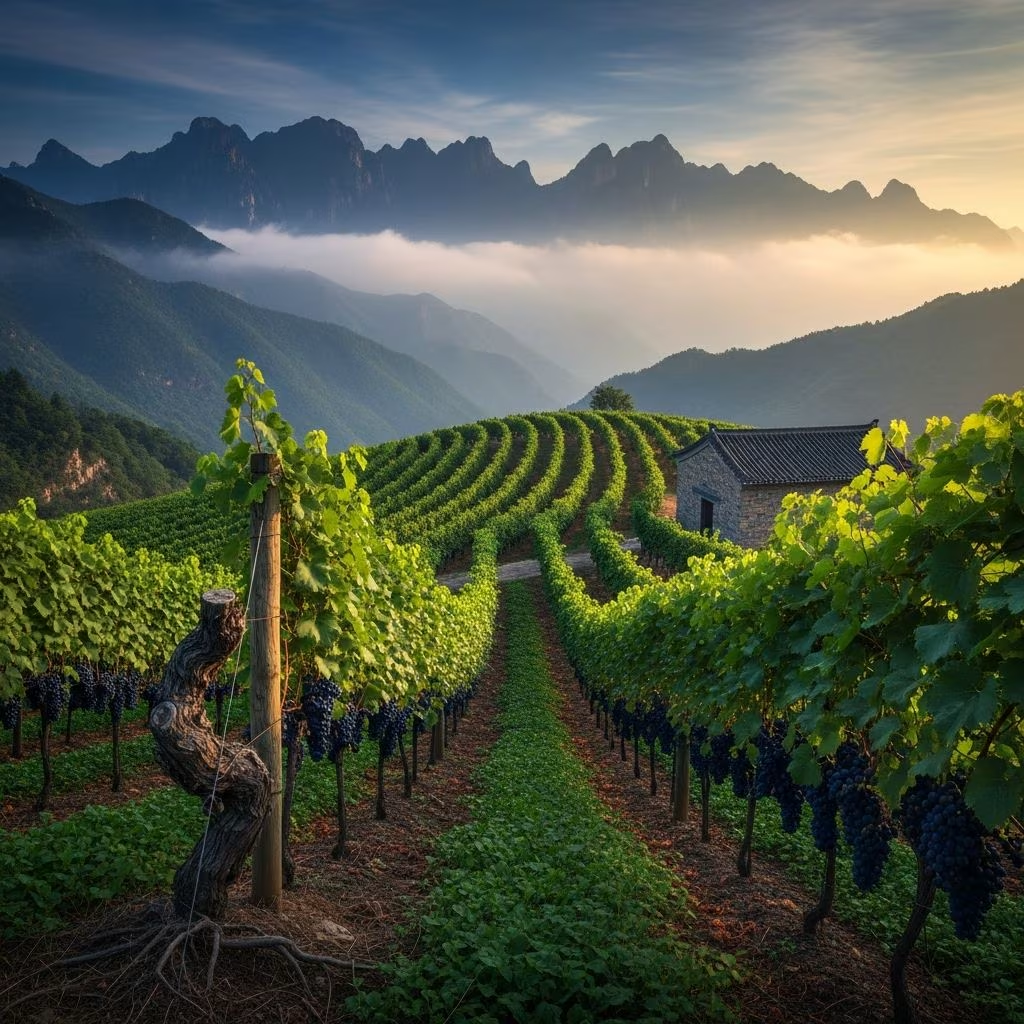
China’s wine industry has surged forward, transforming arid deserts and coastal plains into thriving viticultural hubs. Once overshadowed by traditional powerhouses like France and Italy, these regions now craft bold reds and crisp whites that rival global benchmarks. With ideal climates, innovative techniques, and growing international acclaim, they offer travelers a fresh lens on wine tourism.
Northwest China’s Desert Terroir: Ningxia’s Rise
Nestled where the Gobi Desert meets the Helan Mountains, Ningxia stands as China’s premier wine frontier. The eastern foothills of these ancient peaks create a protective microclimate, blocking harsh winds while channeling mineral-rich sediments into gravelly soils. Vines here plunge deep roots through layers of sand, loess, and limestone, drawing sustenance from Yellow River irrigation canals dating back centuries. This struggle yields concentrated grapes bursting with flavor.
Elevations around 1,200-1,300 meters amplify sunlight exposure, boosting anthocyanins for deep ruby hues in reds. Winters demand ingenuity: growers bury dormant vines under soil to shield against -20°C freezes, a practice honed over decades. The result? Bolder, structured wines that have stunned judges, including a blind tasting where Ningxia claimed four of five top spots against Bordeaux.
- Marselan Dominance: This Cabernet Sauvignon-Grenache hybrid thrives uniquely here, producing plush, spicy reds with dark fruit notes. China leads global plantings, and Ningxia expresses it best.
- Bordeaux Blends: Cabernet Sauvignon, Merlot, and Carménère (locally Cabernet Gernischt) form elegant cuvées with blackcurrant and graphite edges.
- Visitor Essentials: Explore estates like those in Helan Mountain East Foothills for tours amid dramatic dunes and peaks.
Coastal Powerhouse: Shandong’s Yantai and Beyond
Shandong Province dominates production, accounting for over 40% of China’s output. Centered in Yantai—dubbed China’s ‘Napa Valley’—its vineyards mirror Bordeaux’s latitude, basking in Yellow Sea breezes. Penglai and Qingdao sub-areas add maritime humidity, fostering robust canopies against summer heat.
Changyu, Asia’s oldest modern winery since 1892, anchors the scene with French-inspired châteaus offering lavish tastings. European investments exceeding €150 million have built world-class facilities blending Eastern hospitality with Western opulence—think spa resorts, golf courses, and seafood pairings. Winters require vine burial, but diurnal shifts concentrate sugars for balanced wines.
| Sub-Region | Key Grapes | Signature Styles | Notable Spots |
|---|---|---|---|
| Yantai (Napa Valley) | Cabernet Sauvignon, Chardonnay | Full-bodied reds, crisp whites | Changyu Winery, chateau tours |
| Penglai | Merlot, Riesling | Coastal blends, aromatic whites | Penglai Pavilion views |
| Qingdao | Cabernet blends | Maritime-influenced oaks | Seafood-wine pairings |
Xinjiang’s Extreme Vines: Tianshan and Turpan
Far west in Xinjiang, vast vineyards span 6,470 hectares, yielding 100,000 tons annually. The Tianshan Mountains’ north foothills at 44°N and 450-1,000m elevation deliver cool nights and intense days, ideal for dry wines. Minimal rain (110-200mm) demands precise irrigation, while temperature swings build high sugars and vibrant acidity.
Turpan-Hami Basin flips the script with scorching heat and <20mm rain, relying on ancient qanat underground channels for groundwater. Famous for raisins, it excels in luscious sweet wines from late-harvest grapes. Proximity to Central Asia infuses cultural depth, with producers like Citic Niya crafting bold expressions.
- Tianshan North: Scale-friendly for Cabernet and Merlot; producers include Chateau Changyu Baron Balboa.
- Turpan: Sweet specialists; characterful dessert wines shine.
- Challenges: Drought management and extreme climates test resilience, yielding unique profiles.
Gansu and Shaanxi: Underdog Innovators
The Hexi Corridor in Gansu stretches narrowly, linking Wuwei and Zhangye in a cool continental zone. Pinot Noir and Welschriesling excel here, with poor ripening for late varieties underscoring its niche. Transport hurdles kept it obscure, but quality merits attention.
Shaanxi blends heritage with viticulture; home to China’s first oenology university, it cradles winemaking talent. Near Terracotta Warriors, spots like Domaine de Jade in Lantian draw crowds with striking architecture and tourist-friendly tastings. Hebei’s sub-regions like Shacheng (Great Wall Wine) and humid Changli (‘China’s Bordeaux’) add northern diversity, protecting vines through winter.
Why These Regions Captivate Wine Travelers
Beyond bottles, these areas fuse adventure and indulgence. Ningxia’s stark beauty contrasts lush rows; Shandong mixes beaches with cellars; Xinjiang offers Silk Road echoes. Infrastructure booms: high-speed rails link hubs, while estates provide luxury stays. China ranks as top wine consumer and seventh producer, fueling rapid evolution.
Sustainability drives progress—drip irrigation combats scarcity, organic trials enhance purity. International awards validate potential, drawing sommeliers to Marselan and blends.
Practical Guide for Wine Explorers
Plan via Yinchuan for Ningxia (Helan access), Qingdao/Yantai flights for Shandong, or Urumqi for Xinjiang. Best seasons: late summer harvests (September-October). Budget for tours ($20-50/person), pairings elevate experiences. English signage grows, but apps aid navigation.
| Region | Best Visit Months | Top Activities | Stay Options |
|---|---|---|---|
| Ningxia | Sep-Oct | Vineyard hikes, blind tastings | Boutique resorts |
| Shandong | May-Jun, Sep | Chateau golf, sea tours | 5-star châteaus |
| Xinjiang | Aug-Sep | Mountain drives, qanat visits | Cultural lodges |
Signature Grapes and Pairings
- Marselan (Ningxia): Grilled lamb, spicy Sichuan dishes.
- Cabernet Blends (Shandong/Xinjiang): Peking duck, braised meats.
- Pinot Noir (Gansu): Mushroom risottos, light seafood.
FAQs
Is Chinese wine worth trying?
Absolutely—Ningxia reds often outscore Bordeaux in tastings, with unique desert-driven intensity.
What’s the best region for beginners?
Shandong’s Yantai offers accessible châteaus and English tours.
Are vineyards tourist-friendly?
Yes, many feature hotels, spas, and events; book ahead for harvests.
How does climate affect quality?
High elevation, dry air, and diurnal shifts concentrate flavors exceptionally.
Future outlook?
With investments and acclaim, expect global shelves soon.
References
- Ningxia: The Bordeaux of China — Lost Plate. 2023. https://lostplate.com/ningxia-the-bordeaux-of-china/
- China’s Surprising Wine Country — Wandering Educators. 2022. https://www.wanderingeducators.com/best/traveling/china-s-surprising-wine-country.html
- The Rise of Ningxia, Winemaking at the Edge of the Gobi Desert — Wine with Margaret. 2024. https://www.winewithmargaret.com/wine-journal/china-ningxia-winemaking-helan-mountains-vineyards
- Ningxia: China’s Rising Wine Region — YouTube (Sommeliers International). 2023. https://www.youtube.com/watch?v=tO8PSCGbgmk
- A Primer to Chinese Wine (Regional Guide with Maps) — Wine Folly. 2024. https://winefolly.com/deep-dive/a-primer-to-chinese-wine-regional-guide-with-maps/
- 10 Emerging Wine Regions with a Glimpse of History — Sommeliers Choice Awards. 2023. https://sommelierschoiceawards.com/en/blog/insights-1/unveiling-asias-vinous-revolution-and-more-10-emerging-wine-regions-with-a-glimpse-of-history-826.htm
- Chinese wine regions — Decanter China. 2024. https://www.decanterchina.com/en/regions/china/
On This Page
Northwest China's Desert Terroir: Ningxia's Rise Coastal Powerhouse: Shandong's Yantai and Beyond Xinjiang's Extreme Vines: Tianshan and Turpan Gansu and Shaanxi: Underdog Innovators Why These Regions Captivate Wine Travelers Practical Guide for Wine Explorers Signature Grapes and Pairings FAQs← Previous
Canyon Spirit Expands Rockies to Red Rocks Train to Salt Lake City
Next →
Aman Rosa Alpina: Luxury Dolomites Resort in San Cassiano
Related Reading
More in Food & Culture
Food & Culture Food & Culture
 Food & Culture
Best Places to Eat in Rome: Neighborhood Dining Guide
 Food & Culture
 Food & Culture