

 Travel Essentials
 Travel Essentials

Explore the iconic Chocolate Hills in Bohol, Philippines: their formation, legends, best visit times, and tips for an unforgettable adventure amid nature's wonders.
 Travel Essentials
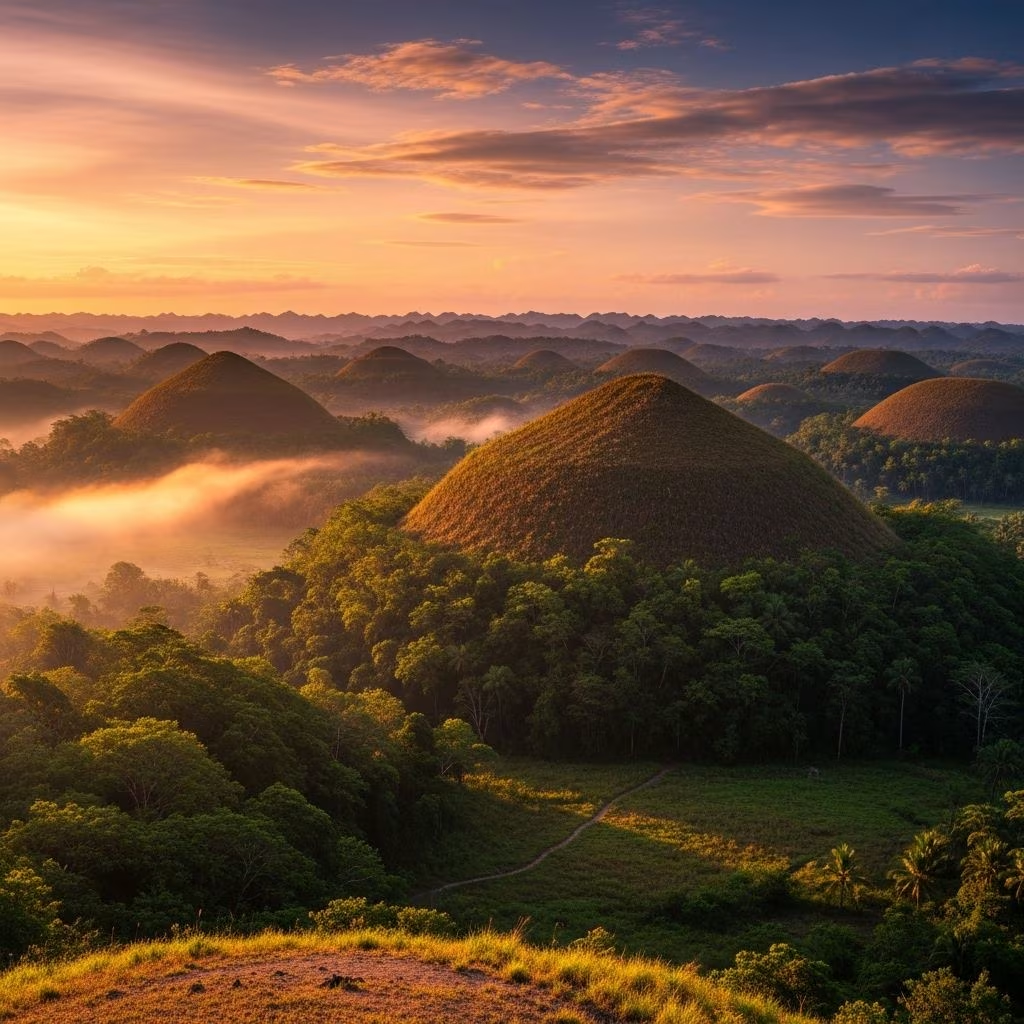
The Chocolate Hills stand as one of the Philippines’ most captivating natural landmarks, drawing adventurers and nature lovers to Bohol Island. These symmetrical, grass-covered mounds, numbering between 1,260 and 1,776, create a surreal landscape that shifts dramatically with the seasons—from lush green in the wet months to a rich chocolate brown during the dry period, inspiring their whimsical name.
At the heart of Bohol’s central region, the Chocolate Hills emerged through millions of years of geological processes. Primarily composed of limestone, these dome-like structures formed from ancient coral reefs uplifted by tectonic forces. During the late Miocene to early Pliocene epochs, marine deposits accumulated in what was once a shallow sea. Subsequent tectonic activity along the Philippine Mobile Belt elevated these layers above sea level.
Rainwater and erosion then sculpted the soft limestone into the uniform cones we see today, a phenomenon known as karst topography. This process created mogotes—steep-sided hills typical of tropical karst regions, riddled with underground caves and springs. Sizes range from 30 to 50 meters high, with the tallest reaching 120 meters, covering over 50 square kilometers across Carmen, Batuan, and Sagbayan towns.
Scientific consensus attributes their formation to a combination of uplift and dissolution by acidic rainwater, dating back to the onset of the last Ice Age around 2.6 million years ago. While exact counts vary, surveys confirm at least 1,268 individual hills, emphasizing their vast scale and uniformity.
The hills’ signature color change defines their allure. In the rainy season (June to November), verdant grass blankets the mounds, blending them into a vibrant green carpet. Come dry season (December to May), lack of moisture turns the vegetation a deep brown, resembling giant Hershey’s Kisses scattered across the terrain.
This seasonal shift not only enhances visual drama but also symbolizes Bohol’s tropical climate resilience.
Beyond science, the Chocolate Hills fuel rich folklore. One popular tale recounts Arogo, a giant warrior, who threw mud balls at rival Nimbo during a cataclysmic battle. Exhausted, they made peace, leaving the projectiles to petrify into hills. Another story features giant children baking mud pies under coconut shells, which hardened into the landscape.
These myths reflect local ingenuity in explaining the unexplainable before modern geology. Today, they enrich guided tours, connecting visitors to Boholano heritage. The formation graces the provincial flag and seal, underscoring its role as a symbol of natural abundance.
Two key sites dominate Chocolate Hills tourism: the government-run Chocolate Hills Complex in Carmen and Sagbayan Peak.
| Site | Location | Highlights | Distance from Tagbilaran |
|---|---|---|---|
| Chocolate Hills Complex | Carmen | Observation deck, 360° views, restaurant, souvenir shops | 55 km |
| Sagbayan Peak | Sagbayan | Panoramic vistas, fewer crowds, adventure activities | ~50 km |
The Complex features a 210-step staircase to viewpoints, man-made forest trails, and facilities for all ages. Sagbayan offers ziplines and ATV rides amid the hills. Entry fees are modest (around PHP 50-100), with tricycles or vans from Tagbilaran costing PHP 500-1000 round-trip.
Practical Tips:
Recognized as the Philippines’ third National Geological Monument, the Chocolate Hills gained protection under Republic Act No. 11038 in 2018, expanding the National Integrated Protected Areas System. In 2006, the DENR nominated it for UNESCO World Heritage status under natural criteria (vii) for aesthetic value and (viii) for geological importance, remaining on the tentative list.
Yet, tourism pressures mount. A 2024 resort controversy highlighted risks to fragile ecosystems, prompting public backlash and stricter enforcement. Balancing thousands of annual visitors with preservation remains critical, with guidelines limiting development on hilltops.
Fly into Tagbilaran Airport (Bohol-Panglao International) from Manila (1-hour flight) or Cebu. From there, vans, buses, or private transfers reach the hills in 1-1.5 hours. Ferries from Cebu City add scenic options.
Accommodations range from resorts near Panglao beaches to eco-lodges in Carmen. Budget PHP 2000-5000/day including meals and transport.
This UNESCO tentative site transcends typical scenery, offering a blend of science, myth, and adventure. Photographers chase seasonal colors, hikers explore trails, families create memories. Amid Bohol’s beaches and rivers, it anchors the island’s reputation as a top Visayas destination.
Recent surges in sustainable tourism emphasize low-impact visits, ensuring future generations witness this phenomenon. Whether seeking Instagram perfection or geological insight, the Chocolate Hills deliver unparalleled wonder.
No, the name derives from the brown grass in dry season; they’re limestone cores covered in vegetation.
Dry season, especially March-May, for peak color transformation.
Yes, PHP 50 for locals, PHP 100 for foreigners at main sites.
Limited access; stick to viewpoints to protect the site. ATV/zipline options available at select spots.
Estimates range 1,260-1,776; no definitive count due to ongoing surveys.
Absolutely—greener, less crowded, with waterfalls enhancing the scene.
