

 Travel Essentials
 Travel Essentials

Explore the challenging Choquequirao trek in Peru: a 64km journey with steep descents, river crossings, and mystical ruins visited by few. Perfect for adventurers seeking solitude.
 Travel Essentials
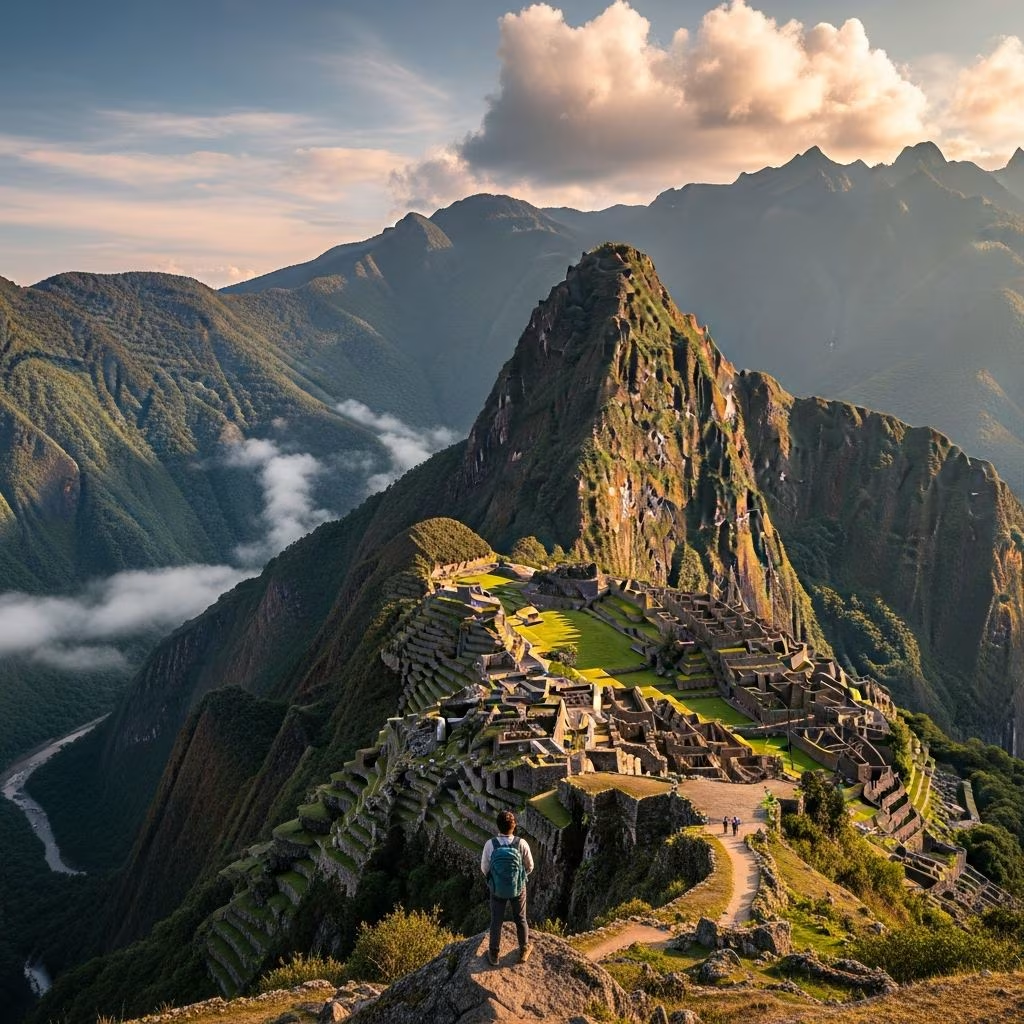
Deep in the Andes of southern Peru lies Choquequirao, an enigmatic Inca archaeological site often called the ‘sister’ of the iconic Machu Picchu. Unlike its more famous counterpart, which draws thousands daily, Choquequirao remains a sanctuary for dedicated hikers, welcoming only a fraction of visitors each year. This remote cradle of Incan history demands a multi-day trek through dramatic canyons, lush cloud forests, and high passes, offering unparalleled solitude and breathtaking vistas.
Choquequirao, perched at around 3,000 meters above sea level, spans terraces, plazas, and temples that mirror Machu Picchu’s grandeur but on a more intimate scale. Discovered in the 18th century but largely unexplored until recent decades, it features over 170 terraces adorned with symbolic llama figures carved into stone—visible only up close. The site’s isolation preserves its mystique, allowing trekkers to wander ancient paths without crowds.
For adventure seekers, the trek surpasses typical tourist trails. It combines physical challenge with cultural immersion, passing Andean villages, wildlife habitats, and diverse ecosystems from arid puna grasslands to humid river valleys. Spot Andean condors soaring overhead or glimpse spectacled bears near water sources, adding thrill to the journey.
The standard out-and-back Choquequirao trek covers approximately 64 kilometers (40 miles) over 4-5 days, starting and ending near Capuliyoc, a viewpoint accessible from Cachora village. Extended versions link to Machu Picchu, stretching 120-160 km across 8-10 days, incorporating high passes like Yanama at 4,627 meters.
| Route Type | Distance | Duration | Max Elevation | Difficulty |
|---|---|---|---|---|
| Standard Out-and-Back | 64 km | 4-5 days | 3,300 m | Challenging |
| Choquequirao to Machu Picchu | 120-160 km | 8-10 days | 4,627 m | Very Challenging |
This trek rates as hard due to relentless elevation changes: a 2,000-meter descent to the Apurimac River followed by an equally steep ascent. Switchbacks are dusty and loose from mule traffic, demanding strong knees and endurance. Even fit hikers find it strenuous, with daily hikes of 10-19 km lasting 8-10 hours.
Most trekkers opt for guided tours from Cusco, including transport, but independent hikes are feasible with permits.
Begin with a 4-5 hour drive from Cusco to Cachora (2,920 m), then hike 12 km along a dirt road to Capuliyoc (2,195 m). Here, the Andes unfold, revealing Choquequirao across the abyss. Descend sharply 2,000 meters via switchbacks to the Apurimac River at 1,500 m, passing Cocamasana campsite. End at Chiquisca (1,900 m) after 10-12 km. Expect heat in the canyon; hydration is critical.
The toughest day: 14 km and 8-9 hours. Cross the swaying bridge over Apurimac, then ascend 1,500 meters of steep switchbacks. Pause at Santa Rosa Baja (after 3 km, 700 m up) for water. Continue to Maranpata (2,900 m), a tent-friendly ridge with views. Push another 4 km to Choquequirao (3,035 m). Camp amid ruins or terraces.
Dedicate a full day to the site. Hike undulating paths to principal plazas, ritual areas, and the llama terraces. The complex covers 1,800 hectares, with only 30-40% excavated. Marvel at agricultural systems and astronomical alignments. Optional side trip to lower terraces. Stay overnight to catch sunrise over the canyon.
Retrace steps: descend to Chiquisca, cross Apurimac, climb to Capuliyoc (12-14 hours total). Mules assist gear, but hikers manage descents on foot. Arrive exhausted but triumphant; transport back to Cusco.
May to September marks the dry season, ideal for clear skies and stable trails. Temperatures range 5-20°C daytime, dropping at night. Rainy season (November-April) brings slippery paths, swollen rivers, and fog obscuring views—avoid unless experienced. Check forecasts; altitude affects microclimates.
Prepare for variable weather: layers for cold mornings, rain gear, sun protection. Mules carry main packs (up to 20 kg), so personal daypacks suffice.
Acclimatize in Cusco (3,400 m) for 2-3 days. Fitness: Train with hill repeats, stairs, loaded packs. Guides provide meals (Peruvian staples like quinoa soup, trout).
No Inca Trail permit needed, but entry ticket (70-150 PEN) required at Choquequirao. Book via Peru’s Ministry of Culture or agencies. Guides mandatory for groups; independent trekkers register at Capuliyoc. Campsites basic: tents, outhouses. Tours from Cusco cost $400-800 USD, including gear, food, mules.
Transport: Collectivos or shuttles to Cachora. Horses/mules available at trailhead (extra fee).
The trek traverses biodiversity hotspots: watch for vizcachas, hummingbirds, orchids. Respect Quechua communities in Cachora; learn phrases like ‘solpayki’ (thank you).
Leave No Trace: Pack out waste, stick to trails to prevent erosion. Support locals by buying crafts.
Yes, steeper elevation changes and fewer facilities make it more demanding physically.
Possible but not recommended; guides enhance safety and history insights.
Moderate; max 3,300 m on standard route. Acclimatize and hydrate.
Basic: water sources (boil/treat), toilets at main sites. No showers.
Extend to 8-day trek via Yanama Pass, ending at Hidroelectrica.
For less challenge, combine with Salkantay Trek. Or day-hike ruins via horseback (partial). Post-trek, relax in Cusco’s markets.
Choquequirao rewards the bold with timeless Inca legacy amid pristine nature—a trek etching memories forever.
