

 Travel Essentials
 Travel Essentials

Explore how Cinco de Mayo is truly celebrated in Mexico, focusing on Puebla's parades and traditions, distinct from U.S. festivities and Mexican Independence Day.
 Travel Essentials
Cinco de Mayo marks the commemoration of Mexico’s unexpected triumph over French invaders at the Battle of Puebla on May 5, 1862. While widely recognized in the United States as a vibrant cultural festival, in Mexico the day holds a more localized significance, primarily centered in Puebla with parades, historical reenactments, and community gatherings.
The origins of Cinco de Mayo trace back to a critical moment during Mexico’s turbulent 19th century. After financial struggles following independence, Mexico suspended debt payments to European powers, prompting France under Napoleon III to invade in 1861. Mexican President Benito Juárez rallied forces under General Ignacio Zaragoza, who led roughly 4,000 troops against a better-equipped French army of about 6,000 at Puebla. Against the odds, the Mexicans repelled the assault, boosting national morale though the war continued for years.
President Juárez declared May 5 a national observance day shortly after, but it never became a federal holiday. Instead, it evolved into a regional event, symbolizing resilience rather than full victory, as France later occupied Mexico until 1867. This distinction sets it apart from grander national holidays.
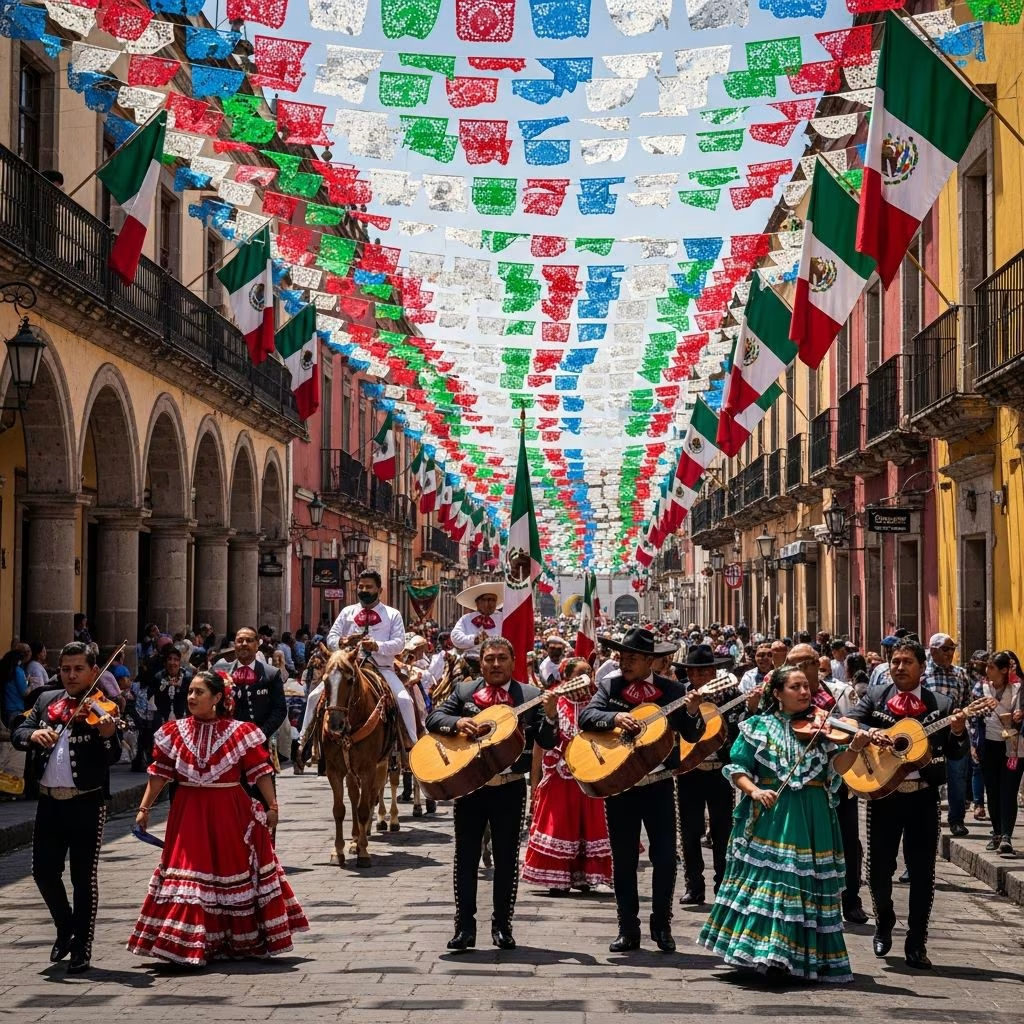
Puebla stands as the epicenter of Cinco de Mayo festivities in Mexico. The city hosts elaborate events that draw thousands, transforming historic streets into living history. Key activities include:
These events underscore Puebla’s pride in its heritage, with schools closing nationwide on May 5, though only Puebla and neighboring Veracruz treat it as a full public holiday.
No Cinco de Mayo gathering is complete without iconic dishes from Puebla. Food stalls and family meals feature:
During the Festival Internacional del Mole, chefs compete in mole variations, attracting food enthusiasts from across Mexico.
While Puebla dominates, other areas incorporate Cinco de Mayo modestly. In Veracruz, it’s a statutory holiday with local parades echoing Puebla’s style. Major cities like Mexico City might host smaller cultural shows, but the day largely passes without fanfare elsewhere. Families often enjoy casual barbecues or mariachi performances at home, emphasizing quiet reflection over spectacle.
This restraint contrasts sharply with the U.S., where the holiday amplifies into a nationwide party. Early celebrations began in California post-battle, evolving by the 1950s into broader Mexican-American pride events in places like Los Angeles and Denver.
A frequent mix-up positions Cinco de Mayo as Mexico’s Independence Day, but that honor belongs to September 16, commemorating Father Miguel Hidalgo’s 1810 Grito de Dolores cry against Spanish rule. Independence Day features massive fireworks, el grito reenactments nationwide, and all-night fiestas—far grander in scale.
| Aspect | Cinco de Mayo (May 5) | Mexican Independence Day (Sept 15-16) |
|---|---|---|
| Historical Event | Battle of Puebla victory over France (1862) | Grito de Dolores start of independence war (1810) |
| National Status | Not federal; regional holiday | Major federal holiday |
| Main Celebrations | Parades, reenactments in Puebla | Fireworks, gritos, parades nationwide |
| Cultural Focus | Regional pride, military history | National unity, independence |
Music and dance infuse the day with energy. Mariachi ensembles, clad in charro suits, belt out corridos recounting the battle. Baile folklórico dancers in colorful skirts twirl to brass-heavy rhythms, preserving indigenous and mestizo traditions. Lucha libre exhibitions sometimes cap events, adding theatrical flair.
Puebla’s Festival Internacional de Puebla expands this with global artists, blending local talent and international acts for a week-long cultural immersion.
For travelers, Puebla offers prime viewing. Book accommodations early near the Zócalo, the main square. Expect crowds; arrive by April 30 for pre-festivities. Public transport runs extended hours, but walking historic routes enhances immersion. Respect local customs—family-oriented events prioritize community over excess.
Combine with nearby sites: explore Puebla’s baroque cathedral or Talavera tile workshops. Day trips to Cholula’s pyramid add historical depth.
Though understated in most of Mexico, Cinco de Mayo’s U.S. popularity—fueled by immigrant communities from Puebla—has looped back, inspiring more media coverage at home. Nielsen data notes massive beer sales in the U.S., highlighting commercial aspects absent in Mexico. Still, Mexican celebrations retain authenticity, focusing on history over commercialization.
No, it’s not a nationwide statutory holiday except in Puebla and Veracruz. Schools close, but most work continues.
A 1862 clash where Mexican forces under General Zaragoza defeated French troops, symbolizing resistance.
U.S. events emphasize general Mexican culture with parades, food, and parties, less focused on the specific battle.
Mole poblano, tacos, guacamole, and churros dominate menus.
September 15-16, with el grito reenactments and fireworks.
Cinco de Mayo in Mexico invites reflection on underdog victories and cultural endurance. Visitors witness genuine passion in Puebla’s streets, far from stereotypes. As global interest grows, these traditions endure, safeguarding history’s lessons.
