

 Travel Essentials
 Travel Essentials

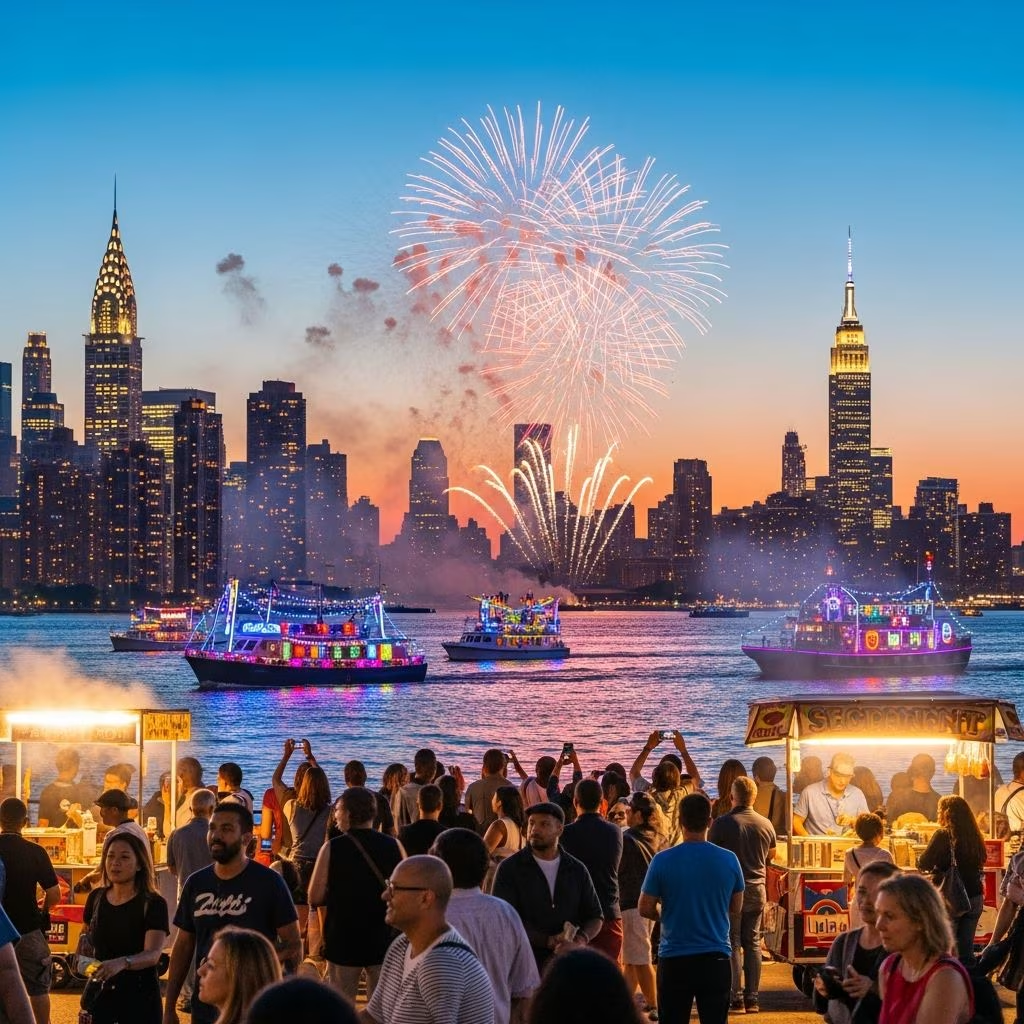
Explore City of Water Day, an annual regional celebration featuring free waterfront activities, environmental education, and climate resilience initiatives across NYC.
 Travel Essentials
New York City’s relationship with water defines its identity, geography, and future. Every year, communities across the region come together to honor and celebrate this vital connection through an expansive, region-wide initiative that transforms waterfronts into gathering spaces for education, recreation, and environmental stewardship. This annual celebration brings together dozens of organizations, volunteers, and residents in a coordinated effort to highlight the importance of accessible, resilient waterways throughout the metropolitan area.
The waterfront celebration has evolved into a significant regional initiative that extends far beyond New York City proper. Organized collaboratively by prominent environmental and community organizations, this day-long festival encompasses activities across all five boroughs, Westchester and Rockland counties, and northern New Jersey. The initiative operates with a dual mission: to provide accessible recreational opportunities for community members and to advance climate resilience and environmental restoration goals that affect the entire New York-New Jersey Harbor ecosystem.
What distinguishes this festival from typical urban events is its explicit focus on environmental outcomes. Rather than serving primarily as entertainment, the celebration functions as a platform for raising awareness about watershed health, harbor restoration, and the practical steps communities can take to build resilience against climate-related challenges. The festival theme emphasizes collective action, recognizing that addressing water-related environmental challenges requires coordinated effort across municipal boundaries and community groups.
The festival offers an extraordinarily diverse array of activities designed to accommodate different interests, age groups, and physical abilities. Participants can engage with water in multiple ways, from active recreation to contemplative artistic experiences.
Direct access to waterways represents one of the festival’s most popular offerings. Free and low-cost boating opportunities allow residents to experience their city’s marine environment firsthand. Kayaking programs, particularly those offered as free or subsidized activities, introduce families to paddling while building comfort and confidence on the water. Rowing opportunities provide more structured water access for those seeking instruction and community connection through athletic activity.
Tugboat and schooner experiences offer unique perspectives on the harbor. The W.O. Decker, a historic wooden tugboat built in New York, provides 75-minute harbor cruises that showcase landmarks including the Statue of Liberty, Ellis Island, and Governors Island. These experiences combine recreation with maritime history education, allowing participants to understand how water commerce and transportation shaped the city’s development.
Shoreline and waterway cleanup initiatives represent the festival’s environmental action component. Organized coastal cleanups mobilize volunteers to remove debris from beaches and waterfront areas, directly improving habitat quality and reducing pollution. These hands-on activities demonstrate tangible ways individuals can contribute to environmental improvement while learning about marine ecosystems and pollution sources.
Interactive educational experiences complement cleanup efforts. Oyster restoration projects, for example, allow participants to learn how native species recovery supports both ecological health and storm resilience. Educational stations provide information about watershed management, harbor ecology, and climate adaptation strategies that communities are implementing throughout the region.
The festival incorporates substantial artistic programming that interprets water through multiple creative lenses. Sound installations and performances create immersive experiences that encourage contemplation of human relationships with water. Interactive sculptures explore themes including water scarcity, environmental history, and cultural connections to maritime traditions.
Live music performances situated on waterfront piers create opportunities for community gathering while addressing historical and contemporary themes related to water and environmental justice. These cultural elements elevate the festival beyond practical environmental work, inviting participants to engage emotionally and intellectually with waterfront issues.
The festival’s regional scope ensures that communities throughout the metropolitan area can participate without requiring extensive travel. Events are distributed across Manhattan, the Bronx, Staten Island, Brooklyn, Queens, Westchester, Rockland, and New Jersey locations.
Each geographic area hosts events tailored to local conditions and community interests. Waterfront parks, public piers, nature centers, and community facilities serve as venue anchors. Organizations already engaged with specific waterfront areas—including neighborhood park groups, environmental nonprofits, and community centers—coordinate events that reflect local priorities and ecological conditions.
This distributed model democratizes waterfront access by ensuring that participation doesn’t require travel to Manhattan or other central locations. Brooklyn and Bronx residents can celebrate water connections through programming in their own communities. Similarly, families in Westchester and northern New Jersey can participate in regionally coordinated celebrations without traveling into New York City.
Beyond recreation, the festival prioritizes environmental education that builds understanding of critical water-related challenges and solutions.
Organizing partners explicitly champion climate-resilient harbor infrastructure and adaptive management practices. Programming highlights how climate change affects harbor ecosystems, waterfront communities, and public infrastructure. Interactive displays and workshops explain concrete adaptation strategies, from nature-based solutions like oyster restoration to engineered infrastructure improvements.
Educational initiatives help residents understand how personal choices and community advocacy support climate resilience. By connecting recreational activities to environmental outcomes, the festival demonstrates that water enjoyment and environmental protection are interconnected rather than competing priorities.
Workshops and interactive experiences explain how urban water systems function, from stormwater management to watershed dynamics. Participants learn about the connections between upstream activities and harbor water quality, building systemic understanding of water challenges. This educational approach encourages participants to think beyond immediate waterfront areas to understand regional water systems.
The festival operates through coordinated partnerships among government agencies, nonprofit organizations, and community groups. The Waterfront Alliance, a coalition of organizations dedicated to waterfront sustainability, provides organizational leadership. The New York-New Jersey Harbor & Estuary Program, a government initiative, coordinates environmental and resilience messaging.
This multi-stakeholder approach brings together diverse expertise and resources. Government agencies provide permits and infrastructure support. Environmental organizations contribute scientific expertise and volunteer coordination. Community groups ensure that programming reflects neighborhood priorities and serves residents who might not otherwise engage with formal environmental initiatives.
Planning festival participation requires minimal advance preparation. Most events operate on a walk-up basis without registration requirements, though specific activities may have capacity limits or registration procedures detailed in individual event descriptions.
The festival typically occurs on a designated Saturday in July, announced several months in advance. Comprehensive event listings become available in mid-June through the official festival website and partner organization communications. Participants can browse events by borough and activity type to identify programming matching their interests and location preferences.
Practical considerations for attendees include appropriate clothing for outdoor water activities, particularly for kayaking or other water-based experiences. Families with children should identify age-appropriate activities, as some programming serves all ages while specialized activities like structured rowing may have age minimums. Planning transportation to waterfront venues ensures convenient access, particularly for those relying on public transit.
Beyond individual participation, the festival generates measurable environmental impacts. Volunteer cleanup efforts remove substantial quantities of pollution from waterfront areas. Educational programming reaches hundreds or thousands of residents, building constituency for waterfront protection and restoration policies.
The festival strengthens networks among environmental and community organizations, facilitating ongoing collaboration beyond the single celebration day. Relationships formed through festival participation often lead to sustained involvement in waterfront restoration projects and advocacy for water-related policy improvements.
By offering free or low-cost programming across diverse neighborhoods, the festival democratizes waterfront access that not all residents can otherwise afford. Free museum admission, complimentary kayaking, and subsidized boat tours eliminate financial barriers to water recreation. This commitment to accessibility recognizes that equitable water access supports both public health and environmental justice.
Programming diversity—ranging from active recreation to contemplative artistic experiences—ensures that participants with varying physical abilities and interests can find meaningful engagement. Families, seniors, athletes, artists, and environmentally motivated individuals all find activities suited to their preferences.
The annual celebration functions as more than a single day’s entertainment. It serves as a focal point for year-round waterfront stewardship efforts, building public engagement with water management and environmental restoration. As cities face intensifying climate challenges including sea-level rise and extreme weather events, public understanding of and commitment to water-related resilience becomes increasingly critical. The festival positions community engagement and environmental stewardship as celebrations of city life rather than burdensome obligations.
The festival’s success in drawing thousands of participants and coordinating dozens of organizations demonstrates strong public interest in waterfront access and environmental responsibility. This demonstrated commitment provides political foundation for continued investment in waterfront restoration, public water access, and climate adaptation infrastructure.
