

 Travel Essentials
 Travel Essentials

Journey through Colorado's Mountains & Mesas: hike Grand Mesa's trails, explore Mesa Verde's cliff dwellings, raft San Juan rivers, and savor local wines in a land of peaks, plateaus, and history.
 Travel Essentials
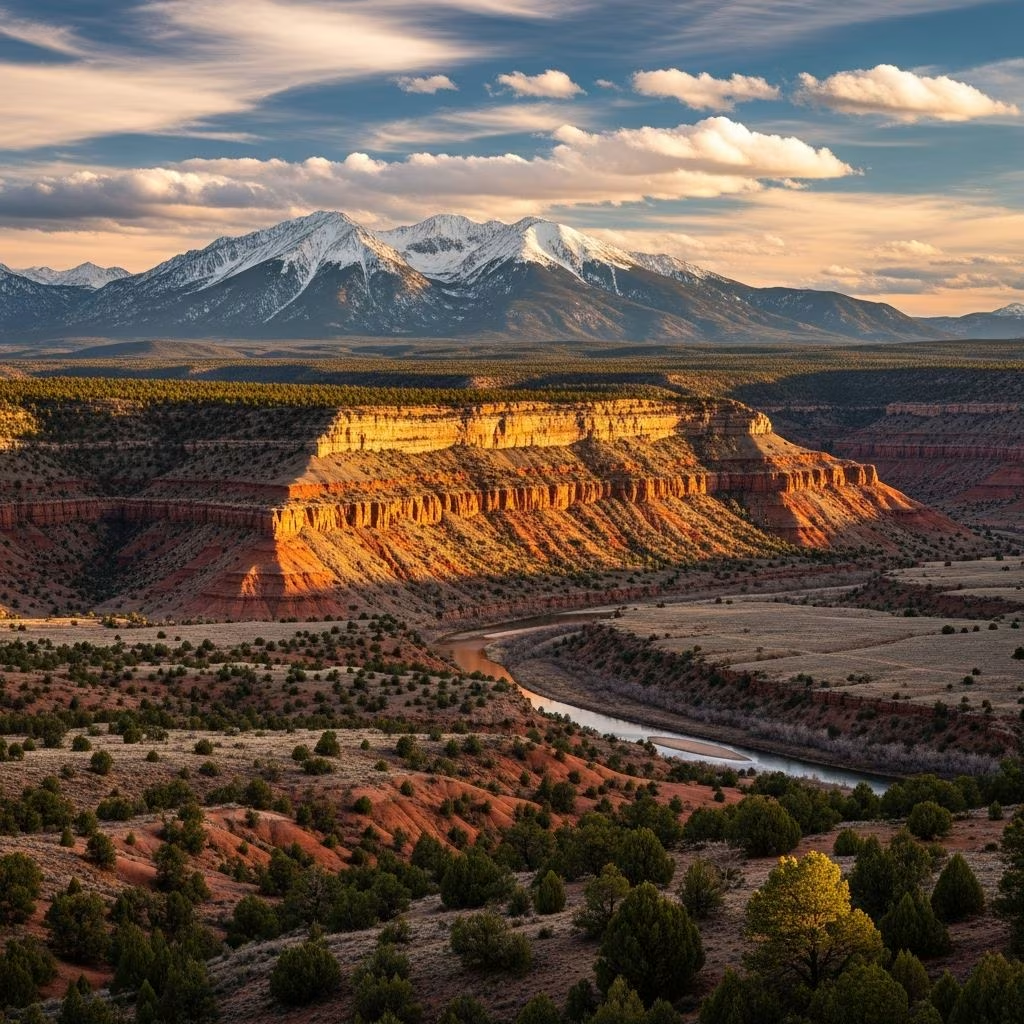
Colorado’s Mountains & Mesas region captivates with its towering peaks, expansive flat-topped plateaus, ancient archaeological treasures, and vibrant farm communities. This diverse area blends rugged outdoor adventures with cultural immersion, offering endless opportunities for hikers, history buffs, and nature lovers alike. Spanning from the jagged San Juan Mountains to the vast Grand Mesa, the region promises breathtaking scenery and authentic Western Slope experiences.
Grand Mesa stands as the world’s largest flat-top mountain, a colossal plateau rising over 10,000 feet above sea level and covering more than 500 square miles. Formed millions of years ago through volcanic activity, its resilient basalt cap resisted erosion while softer surrounding rocks wore away, creating this iconic tabletop landmark dotted with over 300 lakes amid aspen and pine forests.
Wildlife thrives here, with moose, deer, elk, and birds filling the lush ecosystems. The mesa’s unique geology makes it a prime spot for year-round recreation, from summer fishing and boating to winter snowshoeing and cross-country skiing.
The Grand Mesa Scenic and Historic Byway offers a 63-mile journey through national forest lands, showcasing alpine groves, sparkling lakes, and geological wonders. This drive takes about two hours end-to-end, winding from lower valleys up to the mesa’s summit with pullouts for photos and wildlife spotting.
Beyond Grand Mesa, the region’s byways connect to broader adventures. The Trail of the Ancients Scenic Byway stretches 116 miles, linking Mesa Verde National Park, Hovenweep National Monument, Ute Mountain Tribal Park, and the Four Corners Monument where Colorado, Utah, New Mexico, and Arizona converge.
| Byway Name | Length | Highlights |
|---|---|---|
| Grand Mesa Scenic Byway | 63 miles | Lakes, forests, wildlife vistas |
| Trail of the Ancients | 116 miles | Ancient ruins, petroglyphs, Four Corners |
| Million Dollar Highway (nearby) | 25 miles | San Juan peaks, mining towns |
Grand Mesa boasts a network of trails catering to all skill levels. The Mesa Top Trail is a moderate 2.4-mile loop with sweeping views of Grand Valley and the Book Cliffs, featuring some steep, rocky sections ideal for intermediate hikers.
For a full-day challenge, the Crag Crest Trail forms an 11-mile loop atop the mesa, rewarding with panoramic vistas—pack water, snacks, and leashes for dogs. Other favorites include Lake Island Trail (4.5-mile moderate loop around a tranquil lake), Land’s End Trail (7-mile out-and-back with valley overlooks), and family-friendly Eggnog Trail (3.5 miles with flora education).
In the San Juan Mountains, trails lead to alpine tundra, while Vega State Park nearby offers reservoir views and varied paths.
The Mountains & Mesas region pulses with history from Ancestral Puebloans. Mesa Verde National Park preserves cliff dwellings built into alcoves, connected by the Trail of the Ancients. Hovenweep features mysterious stone towers, and Ute Mountain Tribal Park displays pictographs and petroglyphs.
Nearby towns like Telluride, Durango, Ouray, and Montrose echo Victorian mining eras, with preserved architecture and museums. These sites offer guided tours revealing how ancient peoples adapted to the harsh landscape.
With more lakes and rivers than anywhere else in Colorado, the region excels in aquatic pursuits. Grand Mesa’s 300 lakes teem with trout, perfect for fishing or boating. Vega Reservoir in the state park supports kayaking and paddleboarding.
Raft the Animas or San Juan Rivers for thrilling whitewater near Durango. Summer brings calm waters for scenic floats, while reservoirs host boating marinas.
Winter transforms the mesas and mountains into a powder paradise. Powderhorn Ski Resort at Mesa’s base offers slopes for all levels, plus terrain parks. Grand Mesa hosts snowmobiling, snowshoeing, and cross-country skiing on groomed trails.
San Juan areas like Telluride provide world-class skiing amid deep snowpacks, with backcountry options for experts.
Towns infuse the region with character: Grand Junction anchors with Colorado National Monument’s red-rock spires and Book Cliffs. Palisade shines for wine grapes and peaches; Delta, Paonia, and Olathe yield corn, cherries, and produce fueling farm-to-table scenes.
Mesa, an unincorporated gem at 5,636 feet, features essentials like a post office, eateries, and access to Powderhorn Resort. These spots slow life’s pace while amplifying adventure.
Access via Grand Junction Airport, then rent a car for byways. Summers suit hiking and watersports; winters call for snow sports. Camp at Grand Mesa sites or Vega State Park for starry nights.
Pack layers for elevation changes, bear spray for wildlife areas, and check NPS sites for park fees.
It’s the world’s largest flat-top mountain, with 500+ square miles, 300 lakes, and volcanic basalt origins from 9-10 million years ago.
Yes in summer/fall; winter may close sections due to snow—check conditions.
Summer for hikes, fall for aspens, winter for snow sports, spring for wildflowers.
Yes, leashed on most trails like Crag Crest.
Mesa Verde cliff dwellings, Hovenweep towers, Ute Mountain petroglyphs via Trail of the Ancients.
