

 Travel Essentials
 Travel Essentials

Colorado voters narrowly approved wolf reintroduction in 2020, setting up a science-based plan to restore native predators while balancing ranching concerns.
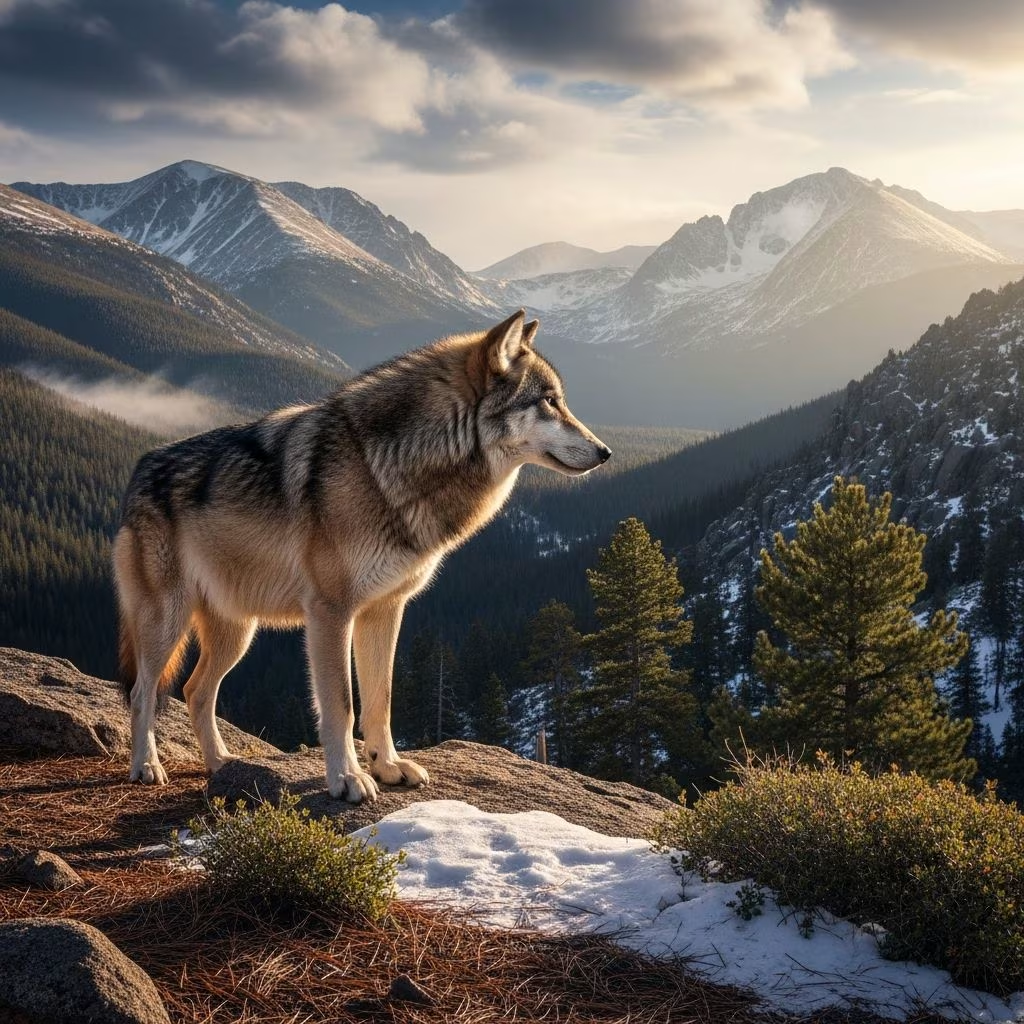 Travel Essentials
Colorado made history in 2020 when voters narrowly approved the reintroduction of gray wolves west of the Continental Divide, marking the first time Americans directly mandated a state agency to restore a native predator through a ballot measure. This decision, driven by Proposition 114, has reshaped wildlife management, sparking debates on ecology, ranching, and public values.
In November 2020, Proposition 114 passed with 50.9% of the vote, a margin of just 60,000 ballots out of nearly 3 million cast. This citizen-initiated measure instructed the Colorado Parks and Wildlife (CPW) Commission to develop a science-based plan for reintroducing gray wolves (Canis lupus) to about 17 million acres of public lands in western Colorado by December 2023.
The campaign highlighted wolves’ extirpation from the state by the 1940s due to government-backed eradication efforts. Proponents argued for ecological restoration, while opponents, mainly ranchers and hunters, raised concerns over livestock losses and impacts on game species like elk.
The proposition outlines clear directives for CPW:
Following the vote, CPW swiftly launched the planning process, releasing wolves in late 2023 as mandated.
Research from Colorado State University reveals key drivers behind the close vote. Support correlated strongly with votes for President Joe Biden, with younger, urban residents favoring reintroduction more than rural or older demographics. Areas with high elk hunter density and proximity to wolf sightings showed opposition, particularly on the Western Slope.
Post-election surveys indicated online polls overstated support, as media coverage and anti-wolf campaigns shifted perceptions closer to election day.
| Demographic Group | Support Level | Key Factors |
|---|---|---|
| Urban/Young Voters | High | Environmental values, Biden voters |
| Rural/Western Slope | Low | Ranching interests, elk hunting |
| Overall | 50.9% | Narrow partisan divide |
By summer 2025, a Magellan Strategies poll of 1,136 registered voters found 53% support for the program, up slightly from 2020’s margin, with 37% opposed and 10% unsure. The ±2.91% margin suggests stable backing.
Partisan gaps persist: 74% of Democrats approve, 30% of Republicans, and 53% of independents. Harris voters in 2024 showed stronger support than Trump voters. Notably, 91% of respondents felt informed about the issue.
Gray wolves serve as apex predators, regulating prey populations like elk and deer, which prevents overbrowsing and promotes biodiversity. In Colorado, their return could mirror Yellowstone’s success, where wolf reintroduction improved riparian habitats, beaver populations, and overall ecosystem health.
CPW’s plan emphasizes science-driven management, including monitoring packs, habitat suitability, and connectivity to Wyoming’s wolf populations for genetic diversity.
Ranchers face real risks, with compensation and tools like range riders, fladry fencing, and guard dogs provided. Verified losses trigger payments from a dedicated fund. Hunters worry about competition for elk, though studies suggest wolves enhance herd health by culling weaker animals.
Western Slope communities, targeted for releases, express ongoing concerns, reflected in lower local support.
Since initial releases in Grand County, CPW has tracked wolves via collars, confirming pack formation and dispersal. Management includes lethal control for problem wolves and collaboration with federal agencies. Public input continues through advisory groups.
Success hinges on adaptive strategies. Lessons from other states inform Colorado’s approach: robust compensation, community engagement, and transparent science build trust. Long-term, wolves could bolster tourism and symbolize restoration.
West of the Continental Divide on public lands, starting in Grand County.
50.9% yes, a 1.9% margin.
Yes, at 53% in 2025 polls.
Compensation for losses and non-lethal prevention funding.
To restore ecological balance as a native species.
As wolf numbers grow, Colorado’s model could influence other states. Ongoing monitoring and dialogue will determine if voter will translates to sustainable coexistence.
