

 Travel Essentials
 Travel Essentials

Uncover the Colosseum's underground tunnels, ancient engineering feats, and latest restorations revealing secrets of gladiatorial spectacles and imperial grandeur.
 Travel Essentials
The Colosseum stands as one of the most enduring symbols of ancient Rome, drawing millions of visitors each year to marvel at its massive scale and storied past. Built in the late first century AD, this elliptical amphitheater once hosted grand spectacles that captivated emperors, citizens, and slaves alike. Beyond its imposing exterior, the Colosseum harbors intricate secrets—from its subterranean labyrinth to cutting-edge restoration efforts—that offer profound insights into Roman ingenuity and society. Recent archaeological work has peeled back layers of history, exposing hidden corridors, advanced machinery, and architectural brilliance preserved for nearly 2,000 years.
Constructed between 70 and 80 AD under Emperors Vespasian and Titus, the Colosseum exemplifies Roman engineering prowess. Spanning 189 meters long and 156 meters wide, it could seat up to 50,000 spectators on four tiered levels. The structure’s elliptical shape, a departure from earlier circular designs, maximized visibility and accommodated complex stage mechanics.
Key to its design were the innovative use of arches, vaults, and Roman concrete—a mixture of lime, volcanic ash, and aggregate that provided exceptional durability. Workers erected the arena in just a decade, employing thousands of laborers and slaves captured during the Jewish Wars. Travertine stone from nearby quarries formed the outer facade, while tuff and brick-faced concrete filled the interior, creating a robust framework that withstands earthquakes and weathering to this day.
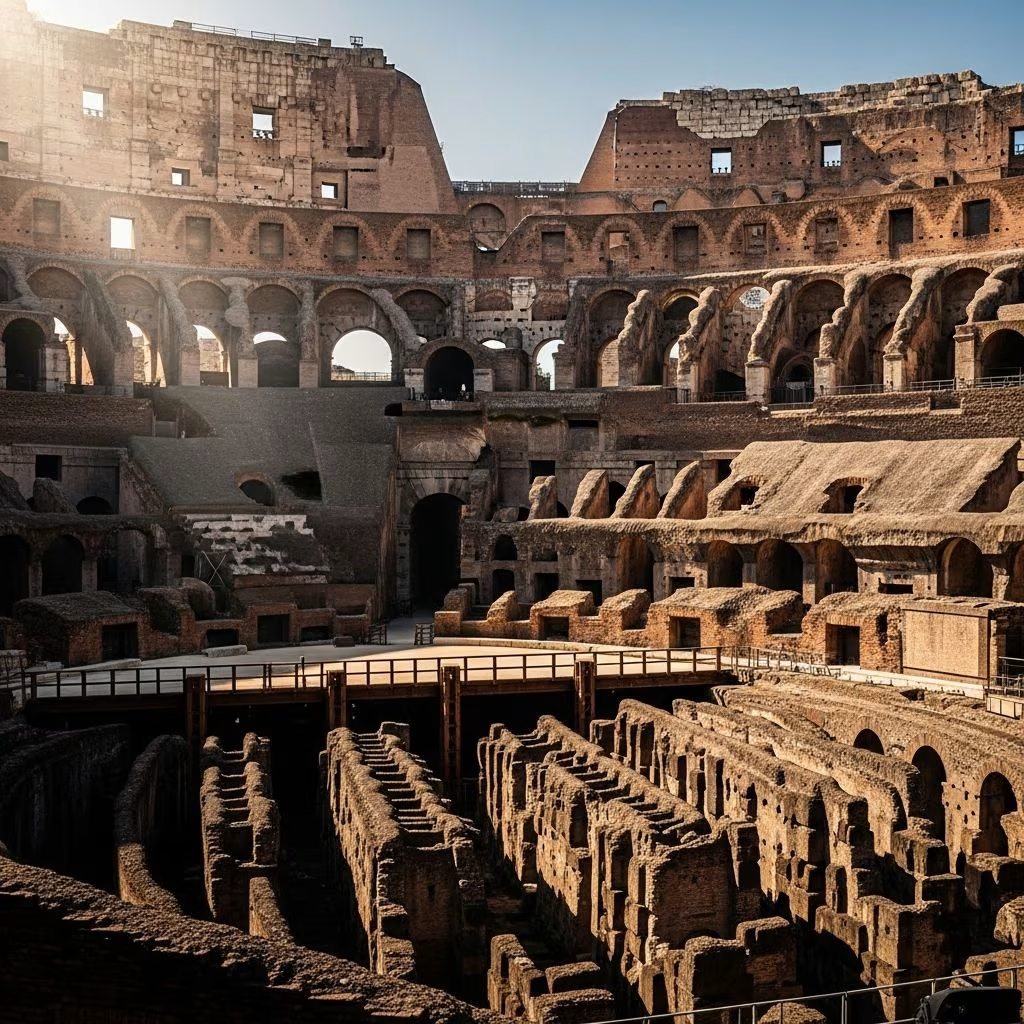
Beneath the Colosseum’s sandy arena floor lies the hypogeum, a maze of tunnels, cages, and elevators that orchestrated the bloodiest shows of antiquity. This underground network, deciphered by archaeologists like Heinz-Jürgen Beste of the German Archaeological Institute, resembled a vast stage beneath a theater. Following a $1.4 million renovation, it opened to the public, revealing a labyrinth of concentric walls, chambers, and shafts.
The hypogeum facilitated dramatic entrances for gladiators, wild beasts, and scenic props. Over 36 trapdoors dotted the arena floor, connected to a system of pulleys, winches, and ramps powered by manpower and counterweights. Animals from across the empire—lions, elephants, tigers—were hoisted into the fray via these mechanisms, creating illusions of sudden appearances.
| Component | Function | Modern Insight |
|---|---|---|
| Tunnels & Corridors | Transported fighters and beasts | Recently restored for visitor access |
| Elevators (Capstans) | Lifted animals to arena | Reconstructed via skeletal remains |
| Cages & Pens | Held gladiators pre-battle | Now viewable in guided tours |
Like a massive ship, the hypogeum required meticulous coordination. Ropes and wooden frameworks, stored compactly between shows, enabled rapid setups for naval battles (naumachiae) by flooding the arena—a feat demanding precise drainage.
Gladiatorial contests weren’t mere brutality; they were propaganda tools reinforcing imperial power. Fighters, often slaves or prisoners, trained in ludus magnus schools adjacent to the Colosseum. They entered through the Porta Sanavivaria (Gate of Life) for victors and exited via the Porta Libitinaria (Gate of Death) for the fallen.
Spectacles varied: venationes pitted hunters against exotic animals, while re-enactments of myths featured condemned criminals as gods or monsters. Emperors like Titus inaugurated the venue with 100 days of games, slaughtering 5,000 beasts. Hot days brought refreshing sprays of scented water, heightening the sensory overload.
Ongoing restorations by the Parco Archeologico del Colosseo have unearthed buried columns, arches, and walkways, restoring the arena’s original footprint. Conservators clean centuries of grime using marble powder stucco and innovative waterproofing, monitored by sensors for structural integrity.
Recent projects expose foundations and entryways once reserved for elites, allowing tourists to tread ancient paths. Underground areas, long inaccessible, now showcase preserved tunnels used by gladiators and beasts.
Augmented and virtual reality tools transport visitors to the Colosseum’s heyday. AR apps overlay virtual crowds and re-enactments on your phone, while VR headsets simulate arena battles. These innovations, paired with guided tours, make history tangible—from hypogeum shadows to packed stands roaring approval.
Interactive exhibits detail engineering, like the concrete’s self-healing properties from volcanic pozzolana, explaining the structure’s endurance.
To fully appreciate these secrets, book skip-the-line tickets with hypogeum access (€24+). Opt for early morning slots to avoid crowds. Wear comfortable shoes for uneven terrain, and consider audio guides for deeper context.
The hypogeum is the Colosseum’s underground complex of tunnels and lifts used for staging gladiatorial shows.
Yes, special tours provide access post-restoration.
Advanced arches, concrete, and massive workforce enabled completion in 10 years.
No, modern visits focus on history via VR reconstructions.
Exposed passageways, columns, and tech-enhanced exhibits.
Restoration battles pollution, tourism wear, and climate change. Laser scanning and 3D modeling ensure precise interventions, safeguarding this UNESCO site. Visitor limits and sustainable practices balance access with conservation.
