

 Travel Essentials
 Travel Essentials

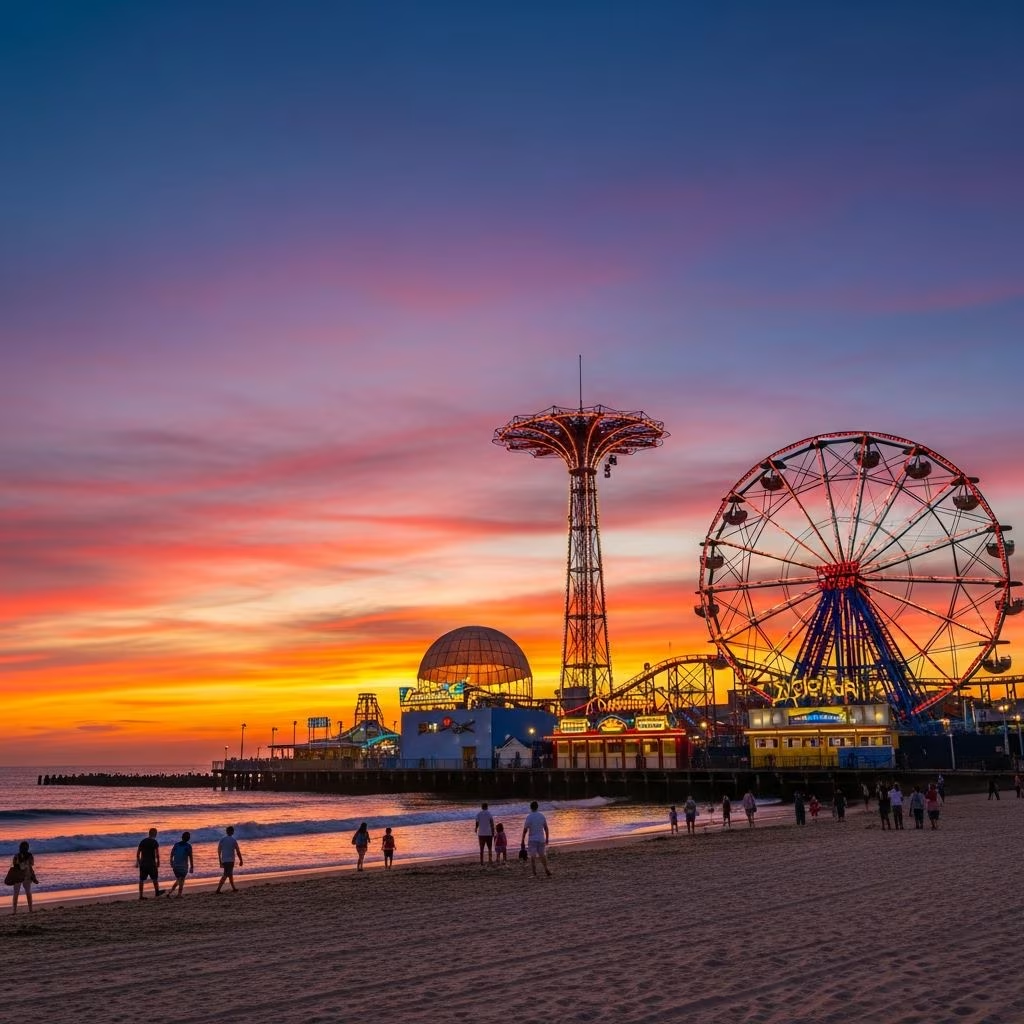
Explore Coney Island's evolution from a quiet beach to a bustling amusement hub, its iconic attractions, and modern-day allure as Brooklyn's ultimate escape.
 Travel Essentials
Coney Island stands as a legendary stretch of Brooklyn coastline that has captivated generations with its blend of thrill-seeking rides, salty ocean breezes, and unpretentious fun. Once a simple sandy outpost, it transformed into America’s first major amusement destination, drawing millions to its electric-lit parks and democratic revelry.
The story of Coney Island begins long before the roar of roller coasters filled the air. In the 18th century, this narrow barrier island off Brooklyn’s southern shore served as a serene retreat for New Yorkers escaping urban grit. Named after the Dutch word for rabbit—’konijn’—due to its hopping wildlife, the area was initially prized for its beaches and clam beds, where Native Canarsie people gathered shells for trade.
European explorers like Henry Hudson glimpsed its shores in 1609, but it wasn’t until the mid-19th century that accessibility boomed. A daily ferry service launched in 1844, followed by train lines in the 1870s, turning isolation into invitation. What started as a handful of inns and bathhouses evolved into a summer haven for immigrants and workers seeking relief from tenement heat. By the 1880s, oddities like the Elephant Hotel—a 122-foot wooden pachyderm brothel and curiosity—greeted arriving ships, symbolizing the wild promise of the New World.
At the turn of the 20th century, Coney Island exploded into a spectacle of innovation and competition. Three massive theme parks—Steeplechase Park, Luna Park, and Dreamland—dominated the landscape from 1904 to 1911, each vying for crowds with copied rides, poached performers, and escalating extravagance. Luna Park, illuminated by a million electric bulbs, offered otherworldly tours via ‘Trip to the Moon’ rockets, while Dreamland boasted fire shows and a mini Niagara Falls.
Steeplechase, dubbed the ‘Funny Place,’ pioneered the mechanical conveyor-belt roller coaster, hauling cars uphill for the first time in U.S. history. These parks democratized leisure, erasing class barriers as tycoons mingled with laborers under shared thrills. Crowds swelled to millions annually, fostering a cultural shift toward outgoing, inclusive entertainment. Carousels spun with exotic flair, freak shows amazed, and aquariums enthralled, all against a backdrop of swirling humanity.
| Park | Opened | Signature Attractions | Fate |
|---|---|---|---|
| Steeplechase Park | 1897 | Parachute Jump, mechanical coaster | Closed 1964 |
| Luna Park | 1903 | Electric towers, dark rides | Fire 1944 |
| Dreamland | 1904 | Fire simulations, lagoons | Fire 1911 |
Beyond rides, Coney Island reshaped American culture. It embodied the Progressive Era’s wholesome fun, rebranding a once-seedy ‘Sodom by the Sea’ into family paradise. Immigrants found escapism from factory drudgery, women and children joined the workforce-freed masses in boundary-breaking merriment. Artists captured the chaos: paintings depicted teeming crowds as the true stars, inspiring global creatives.
The site’s dreamlike allure influenced European avant-garde, with its architecture fueling surreal films and subconscious explorations. Fortune magazine’s 1938 ‘To Heaven by Subway’ epitomized its mass appeal as the ‘Poor Man’s Riviera,’ enduring even through the Great Depression. Coney’s lights were often the first American sight for huddled masses, advertising a land of realized fantasies.
Glory faded with disasters. Dreamland burned in 1911, Luna in 1944, amid fires, world wars, and economic slumps. Post-WWII suburban flight and TV competition dimmed crowds, leading to Steeplechase’s 1964 closure. Yet resilience defined Coney: the boardwalk endured, Nathan’s Famous hot dogs (since 1916) became legend, and the Cyclone roller coaster (1927)—a National Historic Landmark—kept adrenaline alive.
By the 1970s-80s, urban decay loomed, but community efforts sparked revival. The New York Aquarium (1957) expanded, Mermaid Parade (1983 start) added quirky tradition, and Luna Park reopened in 2010 with modern twists. Today, accessible via grand Stillwell Avenue station—New York’s largest subway terminus—it thrives as a nostalgic yet vibrant spot.
Visitors still flock to the 2.7-mile boardwalk for hot dogs, games, and Atlantic views. Key draws include:
Summer pulses with concerts, street performers, and beach volleyball. Deno’s Wonder Wheel Amusement Park and Luna Park deliver family thrills, while beach bums relax amid Cyclones’ screams.
Reach Coney via D, F, N, Q trains to Stillwell Avenue (45 mins from Manhattan). Best times: summer weekdays to dodge crowds; weekends for parades. Budget $50/person for rides/food. Pack sunscreen, cash for games; free beach access year-round, though swimming seasonal (Memorial-Labor Day).
| From | Transport | Time | Crowd Level |
|---|---|---|---|
| Manhattan | Subway (D/F/N/Q) | 45 min | High summer weekends |
| Brooklyn | Bike/B35 Bus | 30-60 min | Medium |
| Airport (JFK) | Train + Transfer | 1.5 hrs | Low weekdays |
Spring blooms with Coney Art Walls murals; fall hosts spooky Seaside Heights events. Hidden spots: Gargiulo’s Italian feasts (1907), Abe’s Chop House for seafood. Sports fans catch Cyclones minor league baseball. For quiet, stroll west to Brighton Beach’s Russian eateries.
Yes, boardwalk and beach are always accessible; rides seasonal (May-Oct).
$10-12 per ride; unlimited passes available.
Memorial Day to Labor Day; lifeguards on duty 10am-6pm.
Annual June Saturnalia with handmade costumes celebrating sea mythology.
Limited; use public transit to avoid hassles.
