


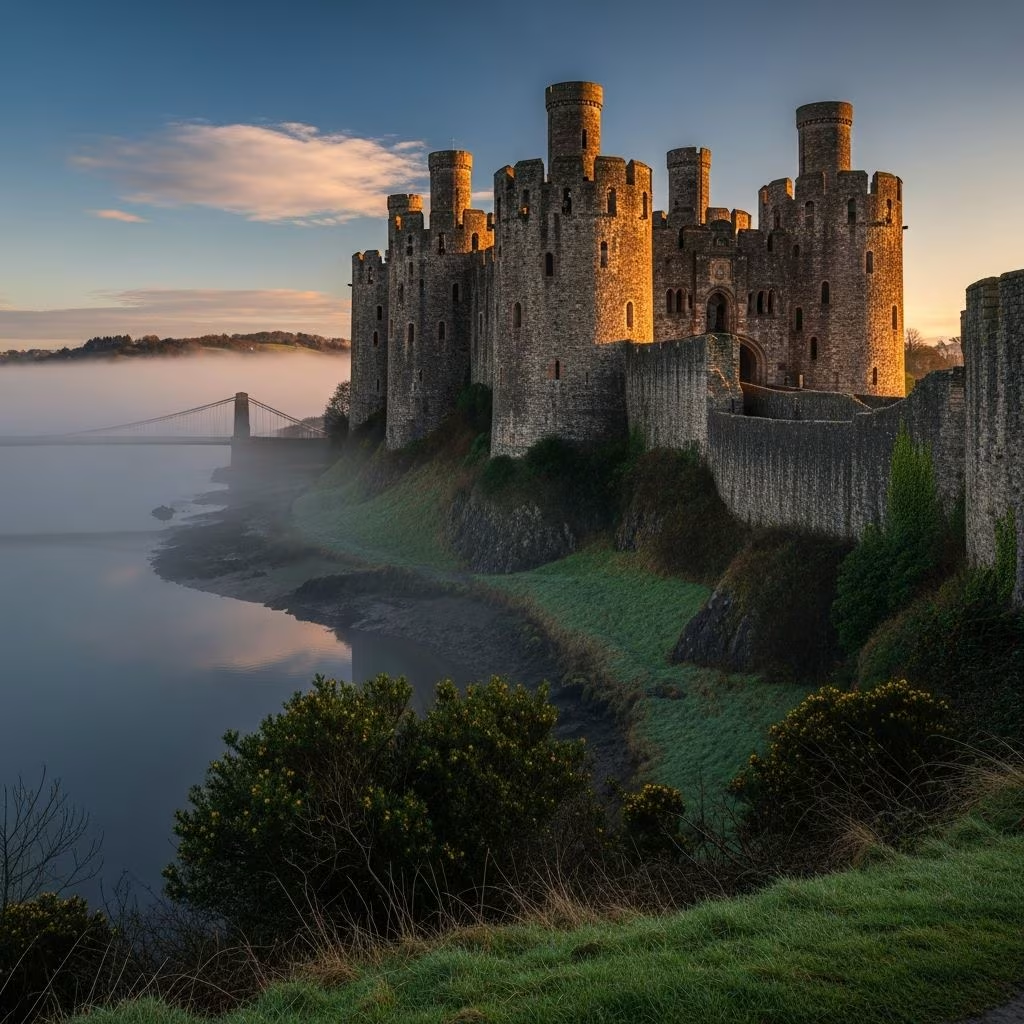
Perched dramatically along the North Wales coast, Conwy Castle stands as one of Europe’s finest examples of late 13th-century military architecture. This magnificent fortress has captivated visitors for centuries, drawing architects, historians, and travelers who seek to understand the intricate tapestry of medieval warfare, royal power, and territorial conquest. Built between 1283 and 1289, the castle represents not merely a defensive structure but a symbol of English dominance during a transformative period in British history.
The Historical Context: Edward I’s Strategic Vision
King Edward I initiated an ambitious military campaign across Wales, resulting in what historians call the \”Iron Ring\” of castles. This unprecedented fortification strategy represented the most extensive medieval building project ever undertaken in Europe. Conwy Castle emerged as a cornerstone of this larger defensive network, alongside Beaumaris, Caernarfon, and Harlech castles, collectively recognized by UNESCO as World Heritage Sites.
The construction of Conwy Castle was completed in remarkably swift fashion—less than four years from commencement to completion. This rapid construction required enormous financial investment, with combined costs for the castle and surrounding town walls reaching approximately £15,000, an astronomical sum for the medieval period. The expense reflected Edward I’s determination to establish permanent English control over newly conquered Welsh territories.
During its operational history, Conwy Castle demonstrated its strategic importance through multiple significant events. The fortress withstood the siege of Madog ap Llywelyn during the harsh winter of 1294-95, survived the brief tenure of Richard II in 1399, and was held by forces loyal to the Welsh rebel Owain Glyndŵr in 1401.
Architectural Design and Structural Features
The castle’s impressive physical presence dominates the Conwy landscape seven centuries after its construction. The rectangular fortress rises majestically from a coastal ridge, originally positioned to command an important crossing point over the River Conwy. The structure showcases sophisticated military engineering divided into two distinct sections.
- The Outer Ward: Designed to accommodate military operations and personnel, this section contained a hall, chambers, kitchen facilities, and a dungeon
- The Inner Ward: This secure section housed royal apartments and residential spaces, reflecting the castle’s dual function as both fortress and royal residence
The castle features eight massive towers that rise from substantial curtain walls, complemented by two barbicans and a postern gate providing access to the river. These defensive elements worked in concert with the town walls stretching over three-quarters of a mile (1.3 kilometers), forming an integrated system of protection. The 9-meter-tall (30-foot) walls were punctuated by 21 horseshoe-shaped towers, originally constructed to protect English colonists from the local Welsh population, who were explicitly forbidden from residing in the town.
Interior Spaces and Royal Apartments
Conwy Castle contains the most intact set of medieval royal apartments in Wales, offering modern visitors rare insight into medieval royal life. These preserved spaces include the Great Hall, serving as a focal point for court gatherings and administrative functions. The Chapel provided spiritual sanctuary for the royal household, while the King’s Apartments—lavishly appointed compared to military quarters—demonstrated royal status and comfort.
The castle’s architectural preservation allows visitors to understand the hierarchical organization of medieval castle life. Different zones served specialized functions: areas for military command, spaces for household administration, quarters for garrison soldiers, and luxuriously appointed royal chambers. This vertical organization reflected both practical military necessities and social hierarchies inherent in medieval society.
Exploring the Defensive Structures
The eight towers served multiple purposes beyond simple fortification. Each tower functioned as a defensive strongpoint, commanded clear sightlines across approaches to the castle, and provided secure positions for archers and armed soldiers. Modern visitors can ascend spiral staircases within these towers to experience the remarkable vistas that medieval defenders enjoyed.
The battlemented walls, now restored with reconstructed spiral staircases, permit a complete circuit around the fortress perimeter. This elevated walkway offers panoramic perspectives over the Conwy Estuary and the medieval town nestled within its 700-year-old walls. The defensive design demonstrates sophisticated understanding of military architecture: multiple levels of walls, tower placement for overlapping fields of fire, and strategic positioning of gates and portals.
The Companion Fortification: Conwy’s Town Walls
The defensive system extended beyond the castle itself. Conwy’s remarkable town walls, built concurrently with the fortress, represent an equally impressive engineering achievement. These structures created a complete defensive enclosure for the town, establishing what UNESCO recognizes as one of the UK’s prime medieval sites.
The walls served a dual purpose: external defense against external threats and internal control to segregate the English settler population from the Welsh natives. This architectural expression of colonial control reflects the complex political dynamics of late 13th-century Wales, where military supremacy required not only fortress construction but also systematic population management and territorial reorganization.
Planning Your Castle Visit
Recommended Duration and Key Areas
Most visitors require approximately two hours to thoroughly experience Conwy Castle’s principal attractions. This timeframe permits adequate exploration of:
- The Great Hall and its historical significance
- The Chapel and its religious function
- The King’s Apartments and royal chambers
- The castle’s numerous towers and defensive positions
- Complete circuits of the castle walls
- Extended vantage point visits for optimal viewing
Access and Practical Information
Conwy Castle is managed as a tourist attraction by Cadw, the Welsh heritage organization. The site has developed substantial visitor infrastructure since initial restoration efforts began in the 19th century, when Conwy became an attractive destination for landscape painters. Modern management ensures accessible pathways, interpretive signage, and maintained structural elements facilitate visitor exploration.
Guided tour options enhance the visitor experience through expert narration, providing historical context and architectural interpretation unavailable through independent exploration. Professional guides share captivating narratives about kings, queens, freedom fighters, and townsfolk whose lives intersected with this mighty structure.
The Castle’s Cultural Significance
UNESCO World Heritage Recognition places Conwy Castle among Europe’s most significant medieval fortifications. The designation acknowledges the fortress as one of “the finest examples of late 13th century and early 14th century military architecture in Europe”. This recognition extends to the broader castle complex—including the town walls and integrated defensive system—rather than treating the fortress in isolation.
The castle’s cultural impact extended into the artistic realm, particularly during the late 18th and early 19th centuries when Romantic-era painters discovered Conwy’s dramatic landscape and architectural forms. These artistic representations contributed to the castle’s transformation from military ruin into tourist destination and cultural icon.
Understanding Medieval Military Architecture
Conwy Castle exemplifies sophisticated medieval defensive engineering principles. The castle demonstrates:
- Concentric Defense: Multiple layers of walls and fortifications requiring attackers to breach successive obstacles
- Vertical Integration: Tower placement enabling defenders to concentrate firepower on vulnerable positions
- Dual Function: Architecture serving both military and administrative purposes within integrated design
- Strategic Positioning: Location controlling important river crossing and coastal approaches
- Garrison Support: Integrated facilities for food storage, water access, and troop accommodation
The Castle’s Evolution and Modern Management
Following centuries of strategic importance, Conwy Castle eventually declined as a military installation. Initial restoration efforts commenced during the second half of the 19th century as Romantic-era interest in medieval ruins stimulated preservation efforts. Contemporary management by Cadw has maintained structural integrity while developing the site as a significant cultural attraction.
The 21st-century transformation represents a shift from active military installation to educational and recreational destination. Modern visitors encounter carefully preserved archaeological evidence, interpreted historical narratives, and opportunities for personal exploration within secure structures.
Experiencing Conwy Castle Today
Contemporary visitors to Conwy Castle encounter a remarkably well-preserved medieval fortress that continues to inspire awe despite seven centuries of weathering. The thick curtain walls and soaring towers hint at the grandeur and strategic brilliance embedded within the structure’s design. Walking through remarkably well-preserved rooms and battlements, visitors can almost imagine the historical activities—the clank of armor, strategic councils, and the administrative functions that sustained this medieval power center.
The castle remains exceptionally impressive, with high curtain walls and eight lofty towers rising almost as dramatically as when originally constructed. Restored spiral staircases enable modern visitors to access battlements and tower summits, experiencing the same commanding vantage points that medieval defenders utilized.
Integration with Conwy Town Experience
Conwy Castle should not be experienced in isolation. The surrounding medieval town, enclosed within its original defensive walls, creates a comprehensive historical landscape. The integrated fortification system—castle, town walls, and urban layout—represents the complete vision of Edward I’s Welsh consolidation strategy. Visitors who explore both the castle and town walls gain deeper understanding of medieval urban planning and defensive philosophy.
References
- The Lonely Planet Guide to Conwy Castle, Wales — Lonely Planet Publications. 2024. https://www.lonelyplanet.com/articles/guide-to-conwy-castle
- Conwy Castle: Medieval Fortification — Irish Tourism. 2024. https://www.irishtourism.com/conwy-castle
- Castell Conwy — Cadw (Welsh Heritage Monuments). Government of Wales. https://cadw.gov.wales/visit/places-to-visit/castell-conwy
- Conwy Castle: A Brief Guide — St. David’s Leisure. 2024. https://www.stdavidsleisure.com/Blog/Conwy-Castle-A-Brief-Guide_34/
- Conwy Castle, North Wales: Why You Should Visit — Wandering Carol Travel Blog. 2024. https://wanderingcarol.com/conwy-castle/
- Open Group Guided Tour of Conwy Castle with an Official Guide — TripAdvisor. 2024. https://www.tripadvisor.com/AttractionProductReview-g186437-d33132540-Open_Group_Guided_Tour_of_Conwy_Castle_with_an_Official_Guide-Conwy_Conwy_County_N.html

