

 Travel Essentials
 Travel Essentials

Discover essential advice for exploring the Cook Islands: from visa rules and best times to visit, to island hopping, local customs, and budget planning for paradise.
 Travel Essentials
The Cook Islands, a scattered archipelago in the South Pacific, offer pristine lagoons, lush interiors, and a laid-back vibe that defines authentic island living. Comprising 15 islands, this destination blends Polynesian heritage with natural wonders, attracting travelers seeking relaxation and adventure without the crowds of more commercialized spots.
Timing your visit maximizes enjoyment in this tropical haven. The dry season, from April to October, brings milder temperatures around 25°C (77°F), lower humidity, and minimal rainfall, ideal for outdoor pursuits like hiking and snorkeling. Peak tourist months—June to August—see more visitors from Australia and New Zealand, but accommodations remain plentiful.
Wet season (November to March) features warmer waters perfect for diving, though expect showers and higher humidity. Cyclones are rare but possible; monitor forecasts via official advisories. Shoulder seasons like April-May or September-October offer fewer crowds and pleasant weather for budget-conscious explorers.
Most visitors enjoy visa-free entry for up to 31 days, provided they hold a passport valid for at least six months beyond departure and proof of onward travel. New Zealand citizens get 12 months automatically. Australians, Americans, and Europeans need no visa for short stays but must show return tickets and sufficient funds.
COVID-era rules have eased; no tests or vaccinations required as of 2023, but check updates. Upon arrival at Rarotonga International Airport, expect biosecurity checks for fruits, plants, or soil—declare everything to avoid fines up to NZ$400. Currency is New Zealand Dollars (NZD); carry cash for outer islands.
| Nationality | Stay Duration | Key Requirements |
|---|---|---|
| New Zealand | 12 months | Passport only |
| Australia/USA/EU | 31 days | Onward ticket, funds proof |
| Others | Varies | Check NZ Immigration site |
Flights land primarily on Rarotonga (RAR), the hub island, via Auckland (3.5 hours), Sydney (7 hours), or Los Angeles (8 hours with stops). Air New Zealand and Jetstar offer direct routes seasonally. From Rarotonga, Air Rarotonga connects to Aitutaki (50 minutes, NZ$400-600 round-trip), Atiu, and Manihiki—book early as seats fill fast.
No international ferries operate regularly; air travel is king. On Rarotonga, the 32km coastal road circles the island—drive left-hand side. Rent scooters (NZ$50/day), cars (NZ$80/day), or hop the clockwise/counterclockwise buses (NZ$3 one-way, no schedule—flag anywhere).
Outer islands like Aitutaki rely on bikes or walking; taxis are scarce and pricey.
ATMs on Rarotonga accept major cards; outer islands are cash-only. Budget NZ$150-250/day per person for mid-range travel, covering food, activities, and lodging. Meals: NZ$20 breakfast, NZ$30 dinner. Drinks add up—beers NZ$8.
Cards widely accepted on main island, but carry NZ$200 cash daily.
Rarotonga boasts diverse options: beachfront bungalows, hostels (NZ$50/night), resorts (NZ$400+). Muri Beach area hums with energy; southern coasts offer seclusion. Aitutaki’s overwater bungalows (NZ$800+) deliver postcard perfection, but beachfront guesthouses suit budgets.
Book direct for deals; no high-rises—law caps buildings at palm height. Camping limited; glamping emerging on private motus.
This 67km² gem circles volcanic peaks fringed by reefs. Circle Island Road (32km) accesses beaches like Black Rock for sunsets and swims. Inland, cross-island treks reveal waterfalls; jeep safaris (NZ$100) tackle rugged paths.
One of the world’s most stunning lagoons spans 18sq miles, dotted by 15 motus. Fly in for day trips or stays; boat cruises (NZ$120) hit One Foot Island—stamp your passport at its tiny post office. Snorkel rays, paddle glassy waters.
Atiu: Coffee plantations, caves, bird sanctuaries. Mangaia: Limestone caves, oldest island on Earth. Manihiki: Pearl farms, atoll immersion.
Water-centric: Snorkel Muri Lagoon rays; scuba pristine reefs. Lagoon cruises blend BBQ, ukulele, dancing—family-friendly fun. Fishing charters yield tuna; sea kayaking explores hidden coves.
Land thrills: Hike ‘The Needle’ on Rarotonga; quad bike interiors. Cultural nights feature fire dancing, umu feasts (earth-oven cooked pork, taro). Circle bike tours (NZ$30 rental) cover 32km leisurely.
Cook Islanders, mostly Māori, embody warmth—greet with ‘kia orana’ (hello). Remove shoes entering homes; Sundays are sacred—businesses close, beaches quiet for churchgoers. Respect reefs—no touching coral. Tattoos common; ask before photos.
Island time prevails—patience key. No nudity on beaches; topless OK privately.
Tap water safe on Rarotonga; boil/filter outer islands. Mosquito repellent essential—dengue rare. No major crime; minor theft possible—lock valuables. Drive cautiously; scooters need license.
Protect paradise: Use reef-safe sunscreen, skip single-use plastics. Support locals via markets, tours.
Fresh seafood, tropical fruits dominate. Try ika mata (marinated fish), rukau (taro leaves), poke (banana dessert). Markets offer pineapples, papaya. Restaurants fuse Pacific-Asian; food trucks serve curries, burgers. Vegetarian options growing—eggplant curry shines.
Moderately so—flights and activities add up, but self-catering keeps costs down (NZ$150-300/day).
18 for beer/wine, 21 for spirits.
Yes on Rarotonga; bottled elsewhere.
Mainly Rarotonga and Aitutaki; cash up.
Rarotonga—beaches, easy transport, activities.
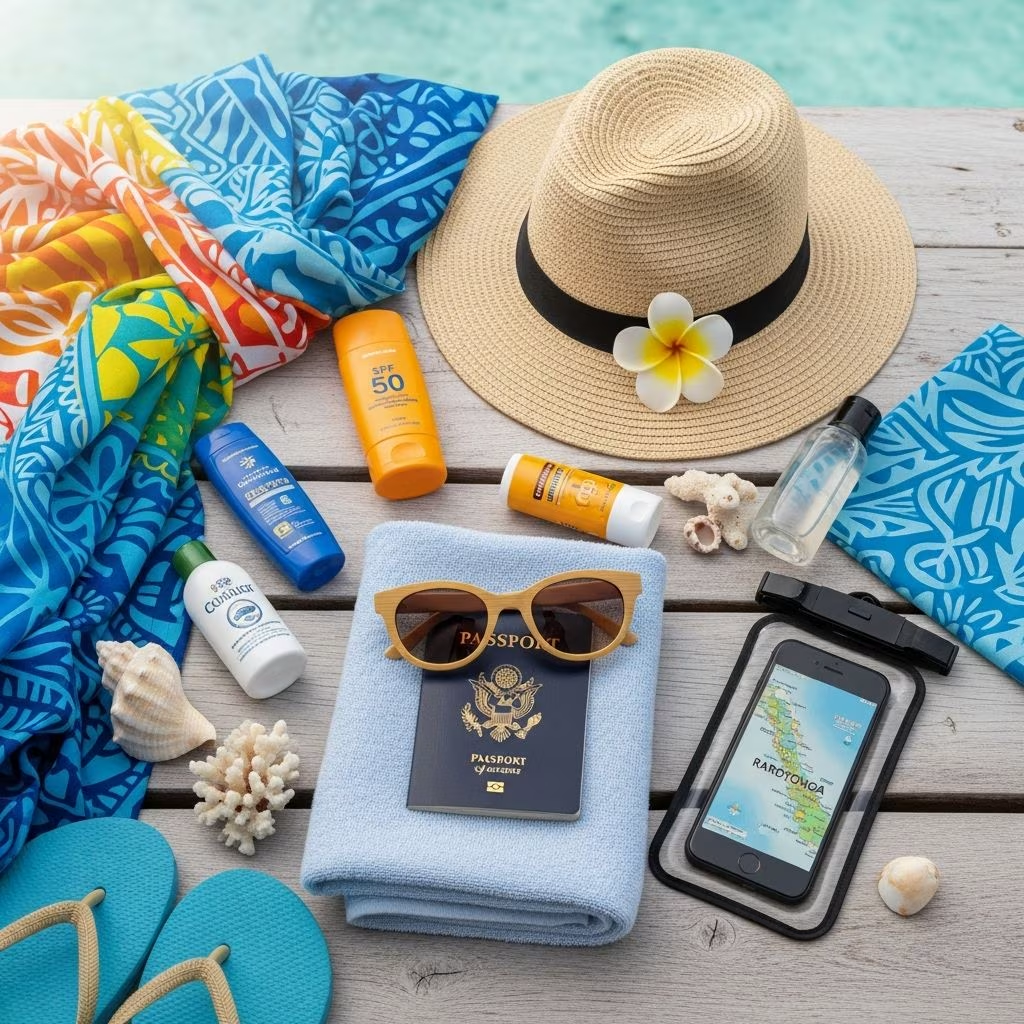
Pack light: reef shoes, hat, adapter (NZ plugs). Disconnect—Wi-Fi spotty. Embrace slow pace; paradise rewards patience.
