


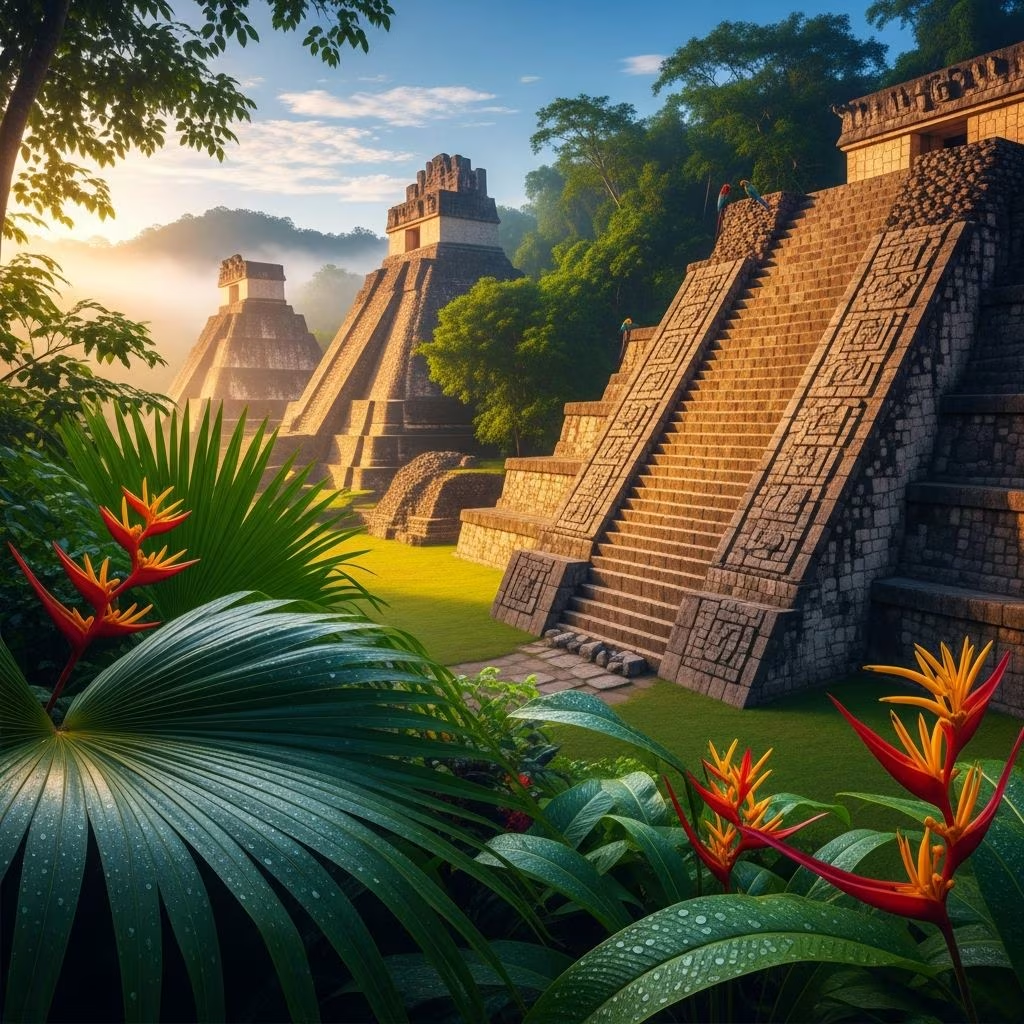
Nestled along the Copan River valley near the Honduras-Guatemala border lies one of the Western Hemisphere’s most remarkable archaeological treasures. This ancient metropolis flourished for over two millennia and stands as a testament to the ingenuity and artistic prowess of the Maya civilization. Today, visitors from around the globe journey to this region to witness the architectural grandeur and intricate stone carvings that have survived centuries of weathering and neglect. The site earned recognition as a UNESCO World Heritage Site in 1980, cementing its importance in global cultural heritage preservation.
Understanding the Historical Significance
During its zenith in the ninth century, this Maya city housed approximately 20,000 residents spread across roughly 250 acres of densely settled territory. The civilization that thrived here developed sophisticated systems of agriculture, governance, and artistic expression that rivaled contemporary societies across Mesoamerica. Archaeological investigations have progressively unveiled the complexity of urban planning and social organization that characterized this ancient settlement.
The city’s decline occurred gradually over several centuries, and by the Spanish colonial period, the site had become largely forgotten. European explorers rediscovered the ruins in 1570 when Diego García de Palacio documented the remains, sparking renewed interest in Maya history. However, serious archaeological investigation did not commence until the nineteenth century, when scholars began systematically studying and preserving the structures.
The Archaeological Landscape: What You’ll Encounter
Visitors exploring the ruins traverse approximately four square kilometers of the Copan Valley, encountering multiple layers of Maya construction and artistic achievement. The landscape reveals how successive generations of inhabitants expanded, modified, and decorated the city according to their cultural values and practical needs.
The Central Royal Complex
At the heart of the archaeological zone stands the Acropolis, a sophisticated royal precinct combining temples, palatial residences, and administrative structures. This elevated complex demonstrates advanced engineering techniques that allowed Maya architects to construct multi-story buildings with remarkable stability. Surrounding the raised platform are fragments of sculptural elements that once decorated these prestigious buildings, offering glimpses into the aesthetic preferences of elite society.
Systematic excavation has revealed an intricate network of tunnels honeycomb beneath the Acropolis, suggesting underground chambers served ceremonial, storage, or administrative functions. These subterranean passages represent one of the most fascinating discoveries, challenging conventional understanding of Maya urban design.
The Hieroglyphic Stairway Monument
Few monuments in the Maya world compare to the remarkable staircase that ascends toward one of the principal temples. This architectural marvel features 1,260 hieroglyphic symbols meticulously carved into 63 surviving steps, creating a narrative text in stone. Scholars continue deciphering these glyphs, which appear to chronicle the dynastic succession of Copan’s rulers and significant historical events.
The preservation quality of these carvings exceeds expectations given the climate’s tropical moisture, a phenomenon that archaeologists attribute to specific environmental conditions and the durability of the local limestone. The carving style and iconography provide invaluable information about Maya religious beliefs, political hierarchies, and historical narratives.
Ceremonial Playing Fields
The archaeological zone includes ball courts where Maya athletes engaged in ritualistic games that combined sport with religious ceremony. While the architectural features are clearly identifiable, the precise rules governing these competitions remain incompletely understood by modern scholars. Evidence suggests these venues hosted events of significant social importance, potentially involving elite participation and ceremonial significance that transcended mere athletic competition.
Artistic Treasures and Museum Collections
The Sculpture Museum (Museo de Escultura) stands as one of Central America’s finest archaeological repositories, housing artifacts that bring the ancient city to life. The museum’s centerpiece is a full-scale replica of the Rosalila Temple, an ornate two-story ceremonial structure erected during the reign of Moon-Jaguar, Copan’s tenth ruler. This reconstruction, painted in historically accurate pigments, demonstrates how vibrant and visually striking these buildings originally appeared—a striking contrast to the weathered stone visitors observe at the excavation site.
The original Rosalila Temple remains entombed within Structure 16, an archaeological decision made to preserve it for future generations with more advanced analytical techniques. Its discovery in 1989 within the superimposed construction layers revealed how Maya builders often enclosed older structures rather than demolishing them, creating vertical time capsules of architectural history.
Beyond the temple replica, the museum displays ceramics, stone sculptures, jade ornaments, and other portable artifacts that illuminate daily life within the ancient city. Intricate vessels often bear hieroglyphic inscriptions identifying original owners or commemorating specific events. These objects collectively narrate stories of elite society, religious practices, artisan specialization, and trade networks extending across Mesoamerica.
The Central Plaza and Its Monuments
The expansive plaza functions as an open-air museum displaying stelae—carved stone monuments typically erected to commemorate significant dates and rulers. Many stelae dotting the plaza represent modern reproductions, with originals secured within museum collections for preservation. These monuments showcase remarkable carving techniques, depicting rulers in full ceremonial regalia accompanied by glyphic texts detailing their achievements and lineage.
The plaza’s spatial organization reflects Maya cosmological concepts, with its layout potentially mirroring celestial patterns or sacred geography. The placement of various monuments suggests deliberate choreography for ceremonial processions and public gatherings.
Surrounding Natural and Cultural Attractions
Macaw Mountain Bird Sanctuary
Beyond the archaeological site itself, the Copan region offers complementary experiences that enrich understanding of the local environment. The Macaw Mountain Bird Park and Nature Reserve, located just outside the town center, preserves native tropical habitat while operating a rescue and rehabilitation facility for indigenous bird species. Hundreds of rescued birds, including yellow-naped Amazons and scarlet macaws, inhabit gardens planted with hardwood trees and native vegetation, creating environments that facilitate their recovery and potential reintegration.
This conservation center represents contemporary efforts to protect biodiversity in regions where ancient Maya civilization once thrived. The connection between past and present ecosystems adds dimension to understanding how the environment has evolved since pre-Columbian times.
Forest Exploration and Adventure Activities
The surrounding landscape encompasses diverse forest ecosystems supporting wildlife populations including monkeys, toucans, and various tropical species. Multiple hiking trails traverse these forests, offering visitors opportunities to experience the natural environment while potentially encountering wildlife similar to species present during Maya times.
For those seeking more dynamic experiences, zip-lining parks operate throughout the canopy, with some facilities offering up to fourteen lines covering extensive distances through the treetops. Horseback riding excursions provide alternative ways to explore nearby communities and terrain, combining physical activity with cultural encounter.
Luna Jaguar Hot Spring
Thermal springs in the region offer relaxation opportunities following days spent exploring archaeological sites and hiking. These natural features add wellness dimensions to cultural tourism itineraries.
The Town of Copan Ruinas: Base for Exploration
The modern town surrounding the archaeological zone maintains a welcoming, relaxed atmosphere appreciated by both international travelers and Honduran visitors. Despite its role as a tourism hub, the community retains authentic character without excessive commercialization common in some heritage destinations.
Several small museums within the town complement the major Sculpture Museum. The interactive exhibits at the Museum of Mayan Culture engage visitors with displays of clothing, musical instruments, and artifacts illuminating both elite rituals and ordinary domestic life. Multilingual presentations in Spanish, English, and Mayan language enhance accessibility for diverse audiences.
The Tea and Chocolate Place, an establishment emphasizing sustainable practices and organic production from the nearby Copan Botanical Research Station, offers respite during afternoons. Operating exclusively from 4 to 6 PM daily except Sundays, this venue provides panoramic vistas particularly stunning during sunset hours, complemented by selections of specialty beverages and traditional snacks.
Planning Your Visit: Practical Considerations
Accessibility and Duration
Day visits allow exploration of primary archaeological features, though overnight stays provide opportunities for more comprehensive exploration and fuller engagement with the community. The site can be visited from either Honduras or Guatemala, with the latter offering easy access to the colonial city of Antigua.
Climate and Preparation
The tropical climate that preserved the intricate carvings also creates conditions requiring preparation. Insect protection proves essential, with strong repellents recommended given the region’s mosquito populations and other biting insects. The preserved carvings’ clarity owes much to environmental conditions that also support robust insect populations.
Physical Requirements
Exploring the four-square-kilometer site involves considerable walking across varied terrain. Comfortable footwear, adequate hydration, and sun protection enhance the experience. The Acropolis elevation and stairway climbing require moderate fitness levels.
Comparative Significance Within Maya Archaeology
Compared to other major Maya sites throughout Central America, Copan occupies a unique position regarding artistic preservation and carving quality. The detailed hieroglyphic inscriptions and sculptural elements here exceed the preservation conditions at certain competing sites, providing scholars with information unavailable elsewhere. This distinction underscores Copan’s irreplaceable value in understanding Maya civilization’s southern reaches and artistic development.
Frequently Asked Questions
What makes Copan distinct from other Maya ruins?
The exceptional preservation of carved details and the abundance of hieroglyphic texts create opportunities for understanding Maya civilization unavailable at many alternative sites. The architectural sophistication and artistic refinement represent the southern extremity of Maya cultural achievement.
How long should visitors allocate for exploring the site?
Three to four hours suffice for observing primary structures and features, though more extensive engagement with museum materials and surrounding attractions can extend visits to multiple days.
Is professional guidance necessary?
Guided tours enhance interpretation significantly, providing context and historical narrative that independent exploration cannot duplicate. However, self-guided exploration remains feasible with published materials and site signage.
What seasonal considerations should influence visit timing?
The region experiences tropical rainfall patterns, with November through March offering drier conditions. However, the site remains accessible year-round, with wet season visits offering advantages of fewer crowds and lush vegetation.
References
- Copan, Honduras | Definitive guide for senior travellers — Odyssey Traveller. Accessed April 2026. https://www.odysseytraveller.com/articles/copan-honduras/
- What to do in Copan? The 15 Best Attractions (UPDATED 2026) — Viator. Accessed April 2026. https://www.viator.com/Copan/d5199
- Discover the best things to do in Copán Honduras — Passport the World. Accessed April 2026. https://www.passporttheworld.com/destinations/central-america/honduras/things-to-do-in-copan-honduras/
- Ultimate Guide to the Copan Ruins in Honduras (2024) — A Little Adrift. 2024. https://alittleadrift.com/travel-copan-ruins-honduras/
- A guide to the ruins of Copán in Honduras — Lonely Planet. Accessed April 2026. https://www.lonelyplanet.com/articles/guide-to-copan-honduras
- A Visitor’s Guide to Copán — Garden & Gun Magazine. Accessed April 2026. https://gardenandgun.com/a-visitors-guide-to-copan
- THE 15 BEST Things to Do in Copan Ruinas (2026) — TripAdvisor. 2026. https://www.tripadvisor.com/Attractions-g292022-Activities-Copan_Ruinas_Copan_Department.html

