

 Travel Essentials
 Travel Essentials

Explore Copenhagen's rich history, world-class museums, lively festivals, culinary delights, and green spaces in this comprehensive cultural guide.
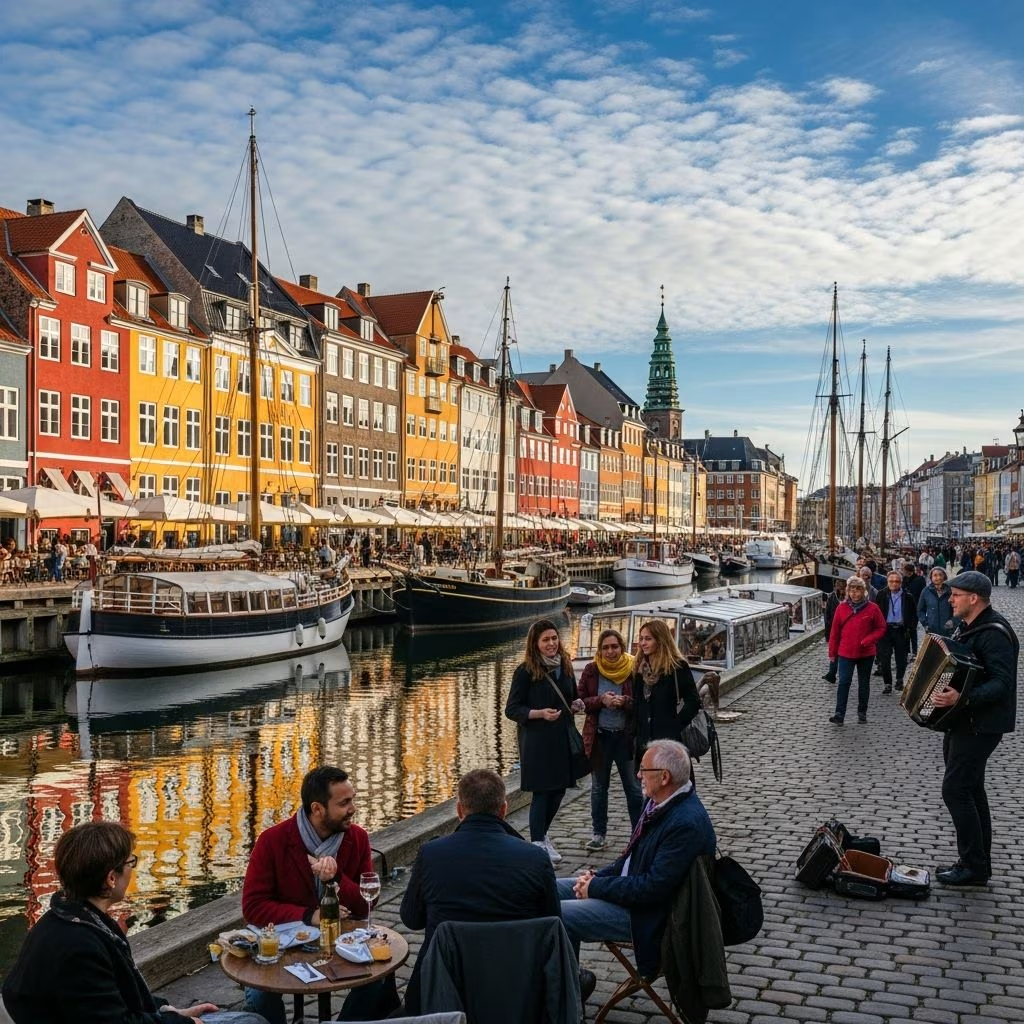 Travel Essentials
Copenhagen stands as a beacon of Nordic sophistication, blending centuries-old traditions with forward-thinking innovation. This guide delves into the city’s multifaceted cultural landscape, offering travelers a roadmap to its historical landmarks, artistic hubs, performing arts scenes, seasonal celebrations, and serene natural retreats.
Copenhagen’s history unfolds across its cobblestone streets and grand palaces, where royal legacies and maritime prowess intertwine. Established in the 12th century as a fishing village, it evolved into a powerhouse under kings like Christian IV, whose architectural imprints define the skyline.National Museum of Denmark provides deep insights into Viking roots through immersive exhibits like the Viking Sorceress display, featuring audio-guided journeys into ancient rituals and artifacts.
Key landmarks include Rosenborg Castle, a 17th-century Renaissance gem housing the dazzling Danish Crown Jewels in opulent halls of marble and gold. Adjacent King’s Garden offers tranquil strolls amid manicured lawns and sculptures, embodying royal leisure. Nearby, Amalienborg Palace serves as the current royal residence, where the changing of the guard draws crowds daily. Christiansborg Palace anchors the city center, encompassing parliament, supreme court, and royal reception rooms atop medieval ruins.
These sites reveal Copenhagen’s evolution from Viking stronghold to modern monarchy, accessible via the efficient Copenhagen Card for bundled entry.
Denmark’s design ethos permeates Copenhagen’s museums, showcasing functional beauty and creative ingenuity. Designmuseum Denmark celebrates national icons like Arne Jacobsen chairs and Royal Copenhagen porcelain, tracing innovation from crafts to contemporary concepts.
Ny Carlsberg Glyptotek impresses with its glass-domed winter garden and collections spanning Egyptian mummies to Rodin sculptures and Impressionist masterpieces. For modern expressions, Copenhagen Contemporary hosts rotating large-scale installations, while Nikolaj Art Gallery focuses on intimate urban contemporary works.
Beyond the city, the Louisiana Museum of Modern Art—Scandinavia’s most visited—merges Picasso, Warhol, and Yayoi Kusama with a seaside sculpture park overlooking Sweden. Reachable by a 40-minute train, it pairs art with cafe lunches featuring Øresund views. The National Museum anchors Viking lore and ethnographic treasures, including five original 11th-century ships at the affiliated Viking Ship Museum in Roskilde—a UNESCO site 30 minutes away.
| Museum | Highlights | Travel Tip |
|---|---|---|
| Designmuseum Denmark | Danish modernism, furniture design | Included in Copenhagen Card; closed Mondays |
| Ny Carlsberg Glyptotek | Ancient to Impressionist art | Winter garden cafe; central location |
| Louisiana Museum | Modern art, sculpture park | Train from central station; sea views |
| National Museum | Viking exhibits, history | Free entry; immersive audio tours |
These institutions highlight Copenhagen’s role as a global design capital, fostering creativity since the Golden Age of the 19th century.
Copenhagen’s stages pulse with world-class performances. The Royal Danish Theatre at Kongens Nytorv, a neoclassical landmark since 1748, hosts ballets by August Bournonville and operas in three venues: Old Stage, Main Stage, and Playhouse. Charlottenborg Palace nearby features experimental art shows.
The city’s music scene thrives in venues like Vega for indie rock and Koncerthuset for symphonies by the Danish National Symphony Orchestra. Jazz havens such as La Fontaine offer intimate hygge atmospheres, while summer brings open-air concerts in parks.
Theater enthusiasts find variety in English-friendly productions at English Theatre Copenhagen and avant-garde works at Belleville. Copenhagen’s commitment to arts accessibility ensures diverse programming year-round.
Copenhagen’s calendar brims with events fusing tradition and innovation. Copenhagen Jazz Festival in July transforms streets into free concert zones, drawing international talent. Copenhagen Pride in August parades through the city, celebrating LGBTQ+ culture with parties and floats.
Winter’s Tivoli Gardens twinkles with illuminations and Christmas markets, the world’s second-oldest amusement park since 1843. Distortion urban festival in May showcases electronic music across warehouses, while Copenhagen Cooking & Food Festival highlights Nordic cuisine.
Cultural mainstay Copenhagen Cultural Night opens 200+ venues for free in September. These gatherings embody Danish hygge—cozy communal joy.
No cultural immersion skips Copenhagen’s food scene, rooted in New Nordic Manifesto principles of locality and purity. Smørrebrød—open-faced rye sandwiches topped with herring, roast beef, or shrimp—anchors lunch traditions. Pastries like wienerbrød shine at bakeries such as Skt. Peders Bageri.
Michelin-starred spots like Noma pioneered foraging, but casual eats prevail: street food at Reffen market or cafes in Nørrebro. Coffee culture thrives in hygge spots with baked goods and people-watching. Food tours navigate neighborhoods, sampling from Torvehallerne market halls.
Copenhagen’s 50% green coverage promotes work-life balance. Kongens Have buzzes with picnickers, while Assistens Cemetery in Nørrebro honors Hans Christian Andersen amid park-like paths. Fælledparken hosts concerts; Superkilen park showcases multicultural design.
Cycling—over 60% of commutes—defines mobility, with 400+ km of paths. Canal tours glide past landmarks; kayaking explores Christianshavn. Day trips to Roskilde (Vikings, cathedral) or Kronborg Castle (Hamlet site) extend adventures.
Landmarks like Tivoli Gardens, Nyhavn, and the Little Mermaid; design hubs; Michelin dining; cycling culture.
Many offer free days; Copenhagen Card covers most. National Museum is free; others €10-20.
Roskilde (Vikings), Helsingør (Kronborg), Louisiana Museum—all under 1 hour by train.
Cafe lingering, park picnics, candlelit dinners—embrace coziness.
Yes, nearly universal; signage multilingual.
