

 Travel Essentials
 Travel Essentials

Copenhagen tops the 2025 Global Liveability Index with a near-perfect score, surpassing Vienna thanks to superior stability, education, and infrastructure. Explore its bike-friendly streets, green initiatives, and vibrant culture.
 Travel Essentials
Copenhagen, Denmark’s vibrant capital, has been crowned the world’s most liveable city in the 2025 Global Liveability Index, surpassing Vienna’s three-year reign at the top. This accolade from the Economist Intelligence Unit (EIU) highlights the city’s excellence across key pillars like stability, healthcare, culture, education, and infrastructure, earning it an impressive overall score of 98 out of 100.
Liveability indices evaluate cities based on factors essential to daily life. The EIU’s Global Liveability Index assesses 173 cities worldwide using five categories: stability (crime and conflict risk), healthcare (access and quality), culture and environment (climate and recreation), education (school availability and standards), and infrastructure (transport, housing, and utilities). Copenhagen’s perfect scores in stability, education, and infrastructure propelled it ahead, despite trailing slightly in healthcare.
These rankings matter for urban planners, expatriates, and travelers seeking destinations that balance work, leisure, and well-being. Europe’s dominance in the top 10— with four cities including Copenhagen, Vienna, Zurich, and Geneva—underscores the continent’s focus on quality of life.
| Rank | City | Country |
|---|---|---|
| 1 | Copenhagen | Denmark |
| 2 | Vienna | Austria |
| 3 | Zurich | Switzerland |
| 4 | Melbourne | Australia |
| 5 | Geneva | Switzerland |
| 6 | Sydney | Australia |
| 7 | Osaka | Japan |
| 8-10 | Various | – |
This table showcases the leaders, with Australia claiming three spots and Europe four, reflecting strong public services and safety nets.
Copenhagen earns its nickname as the bicycling capital, with over 50% of residents commuting by bike daily. Extensive cycle superhighways, bike-friendly traffic signals, and secure parking make cycling seamless and safe. This infrastructure reduces congestion, cuts emissions, and promotes health, contributing to high infrastructure scores.
Visitors can join the flow by renting bikes or taking guided tours, experiencing the city’s flat terrain and scenic routes along canals.
Over the past three decades, Copenhagen evolved from an industrial hub facing decline into a model of sustainability. Strategic urban planning revitalized neighborhoods, integrating green spaces, affordable housing, and economic growth. The city’s ‘Cloudburst’ plan addresses climate resilience with permeable pavements and rainwater gardens to manage flooding.
Inclusive policies ensure all residents benefit, fostering social cohesion. Parks like Fælledparken and harbor baths provide recreation, boosting culture and environment scores. Copenhagen aims for carbon neutrality by 2025, with wind energy, district heating, and organic food initiatives.
Denmark’s education system shines, with free, high-quality public schools and universities like the University of Copenhagen ranking globally. International schools cater to expats, supporting the perfect education score.
Stability is unmatched, with low crime rates, minimal terrorism risk, and strong social welfare. Petty crime is rare, and public trust in institutions is high, creating a secure environment for families and professionals.
Though not perfect, Copenhagen’s healthcare rivals the best. Universal coverage via the public system ensures quick access to GPs, hospitals, and specialists. Pharmacies stock over-the-counter remedies efficiently, and life expectancy exceeds 81 years. Private options supplement for faster non-emergency care.
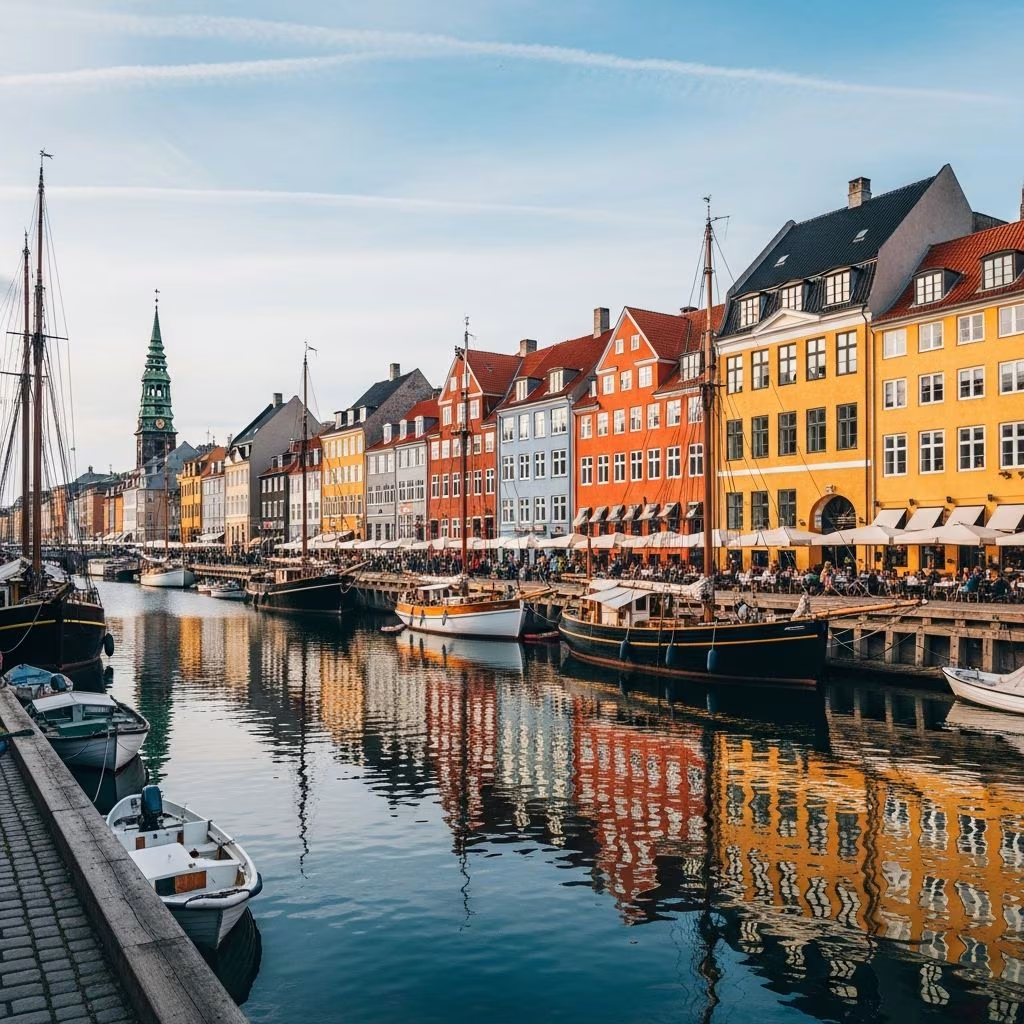
Copenhagen blends history and modernity. Walk the colorful Nyhavn harbor, explore Tivoli Gardens, or visit the National Museum. World-class dining—from Michelin-starred Noma to street food at Reffen—caters to all. Summer festivals, design fairs, and cozy ‘hygge’ cafes enhance cultural life.
Mild maritime climate (summers 20°C, winters 2°C) suits outdoor activities. Green lungs like Amager Strandpark offer beaches and sports, countering urban density.
A thriving economy in tech, pharma (Novo Nordisk), and green energy attracts talent. Excellent public transport—metro, buses, trains—connects efficiently. Airports like Kastrup link globally, and housing mixes modern apartments with historic charm.
Residents enjoy ‘hygge’—cozy well-being—through candlelit homes, communal meals, and work-life balance (37-hour workweek). Neighborhoods like Christianshavn offer canalside living; Vesterbro buzzes with hip cafes. Families thrive with child-friendly policies like parental leave and free daycare.
For expats, English proficiency (over 80%) eases integration. Cost of living is high but offset by salaries and services.
Tourists flock for liveability perks: safe streets, clean air, and authentic experiences. Must-sees include Rosenborg Castle, the Little Mermaid, and meatpacking district nightlife. Sustainable tourism—bike tours, electric ferries—aligns with eco-values.
| Experience | Highlights |
|---|---|
| Food Scene | New Nordic cuisine, smørrebrød, markets |
| Outdoors | Harbor swims, parks, cycling paths |
| Culture | Museums, design district, concerts |
High housing costs and housing shortages pose issues, but initiatives like new builds address them. Immigration integration continues evolving. Copenhagen’s vision: a resilient, inclusive metropolis leading climate adaptation.
Perfect scores in stability, education, and infrastructure per EIU 2025, plus bike culture and green policies.
Yes, but high wages, free education/healthcare balance it. Rent averages €1,500/month for a one-bedroom.
Summer (June-August) for festivals and warmth; winter for hygge and lights.
Extremely—50% commute by bike with world-class infrastructure.
Outstanding: metro, buses, trains with 98% reliability.
