

 Travel Essentials
 Travel Essentials

Corcovado National Park on Costa Rica's Osa Peninsula boasts extraordinary biodiversity, rare wildlife, and diverse ecosystems. Learn about trails, access, and tips for an unforgettable adventure.
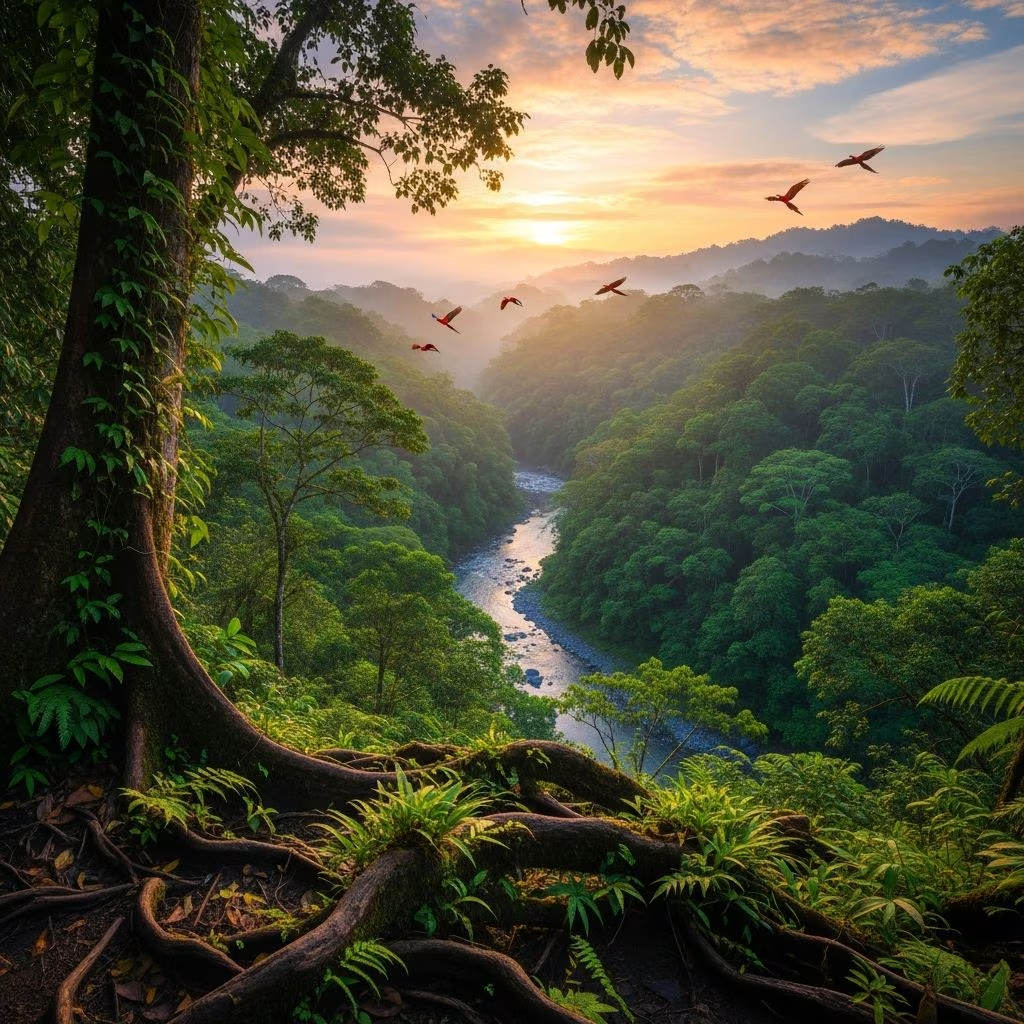 Travel Essentials
Corcovado National Park stands as a pinnacle of natural preservation in Costa Rica, encompassing vast stretches of untouched lowland rainforest on the Osa Peninsula. Renowned for its exceptional biodiversity, the park spans approximately 164 square miles and is celebrated by National Geographic as “the most biologically intense place on Earth.” This remote sanctuary protects diverse habitats, from mangrove swamps to sandy beaches, drawing adventurers and researchers worldwide.
At the core of Corcovado’s appeal lies its staggering array of life forms. The park supports over 6,000 insect species, 500 tree varieties, 367 bird species, 140 mammals, 117 amphibians and reptiles, and 40 freshwater fish species. This concentration represents more than 3% of global biodiversity within a compact area, making it a critical refuge for endangered species.
Endangered mammals thrive here, including the Baird’s Tapir, Jaguar, Puma, and four monkey species such as spider and howler monkeys. Bird enthusiasts can spot Scarlet Macaws, Harpy Eagles, Great Black Hawks, and rare cotingas like the Turquoise and Yellow-billed varieties, which maintain their largest populations in the park. The ecosystem’s health allows for ongoing discoveries, with 52 endemic plant species identified between 1990 and 2005.
Corcovado’s landscapes vary dramatically across its 41,788 hectares, including shallow lakes, rivers, lowland and cloud forests, mangroves, and 46 km of coastline. Lowland rainforests dominate, forming the largest continuous Pacific rainforest stretch in Central America. Mangrove swamps and prairie areas add to the mosaic, supporting unique flora and fauna adapted to coastal and wetland conditions.
These habitats interconnect, fostering a resilient web of life resilient to external pressures.
Reaching Corcovado requires planning due to its isolation on the Osa Peninsula. Most visitors fly into Puerto Jiménez Airport, followed by a boat or 4WD transfer to entry points like La Leona, Los Patos, or Bahía Drake. Driving from San José involves the Pan-American Highway or scenic coastal Route 34, culminating in a ferry from Puerto Jiménez.
| Route | Duration from San José | Key Features |
|---|---|---|
| Pan-American Highway | ~4-5 hours to Puerto Jiménez | Mountain passes, reliable but longer inland drive |
| Coastal Hwy 34 via Caldera | ~5-6 hours | Scenic ocean views, ferry required |
| Flight + Boat | 1-2 hours total | Fastest, involves short domestic flight |
All entrants must hire authorized guides, ensuring safety and educational value. Park stations offer info, restrooms, camping, and radio communication.
Hiking trails range from day hikes to multi-day treks, showcasing the park’s depths. The Sirena Station serves as the central hub, immersed in primary rainforest evoking prehistoric vibes. Trails like those from La Leona follow beaches and rivers, while inland paths reveal canopy layers teeming with life.
Boat tours along the coast reveal whales, dolphins, and seabirds, while fly-ins to Sirena offer aerial perspectives. Rustic refuges and camping sites accommodate overnights amid the sounds of nature.
Corcovado excels in wildlife observation. Jaguars, though elusive, symbolize the park’s wild spirit, revered by indigenous Boruca people. Common sights include troops of monkeys crashing through vines, tapirs grazing at dusk, and flocks of parrots.
Birders tally hundreds of species, from hummingbirds to owls. Marine life offshore includes humpback whales seasonally and spotted dolphins. Guides like those dubbed “Eagle Eye” enhance spotting rates for endemics.
Preparation is key for this rugged destination. Pack insect repellent, sturdy boots, rain gear, and binoculars. Permits cost around $15/day plus guide fees (~$30-50/day). Stay on trails to minimize impact; no pets or drones allowed.
Best visits occur in dry season (Dec-Apr) for easier hiking, though wet season (May-Nov) boosts wildlife activity. Book guides and lodging in Puerto Jiménez or Drake Bay in advance. Practice Leave No Trace principles to preserve this gem.
Corcovado faces threats like illegal logging and poaching, yet ranger patrols and research sustain its integrity. The University of Costa Rica highlights its vulnerability, urging global support for protection. Visitor fees fund maintenance, emphasizing sustainable tourism’s role.
Yes, mandatory for all visitors to ensure safety and compliance.
Dry season (Dec-Apr) for trails; wet season for active wildlife.
Yes, at designated sites with basic facilities.
Rare sightings; dawn/dusk hikes with expert guides maximize chances.
Suitable for older kids; strenuous hikes limit very young children.
