

 Travel Essentials
 Travel Essentials

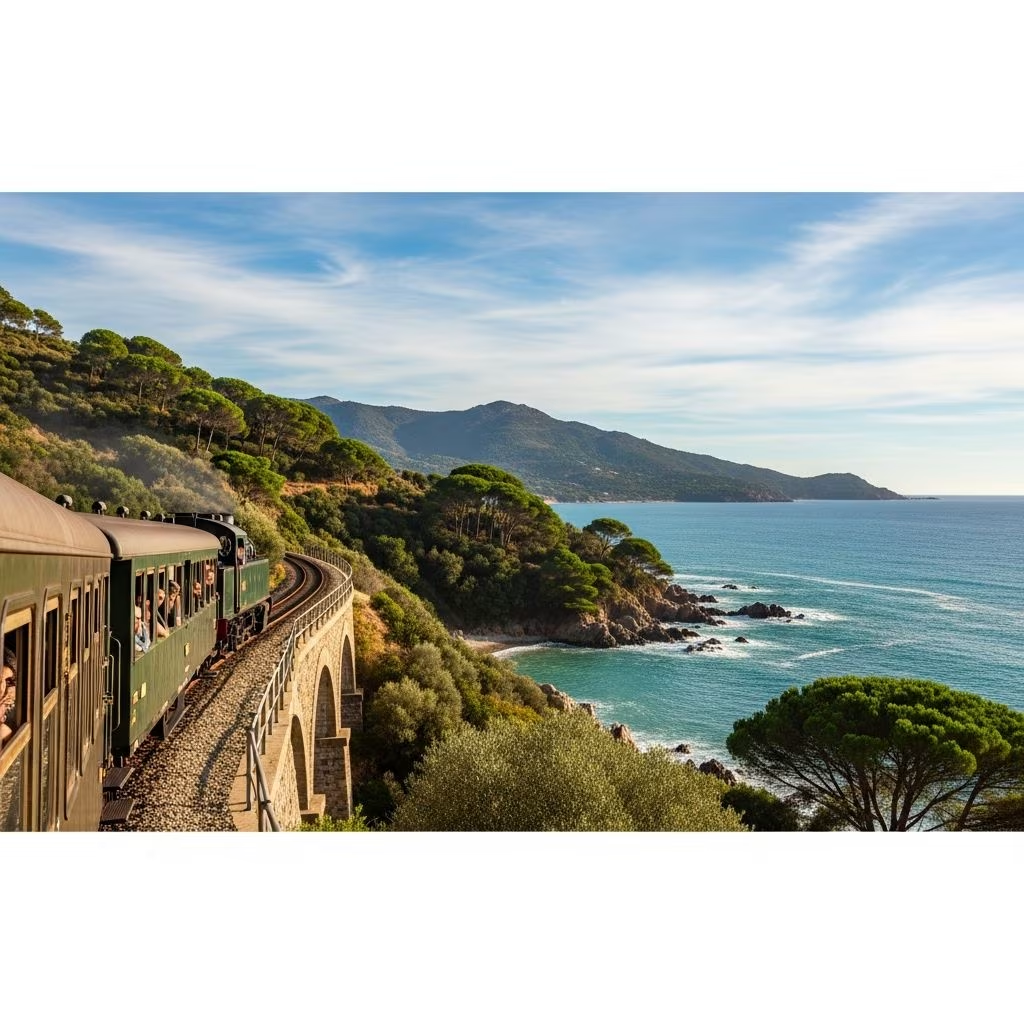
Journey through Corsica's mountains, coastlines, and villages on the charming little train. Perfect for eco-conscious travelers seeking authentic island experiences without a car.
 Travel Essentials
Traveling through Corsica on its legendary narrow-gauge railway offers a unique way to immerse yourself in the island’s dramatic landscapes, from jagged mountains to pristine coastlines. Known locally as U Trinichellu or “the little shaker,” this train prioritizes scenery over speed, making it ideal for mindful explorers.
The Corsican train stands out in an era of high-speed travel by embracing a leisurely pace that allows passengers to truly absorb the surroundings. Unlike cars navigating winding roads, the train accesses remote areas, clinging to cliffs and weaving through dense maquis shrubland. This mode of transport aligns perfectly with slow travel principles, reducing stress and environmental impact while fostering deeper connections with the island’s natural and cultural heritage.
With average speeds rarely exceeding 50 km/h, journeys become meditative experiences, where every curve reveals new vistas of olive groves, wildflowers, and distant sea views.
Construction of Corsica’s railway began in the early 1880s, transforming an isolated island into a more connected destination. French engineers designed the 1,000 mm narrow-gauge tracks to conquer the rugged terrain, completing key sections by 1930. Despite challenges like World War II damage and modernization debates, the network persists, now managed by Chemins de Fer de la Corse (CFC), preserving its vintage charm.
Today, U Trinichellu symbolizes resilience, blending 19th-century engineering with modern tourism. Its nickname reflects the gentle vibrations from navigating steep gradients and tight turns, endearing it to riders worldwide.
Corsica’s rail network forms a Y-shape, linking major towns without encircling the entire island. Core lines include:
| Route | Distance | Duration | Highlights |
|---|---|---|---|
| Bastia to Ajaccio | ~150 km | 3.5–4 hours | Coastal views, Corte’s citadel, mountain passes |
| Calvi to Ajaccio | ~140 km | 3.5–4 hours | Balagne coast, GR20 trail proximity, viaducts |
| Ponte-Leccia to Île-Rousse/Calvi | ~50 km | 1–1.5 hours | Clifftop tracks, beaches, villages |
Interchange at Ponte-Leccia, the central hub, to combine routes for full-island exploration. Shorter segments suit day trips, while end-to-end rides capture the island’s diversity.
Services operate year-round, with 4–5 daily departures on main lines, increasing slightly in peak summer. Always verify timetables via the official CFC site (cf-corse.corsica) or reliable alternatives like train-corse.com, as delays can occur due to weather or maintenance.
For multi-day itineraries, consider rail passes or combining with buses for complete coverage.
Each station unveils hidden gems, tempting passengers to disembark.
From Île-Rousse to Calvi, tracks hug the sea, passing pebbly beaches and citrus orchards. Disembark at Lumio for hikes or Algajola for seaside relaxation.
Corte, the historic capital, boasts a fortress overlooking valleys. Nearby, the train skirts the GR20 hiking trail, offering glimpses of peak-scaling adventurers.
Descending from heights, the line reveals Napoleon’s birthplace amid bays and hills. Side trips to beaches like Plage de L’Isolella are effortless.
Pro tip: Buy return tickets flexibly to hop on/off, maximizing discoveries.
To elevate your journey:
Families appreciate the adventure; accessibility features include step-free options at key stops.
U Trinichellu embodies slow travel by design—its pace encourages presence. Ditch the itinerary; let the landscape dictate your rhythm. This approach not only sustains local economies through station communities but also promotes well-being via nature immersion.
In a car-dependent world, the train revives communal travel, sparking conversations and shared awe.
Extend with buses to Porto or Bonifacio for comprehensive tours.
Yes, short segments and scenic appeal delight children. Family tickets available.
Generally punctual, but check apps for updates. Summer sees minor delays.
No, but bike transport supports hybrid trips.
May–June or September–October for comfort and views.
Small pets in carriers yes; larger on leads at discretion.
Modernization talks balance preservation with efficiency, but enthusiasts advocate keeping its character. Riders’ support ensures U Trinichellu endures as a Mediterranean treasure.
Embark on this rattling, revealing voyage—Corsica unfolds differently from the tracks.
