

 Travel Essentials
 Travel Essentials

Comprehensive guide to Costa Rica: top destinations, itineraries, activities, tips, and eco-tourism highlights for first-time visitors.
 Travel Essentials
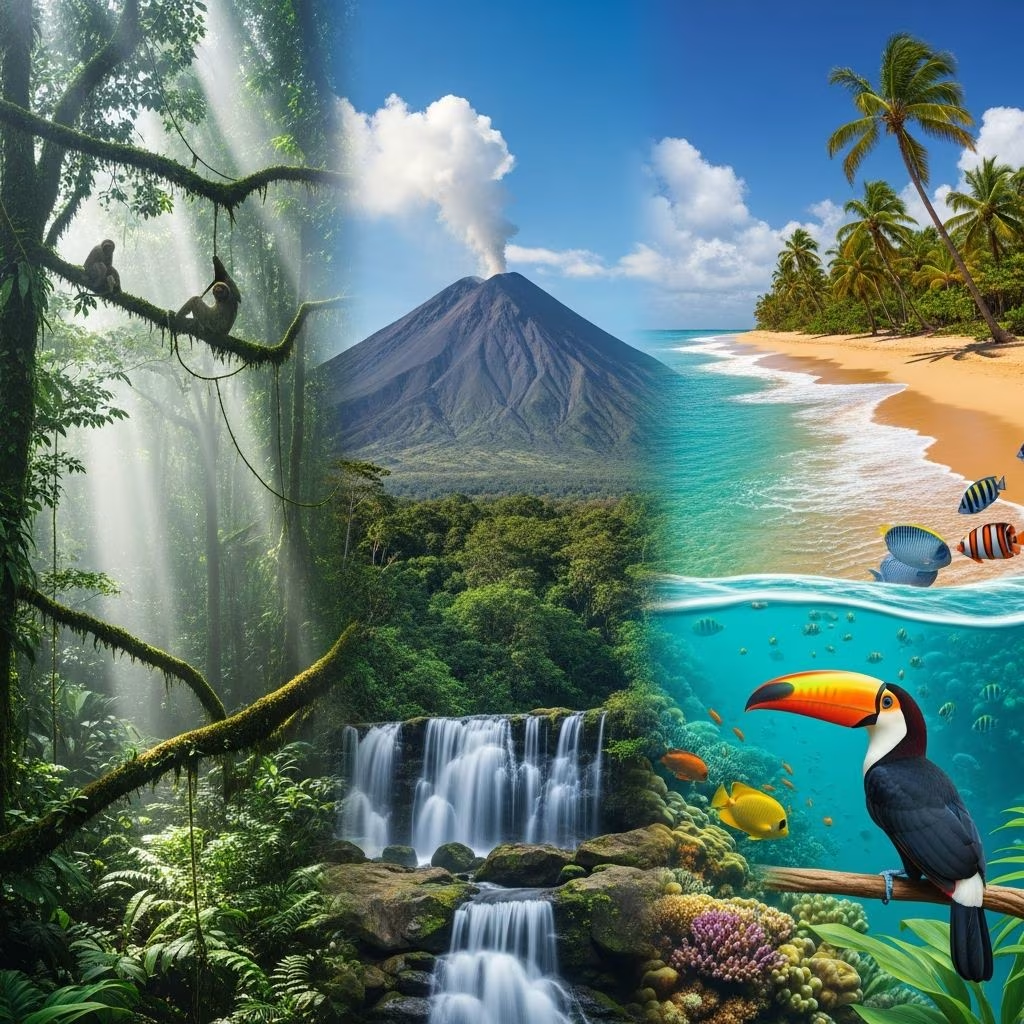
Costa Rica, often called the “Rich Coast,” captivates travelers with its unparalleled biodiversity, stunning landscapes, and commitment to sustainability. Nearly 25% of the country is protected as national parks and reserves, offering endless opportunities for adventure and relaxation. Whether you’re hiking active volcanoes, ziplining through misty cloud forests, or lounging on pristine beaches, this Central American gem embodies the “Pura Vida” lifestyle—pure life at its finest.
In 2026, Costa Rica remains a top destination for nature enthusiasts and adventure seekers. The country boasts five active volcanoes, world-class whitewater rafting, and high-altitude cloud forests teeming with exotic wildlife like the resplendent quetzal. Its eco-tourism leadership ensures visitors experience untouched natural beauty while supporting conservation efforts. Regions like the Nicoya Peninsula, a renowned “Blue Zone,” highlight healthy living through fresh diets and active communities. Safety, accessibility, and diverse itineraries make it ideal for families, couples, and solo travelers.
Costa Rica’s diverse geography spans rainforests, volcanoes, coasts, and highlands. Here’s a breakdown of key areas:
Volcanoes define Costa Rica’s dramatic terrain. Arenal offers scenic hikes and lava field views, while Poás features a boiling acid lake and Irazú a striking green-blue crater. Monteverde’s cloud forest, a biodiversity hotspot, lets you walk suspended bridges amid epiphyte-covered trees. Manuel Antonio National Park combines monkey-filled trails with postcard beaches.
Tailor your trip based on time and interests. Use this table for quick planning:
| Duration | Focus | Key Stops | Highlights |
|---|---|---|---|
| 7 Days | Adventure | San José → Arenal → Monteverde | Volcano hikes, zip-lining, hot springs |
| 10 Days | Nature | San José → Tortuguero → Arenal → Manuel Antonio | Wildlife spotting, beaches, rainforests |
| 14 Days | Complete Loop | San José → Caribbean → Monteverde → Pacific Coast → Guanacaste | All regions: culture, adventure, relaxation |
For a 2-week journey, start in San José for acclimation and culture, detour to the Caribbean for turtle watching, then cross to Arenal and Monteverde for highlands, ending on Pacific beaches. First-timers should prioritize national parks for the best wildlife payoff without extreme logistics.
Costa Rica excels in adrenaline-pumping pursuits:
Cultural immersion includes Sarchí’s hand-painted oxcarts and Guanacaste’s cowboy traditions.
Best Time to Visit: Dry season (December-April) for beaches; green season (May-November) for lush landscapes and fewer crowds.
Getting There and Around: Fly into San José (SJO) or Liberia (LIR). Rent 4×4 vehicles for rural roads; shuttles and domestic flights save time.
Budgeting: Expect $100-200/day per person for mid-range travel, including lodging, food, and activities.
Safety: Costa Rica is safe for tourists; stick to main areas, use reputable operators, and watch for petty theft in cities.
Sustainable Practices: Choose eco-lodges, avoid single-use plastics, and support community tourism to preserve the 25% protected lands.
Options abound:
Prioritize properties certified by the Costa Rican Tourism Institute for sustainability.
Savor gallo pinto (rice and beans), fresh ceviche, and tropical fruits. Coffee tours end with rich brews tasting like liquid chocolate. Nicoya’s Blue Zone diet emphasizes plant-based meals for longevity.
Yes, it’s one of Central America’s safest destinations. Use common sense in urban areas.
San José, Arenal, Monteverde, and Manuel Antonio cover highlights efficiently.
Visit protected parks, choose certified operators, and minimize waste.
Recommended for rural roads, especially in rainy season.
Wildlife spotting in national parks like Manuel Antonio.
Costa Rica offers a perfect blend of adventure, nature, and culture. With thoughtful planning, your 2026 visit will create lifelong memories amid extraordinary biodiversity. Book early for peak season and embrace “Pura Vida.”
