

 Travel Essentials
 Travel Essentials

Discover what makes Costa Rica an exceptional travel destination, from ecological conservation to adventure activities and cultural experiences.
 Travel Essentials
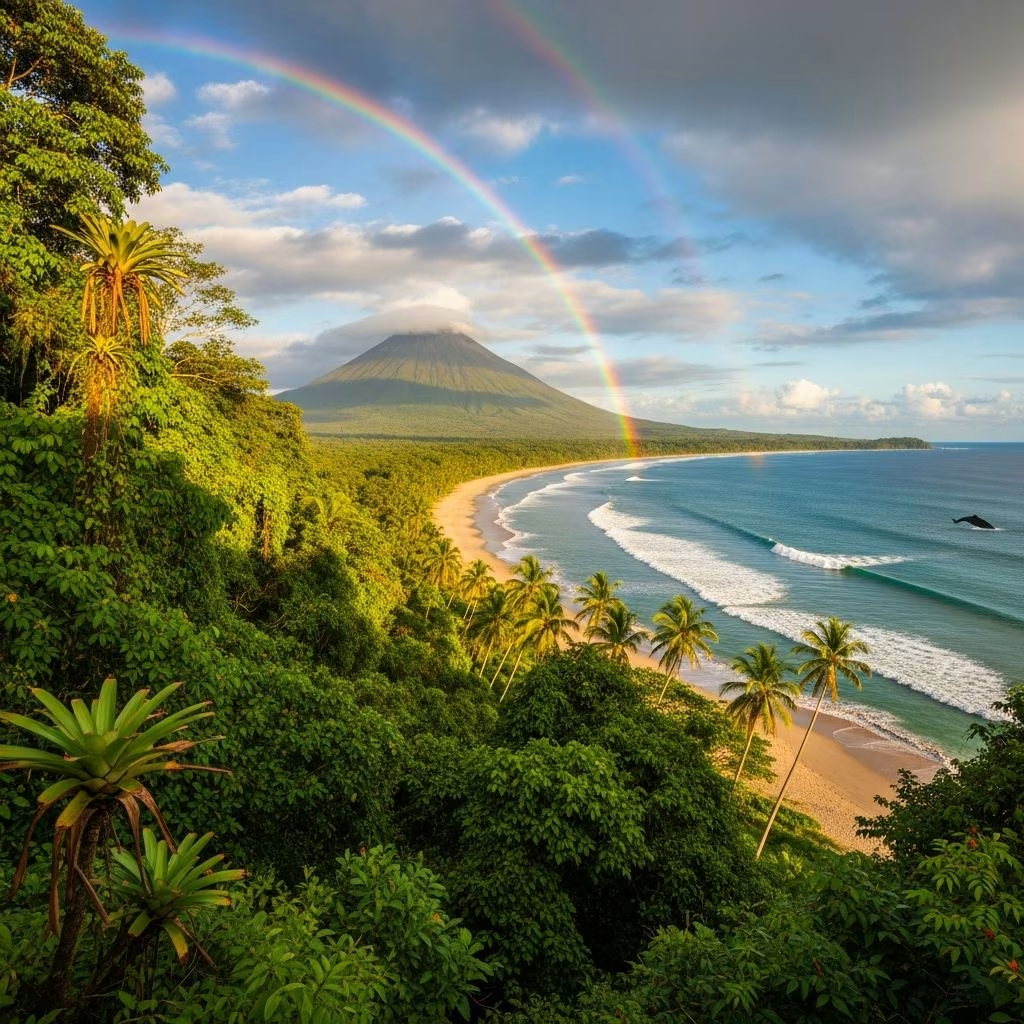
Nestled between Panama and Nicaragua on the Central American isthmus, Costa Rica has emerged as one of the Western Hemisphere’s most compelling travel destinations. The nation’s name, which translates to “Rich Coast,” perfectly captures what visitors encounter upon arrival—a country abundant in natural wonders, cultural depth, and opportunities for meaningful exploration. What distinguishes Costa Rica from other tropical destinations is not merely its picturesque landscapes but rather its profound commitment to conservation and sustainable tourism practices.
The country stands as a global leader in environmental stewardship, dedicating more than one-quarter of its territory to protected areas and conservation initiatives. This commitment translates into tangible benefits for travelers: access to pristine ecosystems, thriving wildlife populations, and landscapes that remain largely unspoiled despite growing tourism infrastructure. With more than 500,000 species of plants and animals distributed across diverse ecological zones, Costa Rica offers naturalists, photographers, and adventure seekers unparalleled opportunities to witness biodiversity in its natural context.
One of Costa Rica’s most remarkable characteristics is its incredible geographic diversity compressed within a relatively compact territory. The country encompasses 12 distinct life zones, ranging from coastal lowlands to high-altitude cloud forests and from humid Caribbean rainforests to drier Pacific slopes. This ecological variety means that travelers can experience dramatically different environments by simply driving a few hours, shifting from beach attire to rainforest hiking gear within a single day.
Costa Rica boasts nearly 800 miles of coastline along both the Pacific Ocean and the Caribbean Sea, providing access to hundreds of beaches with varying characteristics. Beyond the coasts, the interior features significant topographical variation, including mountain ranges, valleys, and plateaus. This geographic complexity creates numerous distinct regions, each with its own character, climate patterns, and tourism offerings.
The northwestern region encompasses several of Costa Rica’s most iconic destinations, anchored by the Arenal Volcano, a cone-shaped volcanic formation that has become synonymous with adventure tourism in the country. La Fortuna, the primary town near Arenal, serves as a base for volcano hikes, exploration of thermal hot springs, and participation in canopy tours. The landscape around this region showcases primary rainforest characteristics, with misty mornings and lush vegetation surrounding volcanic slopes.
Monteverde, located at higher elevation in the northwestern mountains, presents an entirely different ecological context. Home to the renowned Monteverde Cloud Forest Reserve, this destination features perpetual mist, emerald landscapes, and botanical abundance. The cloud forest environment supports more than 3,000 plant species, including 755 different tree varieties, creating habitats for resplendent quetzals, three-wattled bellbirds, and countless insect species found nowhere else on Earth.
Guanacaste, the northwestern coastal province, differs noticeably from central regions by featuring less dense jungle coverage and more accessible development. The province is celebrated for hosting some of Costa Rica’s most stunning shell beaches and establishing itself as a hub for water sports and relaxation. Tamarindo has emerged as the region’s most developed beach town, offering excellent surfing conditions, diverse dining options, and comprehensive tourist infrastructure. Playa Conchal attracts visitors seeking upscale resort experiences, while Flamingo appeals to travelers valuing sophistication and pristine white-sand beaches.
The central Pacific coast presents a different character entirely, featuring thicker jungle coverage that reaches nearly to the shoreline. Manual Antonio represents the quintessential combination of rainforest and beach environments, where visitors can observe wildlife in primary forest before relaxing on tropical beaches within the same day. The Osa Peninsula, particularly the Drake Bay area, epitomizes remote, raw nature—offering outstanding wildlife viewing opportunities and minimal tourism infrastructure compared to more developed regions.
Costa Rica’s volcanic landscape provides opportunities for various activity levels. The country currently maintains five active volcanoes and more than 60 dormant formations. Arenal offers established hiking trails at its base, providing relatively accessible volcano experiences. Poás Volcano features a distinctive crater lake with striking turquoise coloration, while Irazú volcano showcases different geological characteristics. For mountaineers seeking elevation challenges, multiple peaks exceed 11,000 feet, offering cloud forest and páramo (high-altitude grassland) ecosystems.
The rainforest represents Costa Rica’s most iconic ecosystem, and multiple tourism modalities provide access to this environment. Canopy tours using zip-lines, aerial bridges, and observation platforms allow visitors to experience the forest vertical structure—where the majority of biodiversity resides in upper canopy layers rather than the forest floor. Guided hiking trails range from leisurely nature walks to challenging multi-hour expeditions. Nocturnal rainforest tours reveal completely different species assemblages and behaviors than daytime exploration, making these specialized excursions particularly educational.
The extensive coastline supports diverse water activities. Surfing attracts professionals and beginners alike, with different beaches offering varying wave characteristics and difficulty levels. Snorkeling and scuba diving provide opportunities to observe coral reef ecosystems and associated marine fauna. Kayaking through mangrove systems, coastal estuaries, and inland lakes offers perspectives on wetland environments and their dependent species. Boat tours frequently encounter dolphins, humpback whales, sea turtles, stingrays, and other marine megafauna depending on season and location.
Costa Rica’s capital, San José, occupies the geographic center of the country and serves as the primary international transportation hub. While the city lacks the pristine natural attributes of coastal and rainforest regions, it offers cultural institutions reflecting Costa Rican artistic development. The Teatro Nacional showcases architectural significance and hosts performances representing various artistic disciplines. The Museum of Contemporary Art and Design presents visual art reflecting evolving Costa Rican perspectives and creative expression.
San José functions primarily as a transit point for most tourists, typically requiring only a few days for cultural orientation before proceeding to natural attractions. However, the city provides authentic urban experiences absent from tourist-oriented beach and rainforest destinations, offering opportunities to observe daily Costa Rican life, visit local markets, and experience authentic cuisine beyond tourist-oriented restaurants.
Costa Rica’s agricultural heritage remains visible through working landscape experiences available to visitors. Coffee plantation tours demonstrate cultivation, harvest, and processing techniques for the country’s most famous export crop. Cacao production facilities showcase the journey from tropical plant to finished chocolate product. These agricultural tours combine educational content with direct participation opportunities, allowing visitors to engage with rural communities and understand the human dimensions of landscape management.
Travel experts recommend minimum seven-day visits to experience Costa Rica meaningfully, allowing coverage of at least one substantial destination with additional days for travel and acclimatization. Ten-day to two-week itineraries permit visiting multiple regions and experiencing greater ecosystem diversity. Seasonal considerations significantly impact experience quality, with dry season (December through April) offering optimal weather but higher prices and greater tourist congestion. Rainy season (May through November) provides lower prices, fewer tourists, and continued daily sunshine with afternoon precipitation patterns.
Costa Rica maintains approximately 800 miles of coastline and significant internal topographic variation, creating transportation challenges for travelers. Domestic flights provide quick inter-regional movement but increase costs substantially. Ground transportation via rental vehicles offers flexibility but requires adjustment to local driving conditions and road infrastructure variations. Public transportation remains economical but operates on extended timelines unsuitable for tightly scheduled itineraries.
The country experiences consistent sunset timing throughout the year, with darkness arriving around 6:00 PM daily. This geographic reality near the equator means travel planning must account for limited evening activity windows and the importance of completing regional transfers before daylight loss.
Costa Rica’s Nicoya Peninsula has gained recognition as an official “Blue Zone,” representing regions globally where populations demonstrate exceptional longevity and health outcomes. Research attributes these demographics to balanced traditional diets, active lifestyles, strong social cohesion, and integrated health care practices. Visitors increasingly travel to Costa Rica seeking wellness experiences that extend beyond conventional spa offerings, incorporating traditional practices, botanical knowledge, and lifestyle integration approaches.
First-time visitors benefit from understanding that Costa Rica, despite its tourism development, maintains characteristics of a developing nation alongside modern infrastructure elements. The country does not require extensive preparation or specialized equipment for most tourist activities, yet certain regions and seasons present specific considerations. Wildlife encounters, while frequent, remain unpredictable—visitors should maintain realistic expectations regarding animal sightings despite guarantees sometimes offered by tour operators.
The climate presents variable conditions across regions and seasons. Morning mists frequently obscure mountain vistas that may clear by afternoon. Rainy season afternoons typically feature dramatic precipitation followed by clearing skies. Coastal regions experience hotter, more consistent temperatures than highlands, where elevation creates cooler conditions even near the equator.
Dry season (December through April) offers optimal weather but higher prices and crowding. Rainy season (May through November) provides lower prices and fewer tourists while maintaining daily sunshine with afternoon precipitation. Selection depends on personal preferences regarding weather, budget, and crowd levels.
Minimum seven days allows experiencing one destination with travel time. Ten days permits visiting two regions. Two weeks enables comprehensive exploration across multiple ecosystems and regions while minimizing daily travel fatigue.
Adventure enthusiasts can pursue volcano climbing, zip-lining, and whitewater activities. Moderate activity participants enjoy guided rainforest hikes and beach exploration. Relaxation-focused travelers benefit from beach resorts, spa facilities, and gentle nature walks.
Yes, Costa Rica offers family-appropriate experiences. Beach destinations provide safe swimming and water play. Rainforest tours suit varied fitness levels through guide selection and pace customization. Wildlife viewing frequently captivates all ages. Infrastructure in tourist areas accommodates family needs well.
Common sightings include sloths, monkeys, toucans, macaws, and various reptiles. Marine environments feature sea turtles, dolphins, and tropical fish. Encountering specific species depends on destination, season, timing, and chance factors inherent to wildlife observation.
