

 Travel Essentials
 Travel Essentials

Explore Crater Lake National Park's natural wonders, visitor activities, and why this Oregon gem ranks among America's most sought-after travel destinations.
 Travel Essentials
Nestled within the volcanic peaks of Oregon’s Cascade Mountain Range lies one of North America’s most captivating natural wonders. Crater Lake National Park draws visitors from around the globe, captivated by its crystalline waters, dramatic geological formations, and pristine wilderness setting. The park’s surge in online search popularity reflects growing interest in authentic outdoor experiences and UNESCO-caliber natural attractions. Understanding what makes this destination exceptional reveals why travelers increasingly prioritize visiting this remarkable location during their vacation planning.
Crater Lake represents a triumph of geological forces and natural preservation spanning millennia. The lake’s formation traces back approximately 7,700 years, when catastrophic volcanic activity reshaped the landscape. A towering peak that once dominated the Cascade Range collapsed inward following a massive eruption, creating a caldera that eventually filled with pristine water sources. This cataclysmic event, witnessed by indigenous populations inhabiting the region, fundamentally transformed the terrain into the breathtaking landscape visible today.
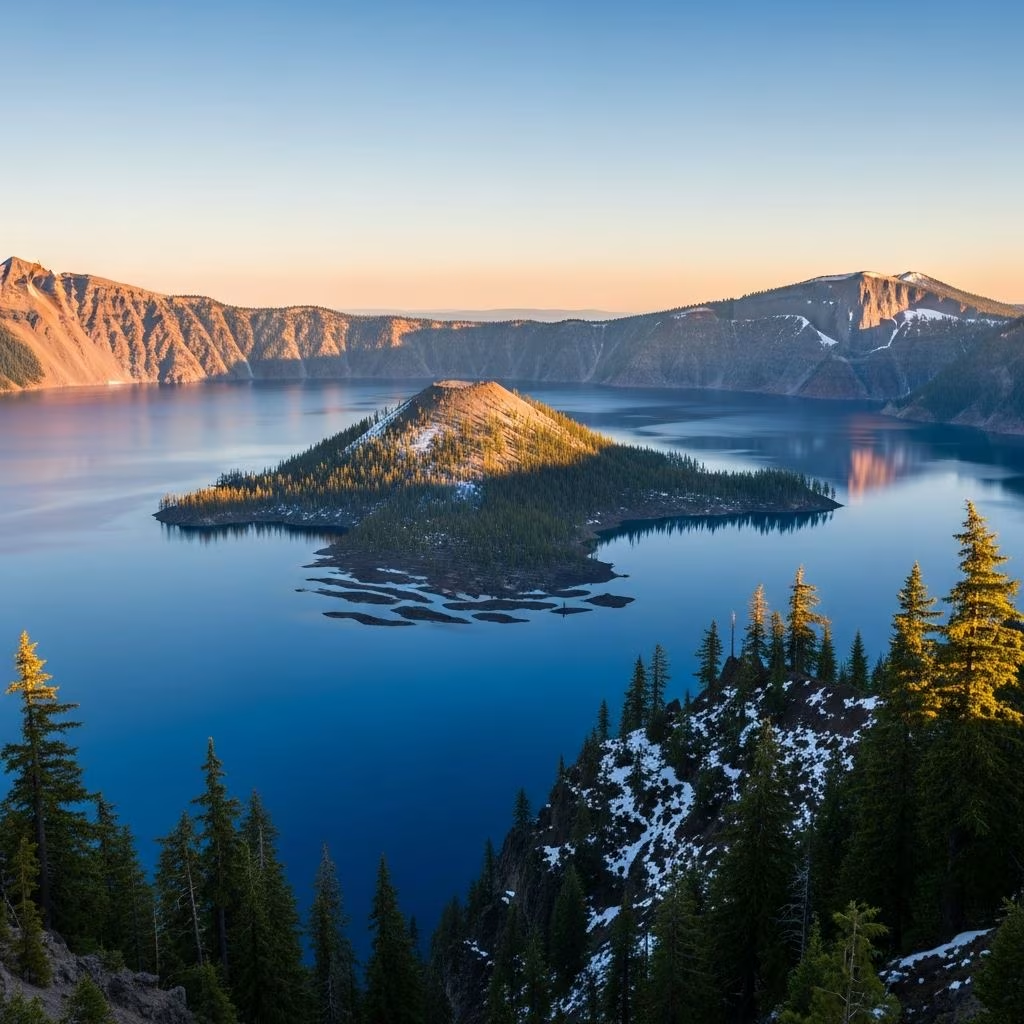
What distinguishes Crater Lake from countless other mountain lakes is its exceptional purity and depth characteristics. As the deepest lake in the United States, Crater Lake maintains water quality standards that astound scientists and environmental researchers. Fed exclusively by precipitation—rain and snow—rather than tributary streams, the lake sustains minimal contamination and maximum clarity. The unique hydrological system creates conditions where sunlight penetrates the water column with remarkable transparency, producing the lake’s signature deep blue coloration that photographs cannot fully capture.
The aesthetic dimensions of Crater Lake generate passionate responses from visitors and inspire creative professionals across multiple disciplines. Photographers strategically position themselves along the rim to capture the interplay between sky, water, and mountain terrain during different seasons and lighting conditions. Artists find endless inspiration in the color gradations, atmospheric conditions, and compositional opportunities presented by the landscape. Sightseers traveling to the park consistently report that personal observation surpasses expectations created by photographs and promotional materials.
The lake’s distinctive blue hue results from complex optical phenomena involving water depth, mineral composition, and light absorption properties. Visitors frequently comment that the color intensity exceeds what their cameras can accurately reproduce, creating a memorable experiential gap between seeing the lake in person and viewing images afterward. This photographic authenticity challenge has paradoxically increased interest, as social media users seek to capture and share their own perspectives of this natural phenomenon.
Crater Lake National Park offers diverse activities suited to different seasons, visitor preferences, and physical ability levels. The park’s recreational calendar provides options throughout the year, though seasonal conditions significantly influence accessibility and available experiences.
Summer months attract the largest visitor concentrations, as weather conditions facilitate road access around the crater rim and enable extensive hiking opportunities. The turquoise and deep blue waters that characterize Crater Lake become visible along the entire 33-mile rim drive during peak season. Visitors navigate scenic overlooks, stopping frequently to observe geological features and photograph distinctive landscapes from multiple vantage points. Backcountry hiking permits allow adventurous travelers to explore remote areas of the park away from primary roadways, discovering lesser-known viewpoints and wildlife habitats.
Winter transforms Crater Lake into a snow-covered wonderland offering specialized recreational pursuits. The Raven Trail emerges as the premier winter activity, functioning as an accessible snowshoe route from the Steel Visitor Center westward toward Garfield Peak and the crater rim. This winter-specific trail maintains regular maintenance, enabling snowshoe enthusiasts to experience the park’s landscapes under seasonal snow cover. The winter season attracts visitors seeking solitude and distinctive photographic opportunities unavailable during busier months.
Understanding access limitations proves essential for trip planning and expectation management. Seasonal closures and maintenance activities periodically restrict visitor movement within the park. Currently, the east rim remains closed to vehicular traffic as park authorities complete snow removal operations, requiring visitors to utilize the west rim access route. This temporary limitation redirects visitor flow while preserving the visitor experience and allowing maintenance crews to complete necessary work without compromising safety or accessibility for active park areas.
The surge in online search activity for Crater Lake National Park reflects broader travel industry trends and evolving visitor priorities. Digital search data reveals increasing interest in authentic natural destinations offering substantial differentiation from urban environments and developed tourist infrastructure. Crater Lake’s remote location, geological uniqueness, and pristine condition position it advantageously within this shifting travel consciousness.
Several interconnected factors explain the park’s trending status across search platforms:
Successful visits require consideration of multiple planning dimensions. The park’s elevation—approximately 7,700 feet at the rim—creates distinctive climate conditions differing significantly from surrounding lower elevations. Weather patterns shift rapidly, requiring flexible preparation strategies and weather-appropriate clothing across seasons.
| Season | Best For | Weather Conditions | Access Level |
|---|---|---|---|
| Summer | Hiking, sightseeing, rim drive | Mild temperatures, occasional afternoon storms | Full access |
| Fall | Photography, fewer crowds | Cool temperatures, crisp air | Gradual restrictions begin |
| Winter | Snowshoeing, solitude | Heavy snow, extreme cold | Limited access |
| Spring | Wildlife viewing, emerging trails | Variable conditions, melting snow | Transitional access |
Crater Lake holds profound cultural importance to indigenous peoples whose ancestors inhabited the Pacific Northwest region. The dramatic volcanic eruption that created the caldera occurred within human memory, recorded through oral traditions passed across generations. Native American tribes maintained deep spiritual connections to the landscape, viewing it as sacred terrain worthy of respect and careful stewardship. Modern park management increasingly incorporates indigenous perspectives into conservation strategies and interpretation programs, honoring the historical continuity of human relationship with this landscape.
Maintaining Crater Lake’s pristine condition requires continuous management attention and resource allocation. The park’s exceptional water purity faces potential threats from atmospheric deposition, invasive species, and climate-related impacts. Park officials implement strict regulations limiting development, restricting certain recreational activities, and monitoring water quality parameters. These preservation efforts ensure that increasing visitor numbers do not compromise the environmental conditions that make the destination exceptional.
While swimming is technically permitted in designated areas, water temperatures remain frigid year-round due to the lake’s depth and elevation. Most visitors observe rather than enter the water, though hardy swimmers occasionally brave the experience during summer months.
Summer and early fall offer optimal conditions for rim drive access and hiking activities. Winter provides unique snowshoeing experiences for visitors prepared for challenging weather. Spring offers transitional conditions with emerging wildlife activity.
A minimum of one full day accommodates the rim drive and basic sightseeing. Multi-day visits enable more extensive hiking exploration and deeper engagement with the landscape.
Pets remain restricted from trails but may accompany visitors on roadways. Specific regulations govern pet access to maintain wildlife protection and trail preservation standards.
Crater Lake National Park’s prominence in travel searches reflects genuine distinctiveness as an American natural treasure. The combination of geological significance, visual magnificence, recreational opportunities, and preservation importance creates a destination meriting attention from diverse visitor categories. Whether seeking photographic inspiration, outdoor recreation, geological education, or spiritual connection with landscape, visitors discover authentic experiences at this volcanic wonder. As travel interests continue evolving toward authentic, distinctive, and environmentally conscious experiences, Crater Lake’s search prominence will likely intensify, attracting even greater numbers of visitors committed to witnessing this remarkable natural formation.
