

 Travel Essentials
 Travel Essentials

Explore Crater of Diamonds State Park, where visitors dig for genuine gems on a 37-acre field. Learn history, tips, and recent finds like multi-carat diamonds.
 Travel Essentials
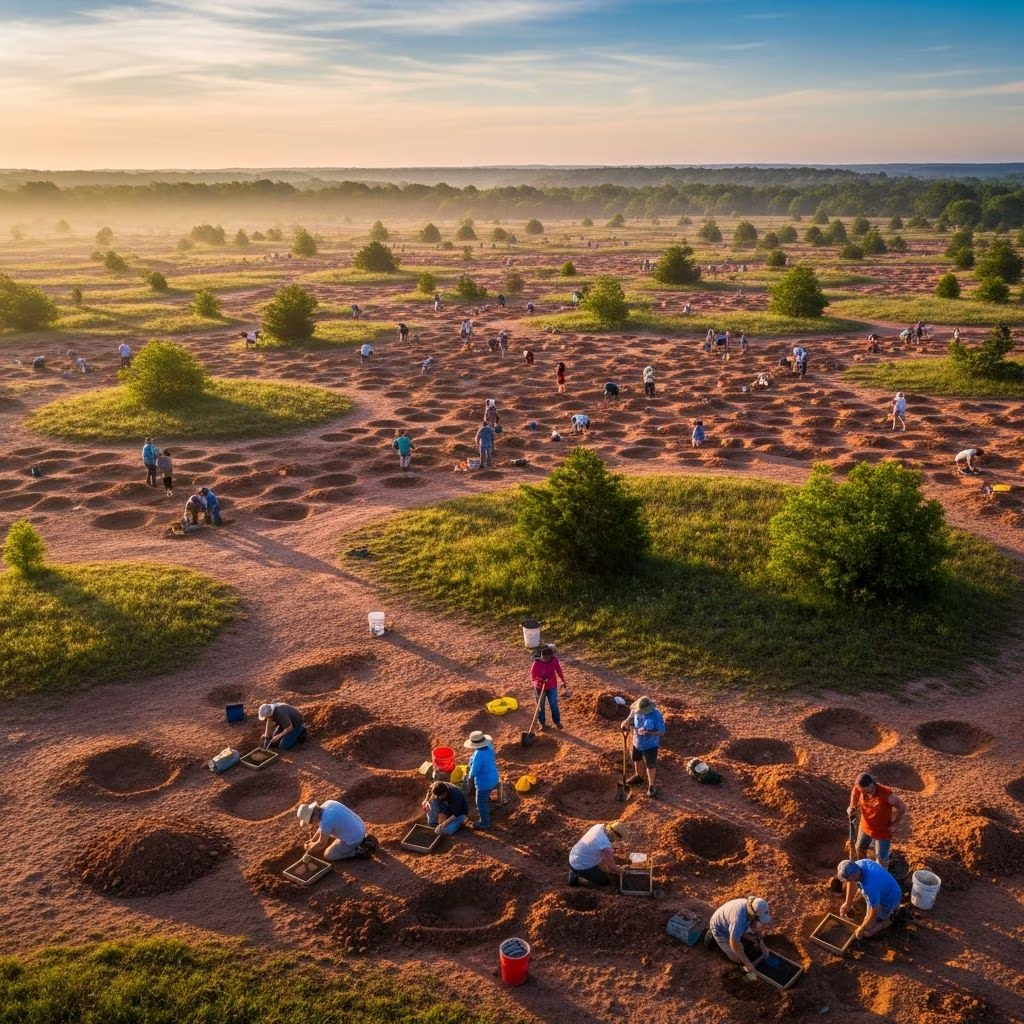
The allure of discovering a sparkling diamond beneath your feet draws adventurers from across the globe to **Crater of Diamonds State Park** in Murfreesboro, Arkansas. This 911-acre haven sits atop an ancient volcanic pipe, offering the world’s only public access to a natural diamond deposit. For a modest entry fee, visitors roam a vast 37-acre plowed field, sifting through soil in hopes of claiming their own gemstones—yours to keep if fortune smiles upon you.
Over 100 million years ago, a massive volcanic eruption formed the Prairie Creek Pipe, thrusting diamonds from the Earth’s deep mantle to the surface. This eroded crater now exposes a treasure trove where diamonds mingle with everyday dirt. Unlike mined jewels from commercial operations, these stones remain in their raw, volcanic birthplace.
Diamonds here vary in hue: white, brown, and yellow dominate, with rarer colors occasionally appearing. Brown variants arise from plastic deformation during formation, creating defects that reflect light in reddish-green tones, giving them a chocolate-like appearance. Most finds weigh under one carat, but their smooth, rounded shapes and metallic sheen set them apart from typical crystals.
The saga began in 1906 when local farmer John Wesley Huddleston stumbled upon the first diamonds on his land. News spread like wildfire, igniting a diamond rush in Pike County. Prospectors flooded the area, birthing the short-lived town of Kimberly. Rival companies vied for control until 1952, when they partnered to open the site as a tourist attraction.
Arkansas acquired the property in 1972, transforming it into a state park. Since then, visitors have unearthed more than 37,377 diamonds as of early 2026. Iconic specimens include the 40.23-carat Uncle Sam—the largest ever found in the U.S.—dug up in 1924 by worker Wesley Oley Basham. Others shine brightly: the 16.37-carat Amarillo Starlight, 15.33-carat Star of Arkansas, and 8.52-carat Esperanza.
Modern highlights continue the legacy. In 1990, Shirley Strawn found the 3.03-carat Strawn-Wagner, later cut into a flawless 1.09-carat gem, the highest quality ever graded by the American Gemological Society. Recent years boast finds like the 4.38-carat diamond in 2021 and a 3.29-carat brown stone in 2023.
These tales underscore the park’s magic: no guarantee of success, but endless potential for personal triumph. On average, two diamonds surface daily amid thousands of visitors.
Preparation elevates your odds. The park rents shovels, screens, and buckets, but bringing your own is fine—minus ladders or motorized gear. Staff recommend three core techniques:
| Method | Description | Best For |
|---|---|---|
| Surface Searching | Scan the plowed field post-rain or tilling for exposed gems. | Beginners; quick hunts. |
| Digging Holes | Excavate 6-12 inches deep in clay-rich “paydirt” zones. | Families; larger finds. |
| Washing & Screening | Sift soil in water to separate heavies like diamonds. | Thorough searches; groups. |
Prime spots include the field’s north side, Prospector Trailhead, and low-lying areas after rains, which wash away lighter debris. Park interpreters offer free demos and identification services.
Open year-round, the park charges $15 for adults, $8 for kids 6-12, free for under 6. Hours: 8 a.m. to 8 p.m. in summer, shorter in winter. Beyond hunting, enjoy:
Pack sunscreen, water, sturdy shoes, and patience. Post-rain visits yield best results as fresh plowing exposes new material. Register finds over 1 carat for fame on the park’s “Diamond Wall.”
The field teems with variety. Common treasures include:
Every discovery is yours, turning a day out into a personal collection.
Crater of Diamonds transcends typical attractions. It’s hands-on geology, where luck meets effort. Families bond over muddy digs, couples craft engagement stories, and solo travelers chase solitude with sparkle potential. Listed on the National Register of Historic Places since 1973, it blends education, recreation, and raw excitement.
Whether you pocket a speck or a showstopper, the experience imprints. As one finder noted, it’s not just about the diamond—it’s the hunt that hooks you.
Average two per day, but thousands visit. Persistence pays off.
Yes! Diamonds, rocks, minerals—all yours.
After rain or plowing for surface gems.
Rentals available; bring your own non-motorized gear.
Most under 1 carat; record is 40.23 carats.
