

 Travel Essentials
 Travel Essentials

A comprehensive guide to Croatia's premier national parks, featuring cascading waterfalls, alpine lakes, and Mediterranean ecosystems perfect for nature enthusiasts.
 Travel Essentials
Croatia possesses some of Europe’s most remarkable natural areas, with its national parks representing some of the continent’s finest examples of protected wilderness. These carefully preserved regions showcase diverse ecosystems ranging from Mediterranean forests to alpine landscapes, offering visitors an unparalleled opportunity to experience unspoiled nature. The country’s commitment to environmental conservation has resulted in the establishment of eight national parks, each with distinct characteristics and ecological significance.
Croatia’s national parks system represents decades of dedicated conservation efforts, beginning in the mid-20th century when the first protected areas were officially designated. These parks have become increasingly important as refuge areas for endangered species and as destinations for travelers seeking authentic natural experiences. The diversity of these protected landscapes reflects Croatia’s geographical position, spanning from the Pannonian plains in the north to the Adriatic coastline in the south.
The Croatian national parks were developed with the goal of preserving exceptional natural features while allowing sustainable public access. Each park was selected based on unique geological formations, biodiversity, or ecological importance. The system includes parks focused on lacustrine environments, fluvial ecosystems, maritime protection, and mountain terrain. This diversity ensures that visitors can experience multiple distinct natural environments within a single country.
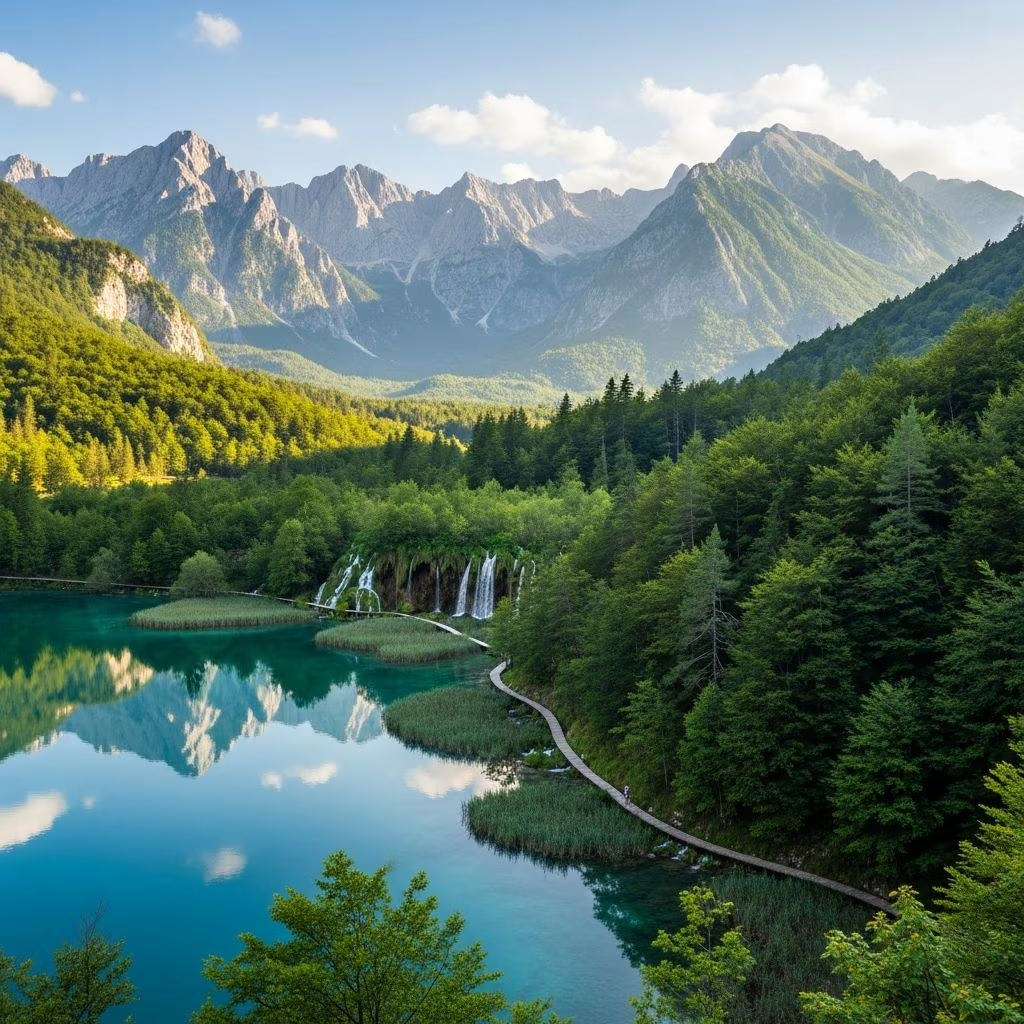
One of Croatia’s most distinctive national parks features an extraordinary system of interconnected water bodies and dramatic waterfalls. Located in the central portion of the country near the borders with Bosnia and Herzegovina, this protected area covers nearly 297 square kilometers—an expanse so vast it could accommodate Manhattan Island five times over. The park was officially established in 1949 and achieved UNESCO World Heritage Site status in 1979, recognizing its exceptional geological and ecological value.
The landscape is characterized by sixteen cascading lakes connected by ninety waterfalls, streams, and subterranean cave systems. The formation of these distinctive features results from complex hydrogeological processes involving limestone dissolution and calcium carbonate deposition. Visitors encounter a striking natural phenomenon where turquoise waters flow over travertine dams, creating an almost surreal visual landscape. The park remains accessible throughout the year, though seasonal variations significantly affect water flow rates and visitor experience.
The interconnected nature of the lake system creates dynamic ecological conditions throughout the park. Upper lakes exhibit different characteristics from lower lakes due to elevation and water chemistry variations. The cascading arrangement means visitors can observe diverse microclimates and vegetation zones as they traverse the park’s elevation changes. Well-marked trails guide visitors through this aquatic maze, providing access to the most spectacular vistas without compromising ecosystem integrity.
Another significant protected area takes its name from a major river system flowing through the Dalmatia region. This park was designated in 1955 and encompasses the section of river between two major towns. The park is particularly renowned for its prominent waterfall features, with the largest reaching an impressive sixty meters in height. These water features have shaped the regional geology and continue to define the park’s primary attraction.
The river’s powerful flow carves through limestone bedrock, creating dramatic gorges and scenic viewpoints. Visitor facilities have been carefully integrated to minimize environmental impact while providing optimal viewing opportunities. Boat excursions and riverside walking paths offer different perspectives on this dynamic aquatic environment. The combination of water features, forest coverage, and geological formations creates a landscape of exceptional beauty and scientific interest.
The northwestern section of a significant Adriatic island has been protected as a national park since 1960. This insular environment encompasses two picturesque salt lakes enclosed by evergreen forests, creating a unique Mediterranean ecosystem. The park’s boundaries were expanded in 1997 to include portions of the island’s coast, establishing protection for an endangered Mediterranean monk seal colony inhabiting these waters. This expansion reflects evolved understanding of ecosystem requirements and the necessity of protecting species across multiple habitat types.
Island national parks present distinct conservation challenges compared to mainland protected areas. The limited land area demands careful management of visitor flows to prevent degradation of sensitive habitats. The marine component adds complexity to park administration, requiring coordination with maritime authorities and fishing communities. Despite these challenges, island parks provide exceptional opportunities for studying isolated population dynamics and endemic species adaptation.
The least internationally recognized of Croatia’s national parks occupies a northern mountain region, covering approximately 64 square kilometers. Established in 1953, this protected area situates itself merely fifteen kilometers from the Adriatic coast, creating a dramatic transition zone between maritime and alpine environments. The park represents a paradise for visitors seeking untouched wilderness and tranquility away from more heavily visited destinations.
This northern park showcases the region’s traditional architectural heritage through distinctive stone and wood structures built in the regional “goranske” style. A 4.2-kilometer nature trail winds through the park, offering optimal access to the region’s biodiversity while remaining respectful of sensitive ecological zones. The trail integrates cultural and natural heritage interpretation, helping visitors understand the complex relationships between traditional human settlement patterns and ecosystem function.
Another protected area encompasses dramatic torrent gorges carved by powerful water systems through mountain terrain. These gorges represent geomorphological features of exceptional significance, with steep canyon walls providing habitat for specialized rock-dwelling species. The accessibility of gorge environments varies seasonally, with some areas requiring specific skill levels or equipment. Hiking through canyon landscapes offers visitors perspective on the immense erosional power of flowing water and the complex geology underlying surface landscapes.
| Protected Area | Establishment Year | Primary Feature | Geographic Region | Size/Notable Characteristic |
|---|---|---|---|---|
| Cascading Lakes Park | 1949 | 16 lakes, 90 waterfalls | Central Croatia | 297 km²; UNESCO World Heritage |
| Waterfall River Park | 1955 | 60m waterfall | Dalmatia region | River gorge system |
| Island Salt Lakes Park | 1960 | Mediterranean monk seals | Adriatic Island | Expanded 1997 for marine protection |
| Mountain Wilderness Park | 1953 | Alpine habitat | Northern Croatia | 64 km²; 15km from Adriatic |
| Gorge Canyon Park | Various | Torrent gorges | Mountain regions | Hiking and geological features |
Croatia’s national parks accommodate hundreds of thousands of annual visitors while maintaining ecological integrity through managed access policies. Visitor facilities have been designed to minimize environmental footprint, with boardwalks and designated trails protecting sensitive vegetation and soil systems. Educational programming helps visitors understand the geological processes, ecological relationships, and conservation challenges specific to each park.
The parks function as critical refuge areas for numerous species, including some found nowhere else on Earth. Endemic plant and animal populations persist within these protected boundaries, representing genetic heritage of global significance. Research institutions utilize park ecosystems as natural laboratories for studying ecological processes, climate adaptation, and conservation biology.
Water flow through park systems varies dramatically with seasonal precipitation patterns and snowmelt from higher elevations. Spring and early summer typically feature maximum waterfall activity and water volume. Summer visits provide optimal weather for hiking and water activities, though crowding increases substantially. Autumn offers reduced visitor numbers combined with pleasant temperatures and colorful vegetation changes. Winter experiences vary by elevation, with some areas receiving significant snowfall while lower-elevation parks remain accessible year-round.
Croatia’s national parks face mounting pressures from climate change, increasing tourism demand, and development pressures in surrounding regions. Park administrators must balance visitor access with habitat protection, implement sustainable management practices, and maintain adequate funding for conservation initiatives. International cooperation, particularly regarding transboundary species and shared water resources, remains essential for long-term park viability.
Future management strategies increasingly incorporate climate adaptation measures, recognizing that species distributions and ecological relationships will shift as temperatures and precipitation patterns change. Restoration of degraded habitats and reintroduction programs for extirpated species represent proactive conservation approaches being implemented within several parks.
The park featuring cascading lakes and multiple waterfalls represents Croatia’s largest protected area, spanning nearly 297 square kilometers and encompassing sixteen interconnected lakes connected by ninety waterfalls.
Park designation occurred throughout the mid-to-late twentieth century, beginning in 1949 with the largest cascading lakes park, followed by establishment of other protected areas including a waterfall river park in 1955 and an island ecosystem park in 1960.
Many parks remain accessible year-round, though seasonal variations affect specific features and accessibility. Water flow and weather conditions influence optimal visiting periods for different park locations.
Extensive trail systems exist throughout the parks, including a 4.2-kilometer nature trail through a northern mountain park and well-marked paths through lake and waterfall systems.
Mediterranean monk seals inhabit marine areas within island park boundaries, with expanded protections established in 1997 specifically to safeguard this endangered population.
Visitors should research specific park characteristics and plan visits according to personal interests and physical capabilities. Transportation accessibility varies between parks, with some requiring vehicle access while others involve boat travel. Accommodation options range from camping facilities within park boundaries to hotels in nearby towns. Guided tour services provide interpretive experiences explaining ecological, geological, and cultural significance of park features.
Croatia’s national parks represent one of Europe’s most significant collections of protected natural areas, offering visitors exceptional opportunities to experience pristine wilderness while contributing to conservation funding through tourism revenue. These protected landscapes preserve irreplaceable natural and cultural heritage while demonstrating successful integration of human communities and ecosystem conservation.
