 Stays
StaysStays
Cruise Ship Safety: Standards, Drills, Medical Care & Tips
Explore comprehensive cruise ship safety protocols, from mandatory drills and international standards to health measures and passenger best practices for worry-free voyages.
 Stays
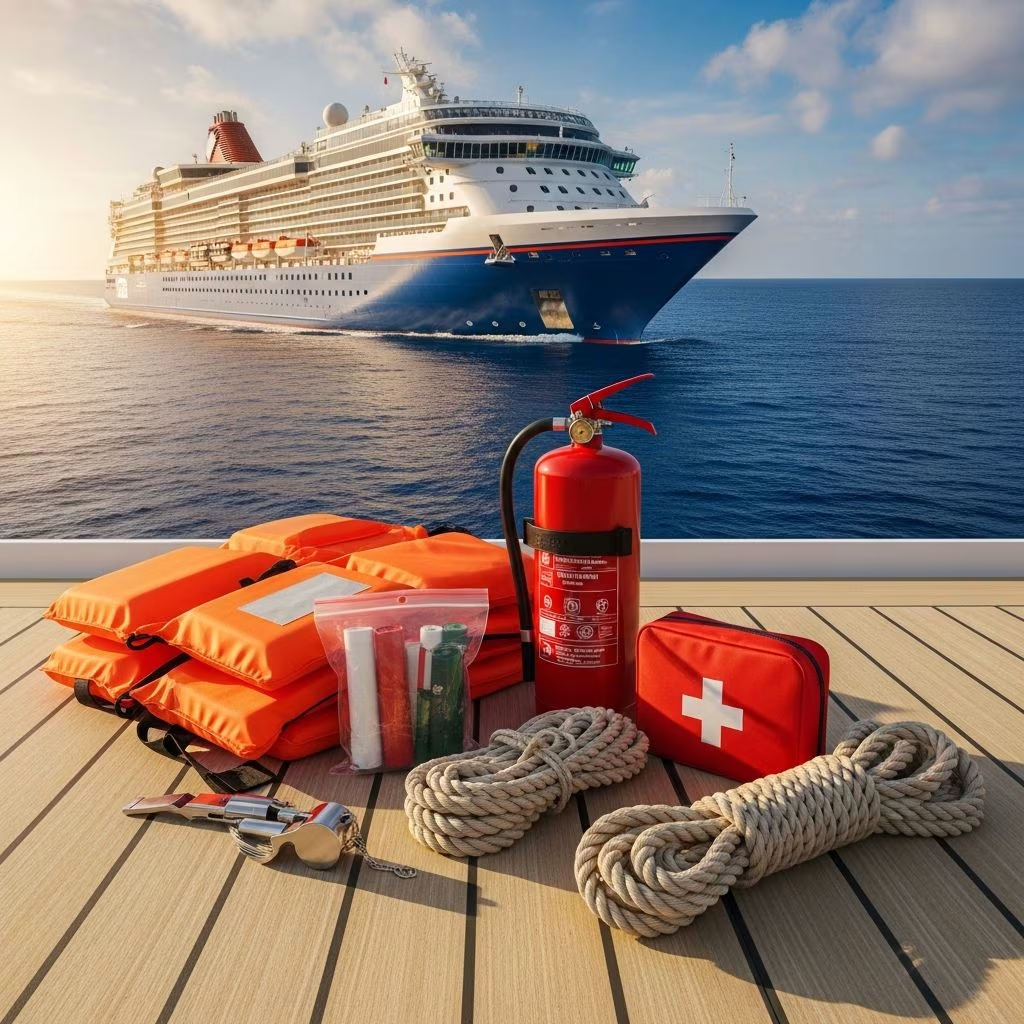
StaysCruise ships represent one of the safest forms of travel, backed by rigorous international standards and multi-layered oversight. Operators adhere to strict protocols set by bodies like the International Maritime Organization (IMO), ensuring vessels exceed basic requirements for structural integrity, emergency response, and passenger welfare.
Global Standards Governing Cruise Operations
The foundation of cruise ship safety lies in the Safety of Life at Sea (SOLAS) Convention, administered by the IMO, a United Nations agency. This treaty mandates comprehensive design, construction, and operational standards, including sufficient life-saving appliances for all onboard individuals plus reserves. Vessels undergo continuous scrutiny from flag states, port authorities, and classification societies from the initial build through ongoing service.
In the United States, the Cruise Vessel Security and Safety Act (CVSSA) of 2010 imposes additional mandates for ships entering U.S. ports, covering railing heights, surveillance systems, medical readiness, and incident reporting. The U.S. Coast Guard performs biannual inspections to verify compliance with fire protection, lifesaving gear, stability, and navigation rules. These overlapping regulations create a robust safety net, with operators often surpassing minimums through proprietary enhancements.
Mandatory Emergency Preparedness Drills
Every cruise begins with a muster drill, conducted before departure or within 24 hours, orienting passengers on life vest usage, lifeboat locations, and evacuation paths. Crew members demonstrate procedures at assigned stations, and modern lines use digital self-mustering systems where guests scan muster cards prior to boarding. No ship departs until all passengers are accounted for.
Crew training intensifies this preparation: weekly, monthly, and annual simulations cover evacuation, fire response, and medical scenarios. All personnel, regardless of role, receive certification in first aid, alarms, and fire prevention. This regimen ensures rapid, coordinated action in crises, contributing to exemplary safety records over decades.
Medical Facilities and Health Protocols
Cruise lines maintain 24/7 medical bays staffed by qualified professionals, featuring exam rooms, intensive care units, lab processing, and vital monitoring equipment. Guidelines developed with the American College of Emergency Physicians set these standards for major operators. Severe cases transfer to shore facilities.
Health oversight includes pre-boarding screenings, terminal-to-terminal deep cleans with specialized sanitizers, and staff training in infection control. U.S.-bound ships face at least two annual unannounced public health inspections, plus internal audits. These measures mitigated risks during past outbreaks, reinforcing cruises as secure vacation choices.
| Facility Type | Standard Equipment | Staffing |
|---|---|---|
| Medical Bay | Exam room, ICU, labs, monitors | 24/7 physicians/nurses |
| Daily Operations | Medications, oxygen, defibrillators | First aid trained crew |
| Emergency Transfer | Shore referrals, helicopter pads | Coordinated with ports |
Security Measures and Crime Prevention
Security teams, often led by ex-law enforcement, monitor via closed-circuit TV, access controls, and 24/7 patrols. CVSSA requires crime reporting protocols, designated responders, and passenger-accessible security guides detailing onboard law enforcement processes. Ships maintain zero-tolerance for disruptions, illegal substances, or fire hazards like improper smoking.
Passengers receive orientation on these systems, with captains holding ultimate authority for safety interventions. Sophisticated navigation tech enables safe passage in adverse weather, backed by redundant systems.
Personal Strategies for Passenger Safety
While operators provide the framework, individual vigilance enhances protection. Key practices include:
- Buddy System: Travel with companions on board and ashore to enable quick assistance.
- Cabin Security: Lock doors and balconies; report issues to security immediately.
- Alcohol Moderation: Limit intake to maintain awareness.
- Rule Adherence: Follow all posted guidelines, born from past incidents.
- Slip Prevention: Wear non-slip footwear on decks and balconies.
Avoid high-risk pursuits like wave simulators or extreme excursions unless risk-assessed. Steer clear of crowded indoor spaces to minimize illness or injury exposure.
Navigating Shore Excursions Safely
Shore activities demand equal caution: select operator-led tours for inherent safety, research destinations via State Department advisories, and share itineraries. Stick with groups, avoid isolated areas, and carry essentials like ID and meds. Local laws vary, so respect customs to prevent mishaps.
Fire Safety and Prevention Protocols
Structural fireproofing, advanced detection, and suppression systems define modern ships. Crew drills emphasize containment and evacuation. Passengers aid by observing no-smoking zones, proper e-cigarette use, and avoiding unattended irons or candles.
Weather and Navigation Resilience
Captains leverage radar, satellite data, and stability designs to evade storms. Backup power, steering, and communications ensure continuity. Ports deny entry to unsafe vessels, adding oversight.
FAQs on Cruise Ship Safety
What happens if I miss the muster drill? Ships delay sailing; participation is mandatory via app or station.
Are lifeboats sufficient for everyone? Yes, with extras per SOLAS.
How often are ships inspected? Biannually by Coast Guard, plus ongoing by class societies.
What if I’m a crime victim? Report to security; CVSSA mandates protocols.
Is medical care free? Basic is included; advanced may incur fees.
Choosing Safe Cruise Lines
Prioritize lines with strong records, like those CLIA-affiliated, transparent inspections, and awards for humanitarian aid. Review recent audits and passenger feedback, but prioritize official data.
References
- Cruise Ship Safety Tips — American Safety Council Blog. 2023. https://blog.americansafetycouncil.com/cruise-ship-safety-tips/
- Safety At Sea — CruiseOne. 2024. https://www.cruiseone.com/travel/cruises/Editorial.html?edType=Custom+Page&pagename=Safety_At_Sea
- Safety & Security Onboard Our Cruises — Royal Caribbean. 2025-04-01. https://www.royalcaribbean.com/resources/safety-and-security
- Cruise Ships Safety Tips — U.S. Department of State. 2025. https://travel.state.gov/en/international-travel/planning/safety-tips/cruise-ships.html
- Health & Safety — Cruise Lines International Association (CLIA). 2025-03-15. https://cruising.org/health-safety
- Passenger Cruise Ship Information — U.S. Department of Transportation. 2024-12-10. https://www.transportation.gov/mission/safety/passenger-cruise-ship-information
- 10 Cruise Safety Tips — Brais Law. 2024. https://www.braislaw.com/blog/10-cruise-safety-tips-reducing-your-risk-of-injury-and-illness-onboard/
- Safety and Security — Carnival Cruise Line. 2025-02-20. https://www.carnival.com/legal/safety-security
On This Page
Global Standards Governing Cruise Operations Mandatory Emergency Preparedness Drills Medical Facilities and Health Protocols Security Measures and Crime Prevention Personal Strategies for Passenger Safety Navigating Shore Excursions Safely Fire Safety and Prevention Protocols Weather and Navigation Resilience FAQs on Cruise Ship Safety Choosing Safe Cruise Lines← Previous
How to Resolve Cruise Ship Problems Effectively
Next →
Cruise Ship Dining Guide: Best Meals, Venues & Tips
Related Reading