

 Travel Essentials
 Travel Essentials

Comprehensive guide to Cuba's visa requirements: eTA, D'Viajeros form, exemptions, U.S. rules, and essential documents for all travelers.
 Travel Essentials
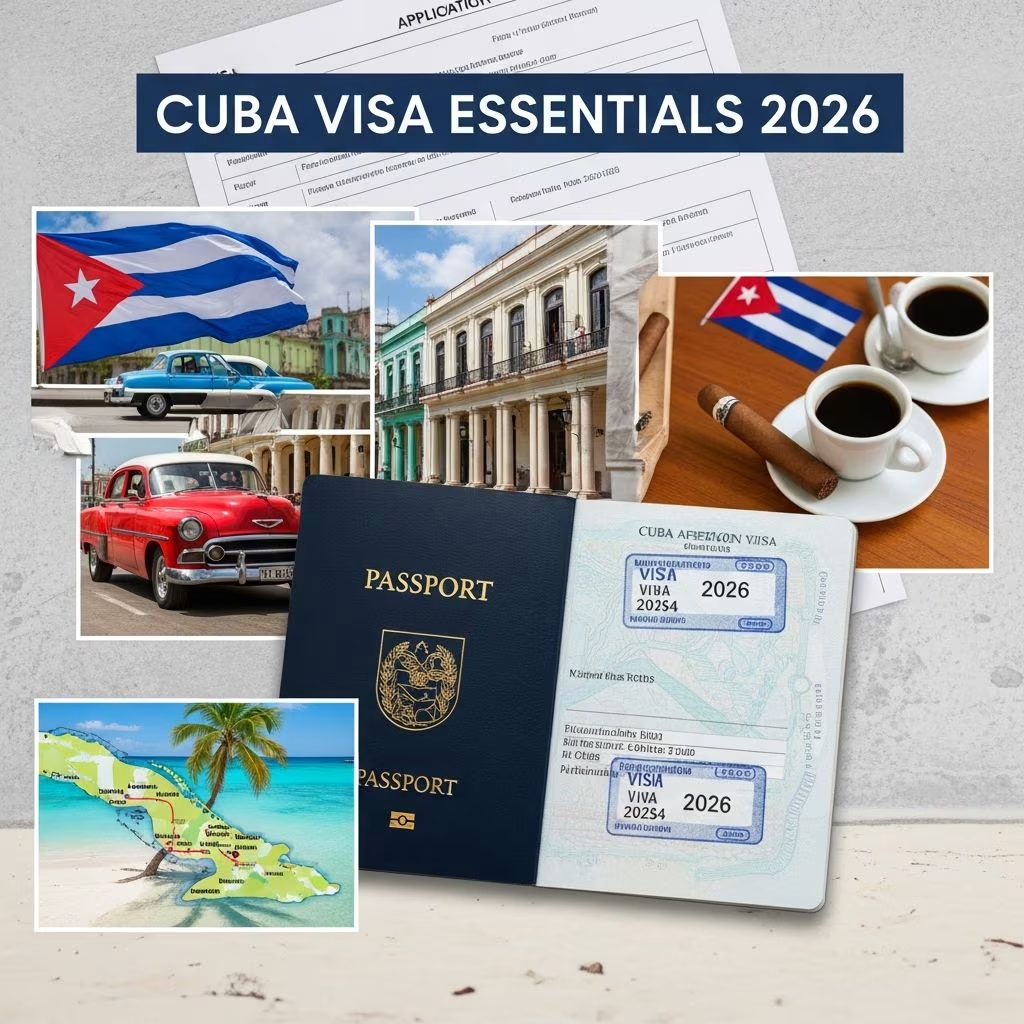
Traveling to Cuba demands careful attention to evolving entry protocols, particularly with the electronic travel authorization (eTA) mandatory for non-Cuban nationals since July 1, 2025, alongside the D’Viajeros digital form for all arrivals. This guide outlines every requirement, from passport validity to insurance, ensuring compliance for tourists, business travelers, and others.
A valid passport forms the foundation of Cuba entry, typically needing at least six months’ validity beyond your departure date, though this varies by nationality—such as two months for Canadians. Beyond that, most visitors require a tourist visa or e-Visa, valid for single-entry stays up to 90 days, extendable once for another 90 days.
Financial proof, like USD 50 daily solvency, may also be requested for non-Cubans.
Since mid-2025, non-Cuban nationals must secure an eTA before flying, applied for digitally at eVisa-Cuba with passport details, fees, and status tracking. This replaces traditional tourist cards for many, streamlining approvals but adding a pre-trip step. U.S. travelers qualify only under one of OFAC’s 12 categories, like family visits or educational activities—no pure tourism allowed.
| Document | Applies To | Validity | Application Method |
|---|---|---|---|
| eTA | Non-Cuban nationals | Single entry, up to 90 days | Online at eVisa-Cuba |
| D’Viajeros | All passengers | Per trip (QR code) | Online pre-arrival |
| Tourist Visa | Most nationalities | 90 days, extendable | Online, consulate, or agency |
Cuba maintains bilateral pacts waiving visas for select passport holders, allowing stays without extra documents beyond standard proofs. For instance, nationals from Russia, Serbia, Bosnia and Herzegovina, Malaysia, Montenegro, and North Macedonia enjoy up to 90 days visa-free. Shorter exemptions apply elsewhere: 60 days for some, 28 for others like Dominica and Barbados. Chinese citizens enter freely with regular passports.
Exceptions demand vigilance—Timatic data notes nuances, like Beninese students’ 90-day access despite general rules. Always verify your nationality’s status via official channels.
American visitors face unique hurdles: pure tourism is banned, but 12 OFAC categories permit travel via general licenses—no extra application needed if qualifying. These include family visits, journalistic pursuits, educational programs, religious activities, public performances, support for Cuban people, humanitarian projects, and authorized trade. Dual Cuban-U.S. citizens must use Cuban passports for entry/exit, per Cuban law, despite U.S. requirements for U.S. passports.
Cuban-born individuals, even U.S. citizens, need Cuban passports post-July 2024 and may face residency obligations. Pink tourist cards are available via U.S. airlines for compliant trips. Delta and American Airlines note added insurance fees and eTA mandates.
Online applications dominate for convenience: submit passport scans, accommodation details, return tickets, and fees at evisacuba.cu or similar. Processing is swift, replacing paper cards. Alternatives include consulates or agencies, ideal for long-term or non-tourist visas (business, study).
High-risk nationalities (e.g., Afghanistan, Nigeria) may need A-1 visas via consulates.
Cuba enforces strict health declarations via D’Viajeros, covering COVID-era remnants and general fitness. Medical insurance is non-negotiable—buy Cuban policies at airports if short, costing extra. Customs scrutinizes declarations for restricted items; declare valuables.
Return tickets prevent entry denials, and solvency proof (bank statements, cash) backs extended stays. Extensions at immigration offices cost fees but cap at 90 additional days for tourists.
Cuban-born travelers, regardless of other citizenships, enter as Cubans using national passports, facing local duties. Long-term visitors pursue extended visas through embassies for business, study, or residency. Families or journalists document category compliance for U.S. travelers.
Yes, most Europeans require a tourist e-Visa or card, valid 90 days.
Yes, under 12 OFAC categories like education or family visits—not tourism.
A digital customs/health declaration yielding a QR code, mandatory for all.
Up to 90 days for exempt nationalities; others need visas.
Absolutely; proof mandatory, or purchase at entry.
Apply early—eTAs and forms process fast but delays occur. Check airline sites (Delta, American) for bundled services. Monitor U.S. State Department for OFAC updates. With these steps, Cuba’s vibrant culture awaits unhindered.
