

 Travel Essentials
 Travel Essentials

Explore Cuba's once-thriving cinema scene, from pre-revolution glamour to today's ruins, highlighting Art Deco gems now abandoned or repurposed.
 Travel Essentials
Cuba’s cinema heritage represents a captivating chapter in architectural and cultural history, where glamorous theaters once lit up the nights of Havana and beyond. In the mid-20th century, the island boasted more movie houses than major cities like New York or Paris, many adorned in striking Art Deco style. Today, these venues stand as poignant reminders of bygone eras, with most repurposed, abandoned, or lost to time.
Before the 1959 Cuban Revolution, cinema was a cornerstone of social life in Cuba. By 1958, Havana alone had over 130 theaters, contributing to a national total exceeding 500. These numbers surpassed those in New York and Paris, making Cuba a cinematic powerhouse in the Americas. American studios like 20th Century Fox, MGM, and Columbia Pictures invested heavily, constructing opulent halls from the 1910s onward. Patrons flocked to these spots for escapism amid political tensions, enjoying Hollywood blockbusters in lavish surroundings.
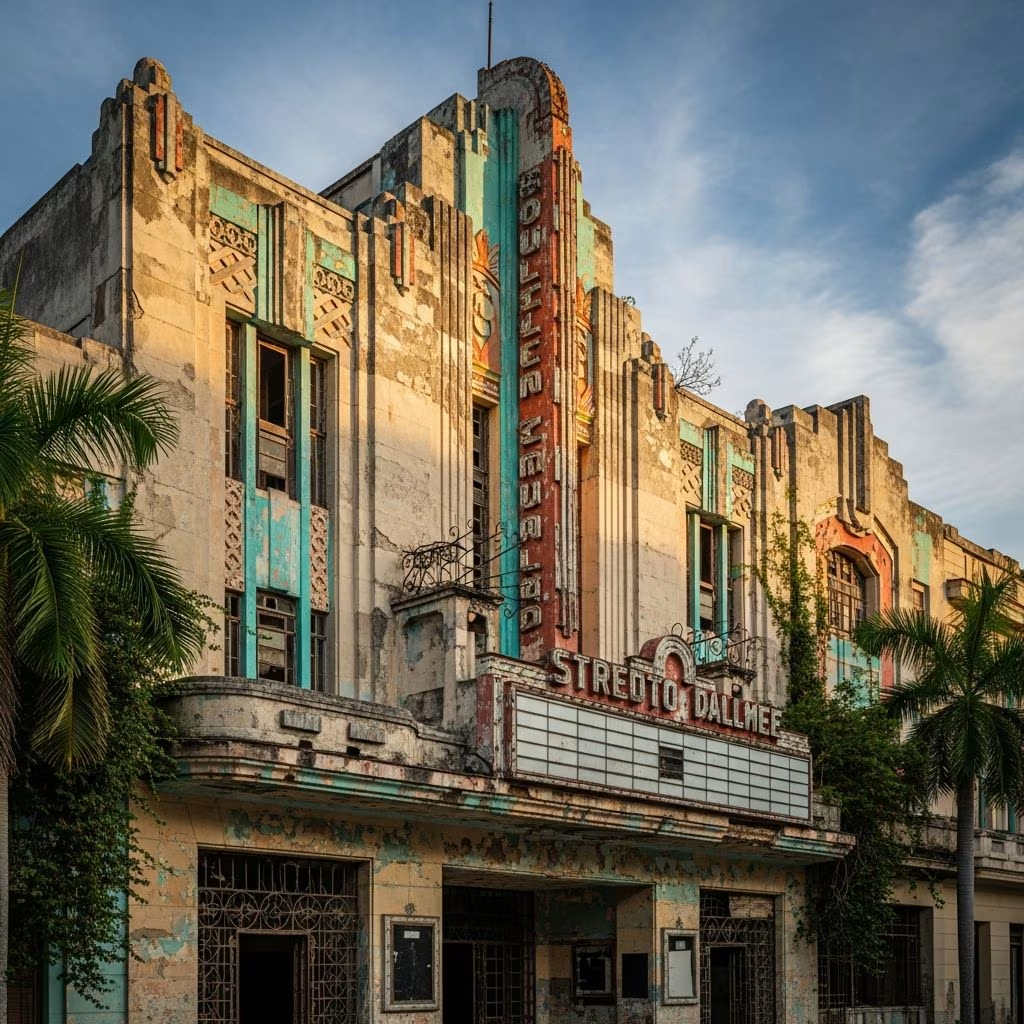
The architecture of this era blended colonial influences with bold Art Deco designs. Facades featured geometric patterns, neon accents, and streamlined forms reminiscent of Miami’s iconic style. Interiors boasted red velvet seats, expansive foyers, and ornate ceilings, creating immersive experiences. Theaters like Cine Fenix in Havana exemplified this grandeur, seating 680 with elegant Deco motifs that drew crowds nightly.
The Revolution dramatically altered this landscape. In 1960, under Fidel Castro’s government, the cinema count peaked at around 600, promoted as centers for “cultura, seguridad y higiene.” However, nationalization led to mass exodus of owners, overwhelming state management. Funding shortages and shifting priorities caused closures; by recent counts, only 19 of Havana’s originals remain operational for films, equipped for digital projection.
Many theaters faced repurposing or neglect. Structures once alive with applause now serve as residences, community centers, or warehouses. Cine Fenix, for instance, houses 10 families within its Art Deco shell. Others, like the 1930s Ambassador, lost neon signs and vitality despite brief 1950s revivals. This decline mirrors broader economic challenges post-Revolution, where maintenance proved impossible for hundreds of venues.
These examples span styles from neoclassical to Deco, often echoing European opera houses or American streamline moderne. Havana’s density of such sites—once rivaling global hubs—underscores their cultural weight.
Italian photographer Carolina Sandretto captured this vanishing world in her four-year project, photographing 398 surviving cinemas nationwide. Her book Cines de Cuba serves as a photographic atlas, revealing facades crumbling under tropical sun, interiors stripped bare, and rare active venues flickering with life. Sandretto’s work highlights not just architecture but stories of community loss, from village projections to urban spectacles.
Her images evoke Miami’s Deco district but with Cuban twists: pastel hues faded by salt air, marquees sans bulbs, and vines reclaiming stairwells. Only a fraction screen films today; others host concerts, elder care, or children’s programs, adapting to survival needs.
| Theater | Built | Original Capacity | Current Status |
|---|---|---|---|
| Cine Fenix, Havana | 1930s | 680 seats | Residential housing |
| Ambassador, Havana | 1930s | Unknown | Repurposed, neon sign gone |
| Cine Esmeralda | 1908 | Unknown | Closed, renamed |
| Cine Principal | 1839 | Unknown | Possibly active or preserved |
Preservation hurdles include economic isolation, material shortages, and urban encroachment. While some benefit from tourism-driven restorations, most languish. Efforts by cultural ministries focus on key sites, but comprehensive revival remains elusive.
Beyond bricks and mortar, these cinemas shaped Cuban identity. Pre-Revolution, they screened U.S. films, fostering glamour amid Batista’s regime. Post-1960, they pivoted to revolutionary propaganda and Soviet imports, influencing generations. Today, they symbolize resilience, with locals reminiscing about packed houses and starlet dreams.
Tourism now spotlights them: guided walks through Habana Vieja reveal Deco facades, while photo books like Sandretto’s inspire global interest. Yet, without investment, more will vanish, erasing tangible links to cinema’s heyday.
Travelers can explore via Havana’s Vedado and Centro Habana districts, where clusters survive. Cine Yara remains active, blending old charm with modern screenings. Venture to provinces for hidden gems like Sancti Spiritus. Tips include hiring local guides versed in history and respecting sites—many are private homes now.
Sustainable tourism supports micro-restoration projects, blending adventure with heritage appreciation.
In 1958, over 130 in Havana alone, totaling 511 island-wide, outnumbering New York and Paris.
Nationalized, then closed due to funding issues; now 19 active, others repurposed or ruined.
Carolina Sandretto photographed 398 for her book Cines de Cuba.
Yes, many from 1920s-1940s mimic Miami styles with neon, geometry, and velvet interiors.
Yes, especially in Havana; some screen films, others offer photo ops or tours.
