

 Travel Essentials
 Travel Essentials

Complete guide to exploring Cusco's historical landmarks, vibrant markets, and surrounding archaeological wonders in the Peruvian Andes.
 Travel Essentials
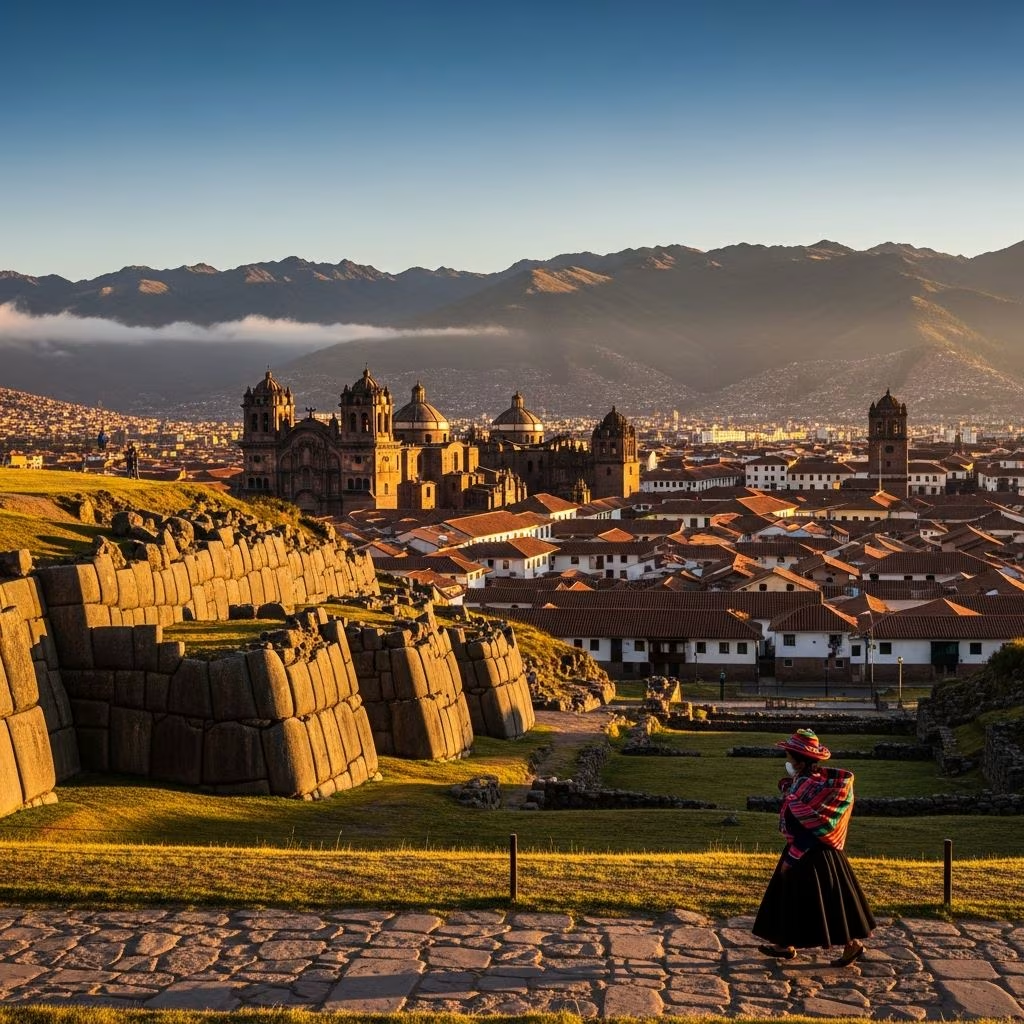
Perched at 11,150 feet above sea level in the Peruvian Andes, Cusco stands as one of Latin America’s most compelling destinations. This remarkable city serves as far more than a launching pad for Machu Picchu expeditions; it is a living museum where centuries of history converge in cobblestone streets, architectural marvels, and the daily lives of Quechua-speaking residents. The city’s significance cannot be overstated—it was once the imperial capital of the Inca Empire and later became a Spanish colonial stronghold, creating a unique cultural tapestry that continues to define its character today.
What makes Cusco exceptional is its authentic preservation of indigenous heritage alongside Spanish colonial influences. Unlike many cities where pre-Columbian civilizations have faded into historical footnotes, Cusco maintains a vibrant connection to its Incan roots. Visitors encounter this living history through the people who speak Quechua, the meticulously preserved Inca-built stonework, and the archaeological richness that surrounds the city on all sides.
Cusco occupies a unique geographical location in the south-central highlands of Peru, making it the natural gateway to the Sacred Valley and surrounding archaeological wonders. The city’s elevation presents both opportunities and challenges for visitors. The high altitude requires acclimatization, but it also provides spectacular views across mountain valleys and access to some of the world’s most significant archaeological sites.
The city’s cultural composition reflects centuries of blending. Today’s residents include descendants of Inca nobility, Spanish settlers, and indigenous Quechua populations who maintain traditional dress, language, and customs. This multicultural heritage manifests in the architecture, cuisine, festivals, and daily rhythms that define Cusco’s atmosphere.
The best way to experience Cusco is on foot. The historic center can be traversed from one end to the other in approximately 15 to 20 minutes, making it remarkably compact and accessible. However, the terrain varies significantly—while the area immediately surrounding the main plaza remains relatively flat, the streets leading toward neighborhoods like San Blas, San Cristobal, and Santa Ana become increasingly steep and challenging.
Walking also allows travelers to discover hidden plazas, local restaurants tucked into colonial courtyards, and artisan shops that larger tourist groups typically miss. The pedestrian-friendly infrastructure means most major attractions lie within comfortable walking distance, though comfortable footwear is essential given the altitude and uneven cobblestones.
At the center of Cusco lies the Plaza de Armas (also called Plaza Mayor de Cusco), a sprawling square that has served as the city’s epicenter for centuries. In pre-Columbian times, the Incas called this space Huacaypata and used it for their most important religious rituals and imperial ceremonies. Today, it remains the cultural heart where Cusco’s past and present continuously interact.
The plaza’s architecture exemplifies Cusco’s hybrid character. Spanish colonial arcades and baroque facades frame the square, while beneath these European structures lie Inca foundations and stonework that have survived earthquakes and centuries of occupation. The plaza bustles with activity from early morning through late evening—crowded with locals and visitors, street vendors, musicians, and entrepreneurs.
Several notable architectural landmarks surround the plaza. The Cusco Cathedral dominates one side with its impressive stone tower representing a masterpiece of colonial stonework. The Iglesia de la Compañía de Jesús (Church of the Society of Jesus) showcases baroque architecture with its elaborate facade and canvases from the Cusco School artistic movement. Visiting these churches early in the morning, before the plaza becomes crowded, reveals the finest architectural details and allows for more contemplative exploration.
One of Cusco’s most distinctive features is the visible integration of Inca masonry with Spanish colonial construction. Walking through the historic center reveals numerous examples of ancient Inca stonework, particularly the precisely fitted stones that required no mortar yet have withstood centuries of earthquakes and weathering.
Hatun Rumiyoc Street represents one of the best-preserved original Inca roads remaining in Cusco. This ancient cobbled street features the famous twelve-angled stone, a remarkable example of Inca engineering precision where a stone block fits perfectly into its neighbors without gaps or mortar. Exploring this street and surrounding laneways provides a tangible connection to the city’s pre-Columbian heritage and showcases the sophisticated engineering knowledge of Inca builders.
The Qoricancha Temple, though largely destroyed during the Spanish conquest and subsequently rebuilt as a colonial church, remains significant for the remaining Inca stonework visible in its foundations and walls. These golden-hued stones represent what was once a temple of immense spiritual importance.
The Museo de Arte Precolombino (MAP) occupies a beautifully restored colonial house and houses nearly 400 pre-Columbian artifacts borrowed from the renowned Larco Museum in Lima. The collection spans approximately three millennia of Peruvian history, from 1250 BC to 1532 AD, featuring artifacts from diverse cultures including the Nazca, Mochica, Huari, Chancay, and Inca civilizations. The museum’s MAP Café offers an elegant setting for lunch or dinner while surrounded by cultural treasures.
Beyond formal museums, Cusco’s artistic character manifests throughout the city. The San Blas neighborhood serves as the creative district, featuring galleries, art studios, cafes, and boutique clothing shops operated by local artists and craftspeople. This neighborhood provides an alternative to the main tourist areas and allows visitors to experience Cusco’s contemporary artistic community.
Experiencing Cusco’s markets offers authentic insights into local daily life, cuisine, and commerce. The Mercado de San Pedro attracts both residents and visitors seeking fresh produce, local cheeses, alpaca textiles, and prepared foods. While the market has become more tourist-oriented in recent years, it remains an excellent venue for observing how Cusco residents shop, dine at market kiosk restaurants, and conduct commerce.
Market etiquette typically involves haggling over prices for items without marked tags and negotiating down prices in soles (Peruvian currency). Visitors can sample inexpensive local snacks, tropical fruits, and traditional beverages while soaking in the vibrant atmosphere.
The San Pedro Market offers a similarly immersive experience, with vendors selling towers of vegetables, wheels of cheese, and handwoven alpaca products. Visitors interested in souvenirs should budget time for browsing and negotiating prices, as this is standard practice in Peruvian markets.
Cusco’s location makes it an ideal base for exploring the broader Sacred Valley region and its numerous archaeological sites. Several exceptional day trips are easily accessible:
Booking guided tours through platforms like GetYourGuide or Viator simplifies logistics for independent travelers, though experienced explorers can navigate the Sacred Valley independently using public transportation and local guides.
Beyond the central plaza, distinct neighborhoods offer different perspectives on Cusco life:
San Blas District: This hillside neighborhood functions as Cusco’s creative hub, featuring narrow winding streets, artist studios, independent cafes, and boutique shops. The Mirador de San Blas viewpoint provides spectacular panoramic vistas across the city, particularly beautiful during golden hour.
San Cristobal and Santa Ana: These neighborhoods offer steeper terrain and more residential character, providing escape from the tourist-heavy central zones.
Altitude Adjustment: At 11,150 feet above sea level, Cusco presents significant altitude challenges. Visitors typically require 24-48 hours to acclimatize. Spending time relaxing at cafes while sipping coca tea—a traditional Andean beverage believed to aid altitude adjustment—is both practical and culturally immersive.
Best Times to Visit: Cusco’s climate varies by season. The dry season (May through September) offers clear skies and comfortable temperatures, ideal for hiking and sightseeing. The wet season (November through March) brings afternoon rains but fewer tourists and lush landscapes.
Transportation Within the City: Walking remains the optimal way to experience Cusco’s historic center. Taxis are inexpensive and readily available for reaching outlying neighborhoods or returning to accommodations when fatigue sets in.
While exploring Cusco, visitors should be aware of several cultural and practical considerations. The Plaza de Armas hosts many individuals offering tours, massages, and other services; polite but firm refusals are typically necessary. Traditional Andean women (cholas) in indigenous dress often request small payments for photographs with alpacas and llamas—a practice that supports local livelihoods while providing memorable photo opportunities.
Visitors should respect religious spaces by dressing appropriately (avoiding overly casual or revealing clothing) and maintaining quiet reverence in churches and temples. Many sites restrict photography or require permits; respecting these policies preserves these spaces for everyone.
