

 Travel Essentials
 Travel Essentials

Cusco offers more than a launchpad to Machu Picchu: explore its Inca foundations, colonial churches, archaeological wonders, and lively culture for an immersive Peruvian adventure.
 Travel Essentials
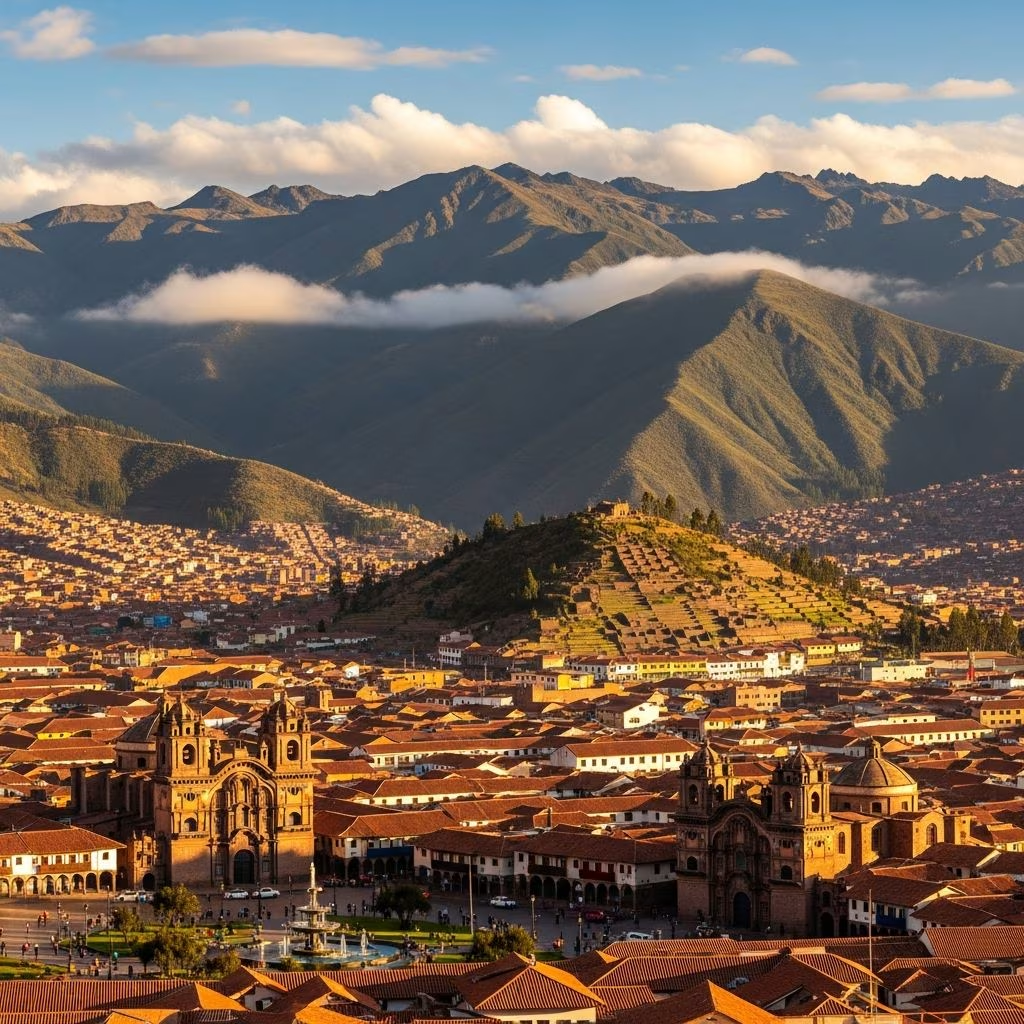
Cusco stands as the pulsating core of Peru’s Andean heritage, a city that predates even the grandest Inca achievements and continues to captivate with its layered history. Far from being merely a stepping stone to the iconic Machu Picchu, Cusco reveals the empire’s administrative genius, architectural prowess, and cultural resilience through its streets, ruins, and sacred sites.
Established around 1100 AD in a dramatic Andean valley, Cusco emerged as the longest continuously inhabited city in the Western Hemisphere. Its founders shaped it in the form of a puma, symbolizing strength and protection, with Sacsayhuaman as the head, the central plaza as the belly, and the Tullumayo River as the tail. This mythical layout reflects the Inca’s deep connection to nature and cosmology.
Under Emperor Pachacútec in the mid-15th century, Cusco transformed from a modest settlement into the thriving capital of the vast Inca Empire, spanning nearly 2 million square kilometers. Pachacútec’s expansions included monumental constructions that showcased advanced stone masonry, hydraulic engineering, and urban planning. The city’s role extended beyond governance; it served as a religious hub and economic nexus, controlling trade routes to the Amazon basin.
Cusco’s landscape is dotted with awe-inspiring Inca ruins that demonstrate unparalleled engineering. Sacsayhuaman, perched above the city, features colossal zigzag walls built from boulders weighing up to 200 tons, fitted without mortar in a puzzle-like precision that has withstood earthquakes for centuries.
Other highlights include:
These structures highlight the Incas’ mastery over their rugged terrain, blending functionality with spiritual purpose.
The Spanish conquest in 1533 reshaped Cusco dramatically. Conquerors looted treasures and imposed colonial architecture, yet Inca foundations endured. The Plaza de Armas, once Huacaypata, became the site of the grand Cathedral of Cusco, constructed from Sacsayhuaman’s stones. Inside, it houses masterpieces like the Señor de los Temblores painting, a blackened Christ revered for surviving a 1650 earthquake.
Qorikancha, the Inca’s ‘Golden Enclosure’ dedicated to the sun god Inti, was repurposed into the Santo Domingo Convent. Its curved foundation walls, visible beneath colonial walls, exemplify hybrid architecture where Andean precision meets Baroque opulence. Entry costs about 10 soles (around $3 USD), offering insights into this cultural synthesis.
| Site | Inca Original Purpose | Colonial Transformation |
|---|---|---|
| Sacsayhuaman | Ceremonial fortress | Stone quarry for cathedral |
| Qorikancha | Sun temple with gold plating | Santo Domingo Convent |
| Plaza de Armas | Central gathering space | Cathedral and colonial square |
Just beyond Cusco lies the Urubamba Valley, the Sacred Valley of the Incas, a fertile expanse that fueled the empire. Pisac’s hilltop ruins overlook terraced markets still bustling with quinoa and textiles. Ollantaytambo’s towering temple complex, with its six-monolith wall, guards the valley entrance, while Moray’s concentric terraces experiment with microclimates for agriculture.
These sites reveal the Incas’ agricultural innovations, including advanced terracing and irrigation that supported populations in high altitudes. The valley’s rivers and mountains provided coca leaves and jungle goods, essential for rituals and economy.
Cusco pulses with contemporary Andean culture. San Pedro Market overflows with fresh alpaca cheese, exotic fruits, and medicinal herbs. Artisan stalls hawk vibrant weavings dyed with cochineal and indigo.
Annual festivals amplify the spirit:
Visitors should respect reciprocity (ayni), offering small tips or purchases to sustain local craftspeople.
Acclimatize to the 3,400-meter altitude with coca tea and slow pacing. The Boleto Turístico (tourist ticket, ~130 soles) grants access to 16 sites, valid for 10 days.
For day trips, trains from Poroy or Ollantaytambo lead to Machu Picchu, but prioritize Cusco’s own wonders first.
Absolutely. Cusco’s ruins, museums, and culture offer a deeper Inca immersion than the citadel alone.
3-5 days: 2 for city sites, 1-2 for Sacred Valley.
Hydrate, rest Day 1, use soroche pills if needed.
Full circuit covers 16 sites; partial options available.
Yes, with standard precautions in crowded areas.
As UNESCO recognizes the Historic Sanctuary of Machu Picchu for its Inca ingenuity amid stunning Andes-Amazon landscapes, Cusco itself embodies ongoing cultural harmony. Sustainable tourism—choosing ethical operators and community tours—ensures this jewel endures.
