

 Travel Essentials
 Travel Essentials

Discover practical tips for safe cycling in London, from infrastructure insights and gear essentials to navigating lorries, obeying rules, and leveraging TfL's safety initiatives for a secure ride.
 Travel Essentials
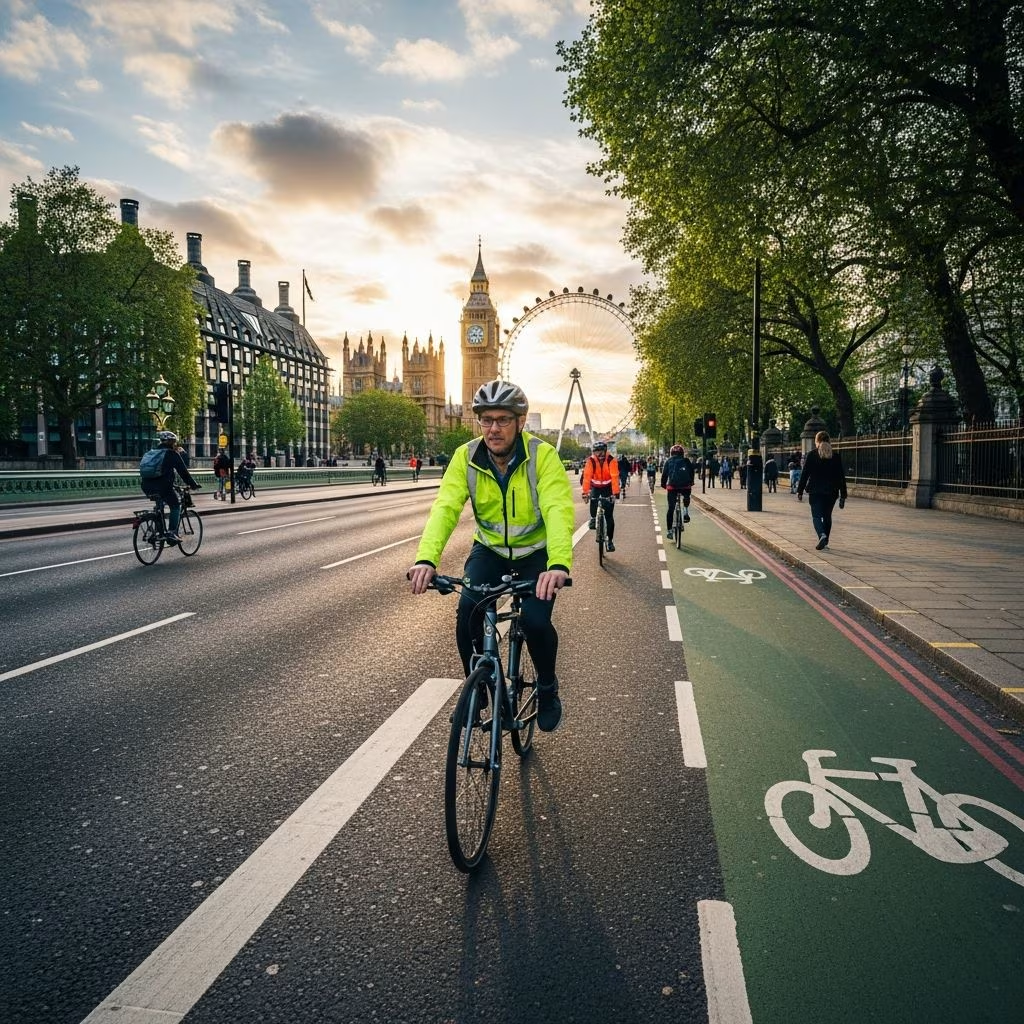
London’s vibrant streets offer cyclists an efficient way to navigate the city, but with heavy traffic and unique urban challenges, safety demands preparation and awareness. Cycling has surged in popularity, supported by expanded infrastructure, yet risks from vehicles and pedestrians persist. This guide equips riders with actionable advice drawn from official guidelines and proven practices to minimize dangers and maximize enjoyment.
The capital has transformed into a more bike-friendly city through targeted investments. Transport for London (TfL) leads efforts via the Cycle Safety Action Plan, which includes 52 actions across safer infrastructure, training, enforcement, and technology. Despite a 34% drop in cyclist casualties since the 1990s baseline—amid rising bike usage—9% of road incidents involve cyclists who make up just 2% of journeys. Polls show 43% of riders still feel unsafe, underscoring the need for vigilance.
Key improvements include Cycleways with two-way lanes and protected junctions, 20 mph zones in boroughs, and removal of unnecessary guardrails that once trapped cyclists. The Vision Zero approach aims for zero road deaths by redesigning high-risk spots and mandating safety tech on lorries.
Proper equipment forms the foundation of safe cycling. While helmets are not legally required for adults, TfL strongly recommends them to reduce head injury risks.
Invest in puncture-resistant tires and brakes checked regularly. Table below compares basic vs. advanced setups:
| Item | Basic | Advanced |
|---|---|---|
| Helmet | Standard foam | MIPS technology for rotation protection |
| Lights | Battery LED | USB-rechargeable with auto-sensor |
| Clothing | Reflective vest | Full waterproof kit with LEDs |
Positioning asserts your space effectively. Ride centrally on narrow roads, away from gutters and parked cars to avoid doors swinging open—maintain a door’s width. In cycle lanes, prioritize safety over markings; take the outer edge if lanes are narrow.
Adopt an upright posture for better visibility: elbows slightly bent, weight balanced. Signal clearly: left arm out for turns, right arm for stopping. Maintain 1-2 meters from curbs to dodge pedestrians stepping out.
Large vehicles pose the gravest threats, especially left-turning lorries with blind spots obscuring cyclists. Slow down when spotting them, make eye contact if possible, and never overtake on the inside. TfL trials sensors to detect cyclists, potentially becoming mandatory.
Buses and trams demand caution: trams are silent and wider than tracks—cross perpendicularly to avoid wheel slots, especially when wet. Buses may pull out abruptly; pass only when safe.
Pedestrians in busy areas like pub districts can dart unpredictably—use your bell judiciously and ride predictably. Avoid pavement cycling except on designated paths; fines apply for violations.
Follow the Highway Code rigorously: stop at red lights (£50 fine), yield to pedestrians at zebra crossings, and ride with traffic, never against it. The Met Cycle Task Force enforces this, targeting red-light jumpers and pavement riders alongside driver offenses like phone use or box junction incursions.
Enhance skills via Bikeability training, offered free to school pupils and available to adults. Practice maneuvers like emergency stops and junction approaches. Apps like TfL’s Cycle Sundays promote low-traffic rides.
London boasts over 200 miles of Cycleways, including segregated paths on Quietways for leisure. Superhighways like CS1 (Tottenham to Westminster) offer protected lanes. Use TfL’s planner for routes avoiding hills and hazards.
Rain makes surfaces treacherous—brake earlier, avoid grates. Night riding requires full lights; flashing modes increase visibility fourfold. Theft thrives in London; secure frames and wheels to immovable objects, register bikes on schemes like BikeRegister.
Park in guarded hubs like those at stations. Insurance covers high-value bikes.
Beyond safety, cycling boosts fitness, cuts emissions, and saves time. Join London Cycling Campaign for advocacy and rides. Community enforces mutual respect, reducing incidents.
Yes, casualties dropped 34% since 1990s despite more cyclists, thanks to infrastructure.
Not legally, but highly advised by TfL.
Report to police; claim via insurer. HGVs face strict liability scrutiny.
TfL Go, Komoot, or Strava with safety layers.
Yes, with same rules; check battery compliance.
Embrace these strategies for secure, exhilarating rides through London’s dynamic streets.
