

 Travel Essentials
 Travel Essentials

Cyclone Hudhud struck India's east coast in 2014, prompting swift evacuations, relief operations, and long-term resilience projects that saved countless lives.
 Travel Essentials
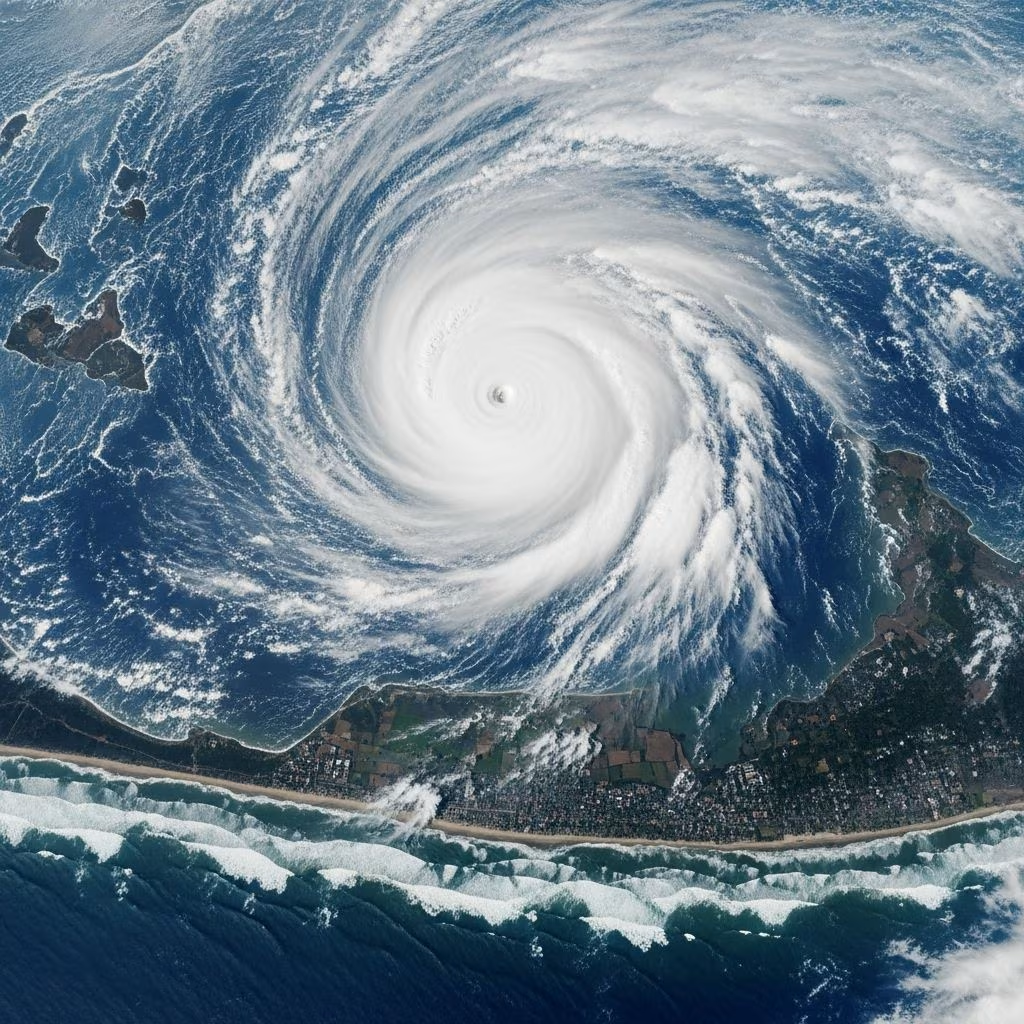
Cyclone Hudhud, a very severe cyclonic storm, made landfall near Visakhapatnam on India’s east coast in October 2014, unleashing winds up to 195 km/h and causing widespread destruction across Andhra Pradesh and Odisha. Despite the fury, proactive measures limited the death toll to around 61 in Andhra Pradesh alone, showcasing India’s evolving disaster management capabilities.
Hudhud originated in the Andaman Sea, intensifying rapidly into a very severe cyclonic storm by October 8, 2014. It tracked northwestward, battering coastal Andhra Pradesh with heavy rains, storm surges, and gale-force winds. The storm affected districts like Visakhapatnam, Vizianagaram, Srikakulam, and East Godavari, damaging infrastructure worth billions and impacting over 9.2 million people, including 3 million in urban areas.
Meteorological forecasts from the India Meteorological Department (IMD) provided early warnings, enabling preparations 48-72 hours in advance. This timely intelligence was crucial for mobilizing resources and alerting vulnerable populations.
Indian authorities demonstrated foresight through comprehensive preemptive actions. Key strategies included:
Preparatory meetings involving revenue, police, irrigation, and transport departments identified relief camp sites equipped with solar lamps, generators, gas cylinders, and cooks for community kitchens.
The response was a symphony of national, state, and local efforts. The National Crisis Management Committee (NCMC), chaired by Cabinet Secretary Ajit Seth, oversaw operations. Andhra Pradesh declared 356 villages in 59 mandals as affected, opening over 300 relief camps.
| Agency | Deployments and Actions |
|---|---|
| NDRF | 42 teams for rescue; cleared roads of trees, poles, and hoardings. |
| Armed Forces | 8 teams in Visakhapatnam and Srikakulam; Disaster Management Cell at Air Defence College; 6 helicopters and 54 boats ready. |
| Telecom | 500 field staff and 100 engineers restoring services; 15 satellite phones deployed. |
| Railways | Cancelled/diverted 70+ trains to ensure safety. |
Special teams monitored black markets, price hikes, and distributed food packets, milk, and vegetables. The Prime Minister announced ₹1,000 crore in aid, including ₹500,000 to families of the deceased and ₹50,000 to the injured, plus essentials like 25 kg rice per family.
Post-landfall, focus shifted to survival needs. Non-food item (NFI) distributions included tarpaulins, mosquito nets, torches, blankets, and utensils. Water, sanitation, and hygiene (WASH) efforts involved testing and disinfecting supplies in flood-prone areas.
Odisha’s 75 cyclone shelters, operated by local branches, provided refuge. Distribution was closely monitored to ensure equitable reach.
Hudhud felled thousands of trees, snapped power lines, and disrupted communications. Restoration involved:
Vehicles were strategically parked for post-storm evacuations, and dedicated NDRF aircraft reduced response times.
Beyond immediate aid, sustainable measures emerged. In July 2015, India and the World Bank signed a $250 million credit for the Andhra Pradesh Disaster Recovery Project, benefiting 13 million people by enhancing public services, livelihoods, and emergency response capacities.
Lessons from Hudhud and prior storms like Phailin emphasized zero-casualty norms, compulsory evacuations under the Disaster Management Act 2005, and removing hazardous signboards. States updated equipment inventories and linked EOCs with departmental control rooms under the National Cyclone Risk Mitigation Project (NCRMP).
The event highlighted best practices and gaps:
These insights, drawn from official reviews, have fortified India’s coastal defenses.
While deaths were low (around 46-61 reported), economic losses were immense: damaged homes, crops, and ports. Urban Visakhapatnam suffered heavily, with 26 cities/towns affected. Vulnerable groups—fisherfolk, farmers, and slum dwellers—received targeted aid, including Aadhaar-verified assistance for missing persons’ families.
Psychosocial support and livelihood restoration were prioritized, with NFIs aiding medium-term recovery.
Hudhud’s management earned international praise, contrasting with higher-casualty events elsewhere. Compared to Phailin (2013), Hudhud refined evacuation strategies, achieving similar success with fewer resources.
It affected 9.2 million people, caused 61 deaths in Andhra Pradesh, and damaged infrastructure across four districts.
Nearly 250,000 from vulnerable areas in Andhra Pradesh.
₹1,000 crore centrally, plus World Bank’s $250 million recovery project.
NDRF, armed forces, state governments, and NCMC.
Enhanced EOCs, equipment databases, and zero-casualty protocols.
This comprehensive response underscores India’s progress in disaster resilience, turning a potential catastrophe into a testament of preparedness.
