

 Travel Essentials
 Travel Essentials

Explore the five D-Day landing beaches in Normandy: Utah, Omaha, Gold, Juno, and Sword. Learn about their WWII significance, key sites, museums, and tips for meaningful visits today.
 Travel Essentials
The Normandy coastline in France holds one of the most profound chapters in modern history. On June 6, 1944, Allied forces executed Operation Overlord, the largest amphibious assault ever, landing over 160,000 troops across five beaches to begin liberating Western Europe from Nazi control. Today, these sites draw millions of visitors seeking to honor the sacrifices made and understand the strategic brilliance behind the operation.
Operation Neptune, the naval component of Overlord, involved 7,000 ships and landing craft carrying troops from the United States, Britain, Canada, and other allies. The beaches—code-named Utah, Omaha, Gold, Juno, and Sword—spanned about 50 miles from west to east. Airborne divisions dropped inland beforehand to secure key points, while naval bombardments softened German defenses.
General Dwight D. Eisenhower oversaw the invasion, which faced challenges like rough seas and fierce resistance. Despite over 10,000 Allied casualties on the first day, beachheads were established, setting the stage for victory. German losses ranged from 4,000 to 9,000.
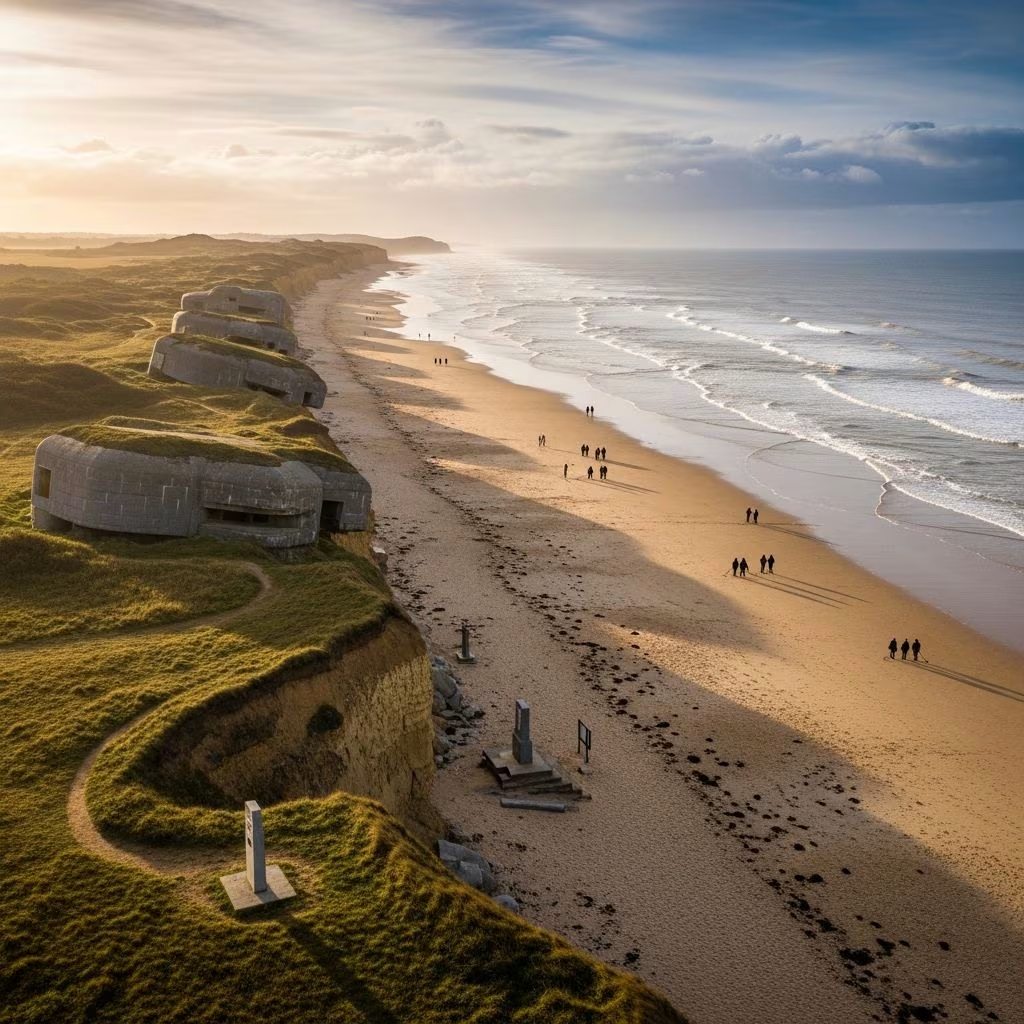
Each beach tells a unique story of bravery. Visitors can walk the sands, visit museums, and reflect at memorials, often in serene settings contrasting the chaos of 1944.
Located at the western end, Utah saw American forces land with fewer casualties due to a strong current drifting them off-course onto less-defended terrain. Today, the beach features a museum detailing the landings and a prominent café evoking the era. Key exhibits include landing craft remnants and personal artifacts, offering insights into the airborne drops behind the lines.
Omaha, assigned to U.S. troops, endured the fiercest fighting with steep bluffs and heavy German fortifications. Over 2,400 Americans fell here on D-Day alone. The Normandy American Cemetery overlooks the beach, a poignant site for nearly 10,000 U.S. soldiers, with a visitor center narrating their stories.
British forces targeted Gold, capturing key towns amid bunkers and artillery. The Arromanches Landing Museum, at the beaches’ center, highlights the innovative Mulberry harbors—artificial ports crucial for supply lines. Remnants of these floating breakwaters are still visible offshore.
Canadians stormed Juno, pushing farthest inland on D-Day despite mines and obstacles. Museums here showcase their rapid advance and the role in linking beachheads. The site includes preserved trenches and a peace garden symbolizing reconciliation.
The easternmost beach saw British troops land near Ouistreham, with paratroopers securing Pegasus Bridge inland—a vital canal crossing held against counterattacks. Visit the bridge museum to see the original structure and glider crash sites nearby.
These sites blend education and emotion, with interactive displays and films bringing history alive.
Plan 2-3 days to cover the area from Bayeux or Caen as bases. Rent a car for flexibility, as public transport is limited. Start early to avoid crowds, especially during June anniversaries featuring parachute jumps and ceremonies.
| Beach | Main Force | Key Attraction | Distance from Bayeux |
|---|---|---|---|
| Utah | U.S. | Utah Beach Museum | 40 km west |
| Omaha | U.S. | American Cemetery | 15 km west |
| Gold | British | Arromanches Museum | 20 km east |
| Juno | Canadian | Juno Beach Centre | 25 km east |
| Sword | British | Pegasus Bridge | 35 km east |
Wear comfortable shoes for bluff walks and check weather, as winds can be strong. Guided tours provide deeper context.
Normandy’s beaches remain frozen in time with bunkers, craters, and rusted obstacles. Annual events keep memories fresh, attended by veterans and leaders. Conservation efforts ensure these hallowed grounds educate about freedom’s cost.
D-Day marked the Allied invasion of Nazi-occupied France, leading to Europe’s liberation and WWII’s end in the West.
Nearly 160,000 across the beaches, supported by massive naval and air forces.
Yes, but June peaks with events; off-season offers quieter reflection.
Possible but rushed; spread over two days for depth.
Many museums have kid-oriented exhibits; beaches are free to explore.
Walking these shores evokes profound respect. From Utah’s relative calm to Omaha’s scars, each site underscores human resilience. Whether history buff or casual traveler, Normandy transforms understanding of 1944’s pivotal moments.
