

 Travel Essentials
 Travel Essentials

Explore the UNESCO sites, Cham sculptures, ancient trading ports, and artistic hubs of Da Nang and Hoi An, revealing Vietnam's profound cultural heritage.
 Travel Essentials
Central Vietnam’s Da Nang and Hoi An stand as vibrant testaments to a layered past, where ancient kingdoms, international trade, and colonial influences intertwine. These destinations offer travelers an immersive journey through **Cham heritage**, well-preserved architecture, and contemporary art scenes, all set against stunning natural backdrops.
The Champa civilization, flourishing from the 4th to 13th centuries, left an indelible mark on central Vietnam through its Hindu-Buddhist artistry and architecture. Originally Austronesian seafarers influenced by Indian culture, the Cham people crafted intricate sandstone sculptures depicting deities and folklore, many of which survive today.
Da Nang’s **Cham Museum of Sculpture** houses the world’s largest collection of these artifacts, showcasing over 2,000 pieces recovered from sites like My Son. Visitors can admire towering statues of Shiva, Vishnu, and Garuda, each telling stories of devotion and mythology. My Son Sanctuary, a UNESCO World Heritage site nestled in a verdant valley 40 miles west of Da Nang, features red-brick towers and temples dedicated to Hindu gods, evoking the kingdom’s spiritual grandeur despite wartime damage.
These sites highlight the Champa’s maritime prowess and cultural synthesis, blending local animism with imported Indian traditions, providing a foundational layer to the region’s identity.
Hoi An Ancient Town, another UNESCO gem, exemplifies a 15th-19th century Southeast Asian trading port, where Vietnamese, Chinese, Japanese, and European influences converged. Located along the Thu Bon River, 30 km south of Da Nang, its narrow streets are lined with 17th-19th century wooden shophouses, assembly halls, and pagodas that remain in use today.
Key landmarks include the iconic **Japanese Covered Bridge**, a 400-year-old structure symbolizing unity between Japanese and Chinese merchants, adorned with monkey and dog statues for protection. Nearby, Chinese assembly halls like Phuc Kien boast ornate gates, dragon motifs, and incense-filled courtyards honoring ancestral migrants.
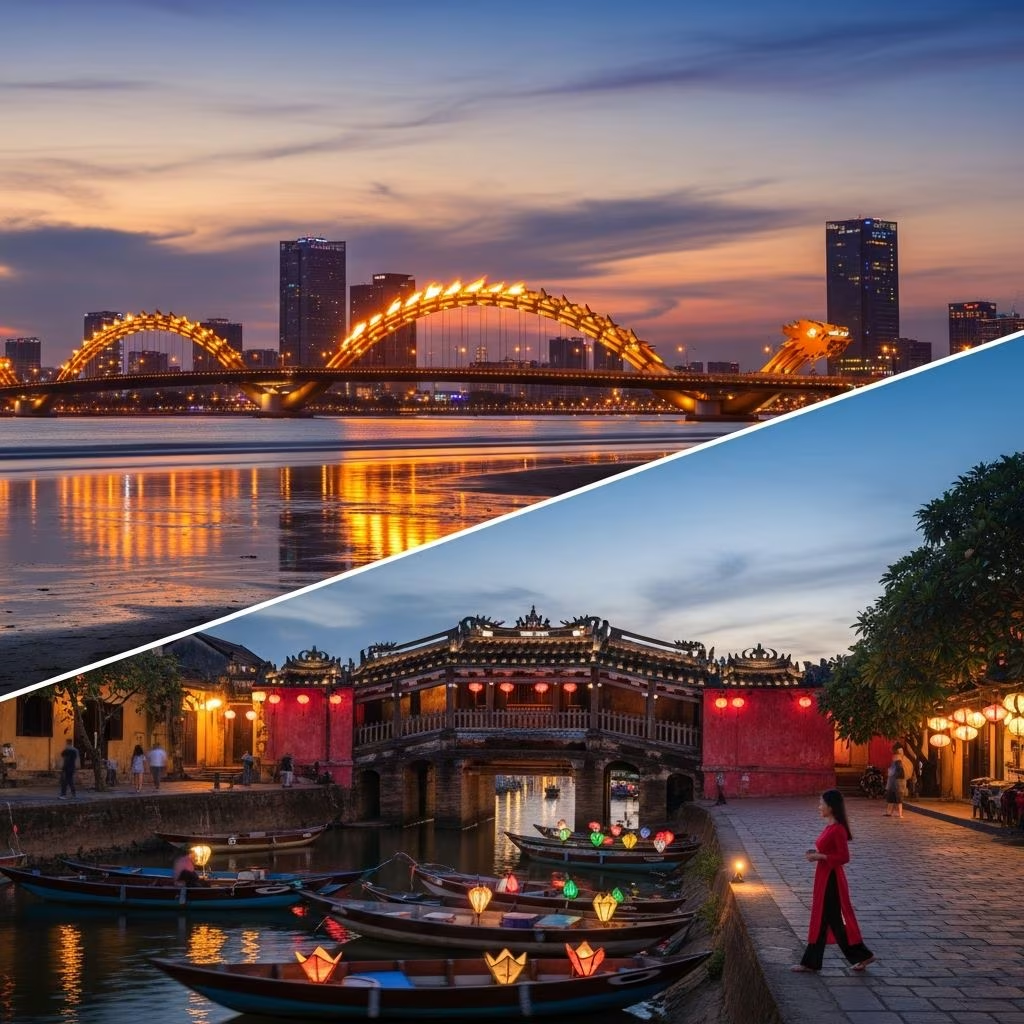
At night, thousands of silk lanterns illuminate the streets, transforming Hoi An into a magical tableau that draws millions annually while preserving its commerce as a tailoring and craft hub.
While Hoi An evokes nostalgia, Da Nang pulses with youthful energy as a gateway city blending history and innovation. Its **Fine Arts Museum**, the first in the city, spans three floors displaying central Vietnamese works in oil, lacquer, silk, and sculpture—mirroring the nation’s evolving aesthetics.
The Dragon Bridge, a modern marvel spewing fire and water on weekends, contrasts with Han River waterfront sculptures and green mountains. Night markets buzz with chocolate vendors and handicrafts, linking past trades to contemporary vibrancy.
| Site | Location | Highlight | Best Time to Visit |
|---|---|---|---|
| Cham Museum | Da Nang | Sandstone deities | Morning for cool temps |
| My Son Sanctuary | 40km W of Da Nang | Red-brick towers | Dry season (Feb-Aug) |
| Hoi An Ancient Town | 30km S of Da Nang | Lantern-lit streets | Full moon nights |
| Fine Arts Museum | Da Nang | Lacquer paintings | Anytime, free entry days |
The architecture of Da Nang and Hoi An reflects multicultural exchanges. Hoi An’s buildings feature curved roofs, mossy walls, and French colonial accents alongside Eastern motifs. Traditional townhouses often include airy courtyards for ventilation and ancestor altars, while assembly halls display gilded woodwork and ceramic mosaics.
In Da Nang, modern structures harmonize with heritage sites, such as beachside pagodas overlooking the East Sea. This fusion underscores the region’s role as a cultural crossroads, from Champa ports to Nguyen Dynasty outposts.
Contemporary art thrives amid historical echoes. Da Nang’s galleries showcase lacquerware—a technique layering resin over wood for luminous effects—and silk paintings capturing rice paddies and festivals. Hoi An’s handicraft shops offer bespoke tailoring, lantern-making, and pottery, where visitors can participate in workshops.
Street art and murals in Da Nang depict mythological scenes, bridging ancient Cham lore with urban creativity. These outlets preserve skills passed through generations, sustaining economic and cultural vitality.
To fully engage, purchase a multi-site ticket for Hoi An (covering five attractions). Opt for early mornings to avoid crowds, and consider boat rides on the Thu Bon for scenic views. Respect customs by dressing modestly in temples and supporting local artisans.
A scenic 30 km road connects them; taxis cost ~$20 USD, shuttles ~$5, or rent a scooter for flexibility.
Yes, for its mystical Champa ruins; allocate half a day with guided tours for context.
Lanterns illuminate daily, peaking during full moon releases into the river.
Cham Museum offers relief from heat; Fine Arts Museum is modern and comfortable.
Custom suits, silk scarves, lanterns, or Cham-inspired replicas from ethical shops.
Efforts by UNESCO and local authorities ensure these sites endure, balancing tourism with conservation. Community-led initiatives revive Cham dances and Hoi An festivals, keeping traditions alive. Visitors contribute by choosing sustainable tours and eco-friendly stays.
Da Nang and Hoi An together weave a narrative of resilience—from ancient seafaring kingdoms to bustling ports and now global attractions—inviting all to connect with Vietnam’s soul.
