

 Travel Essentials
 Travel Essentials

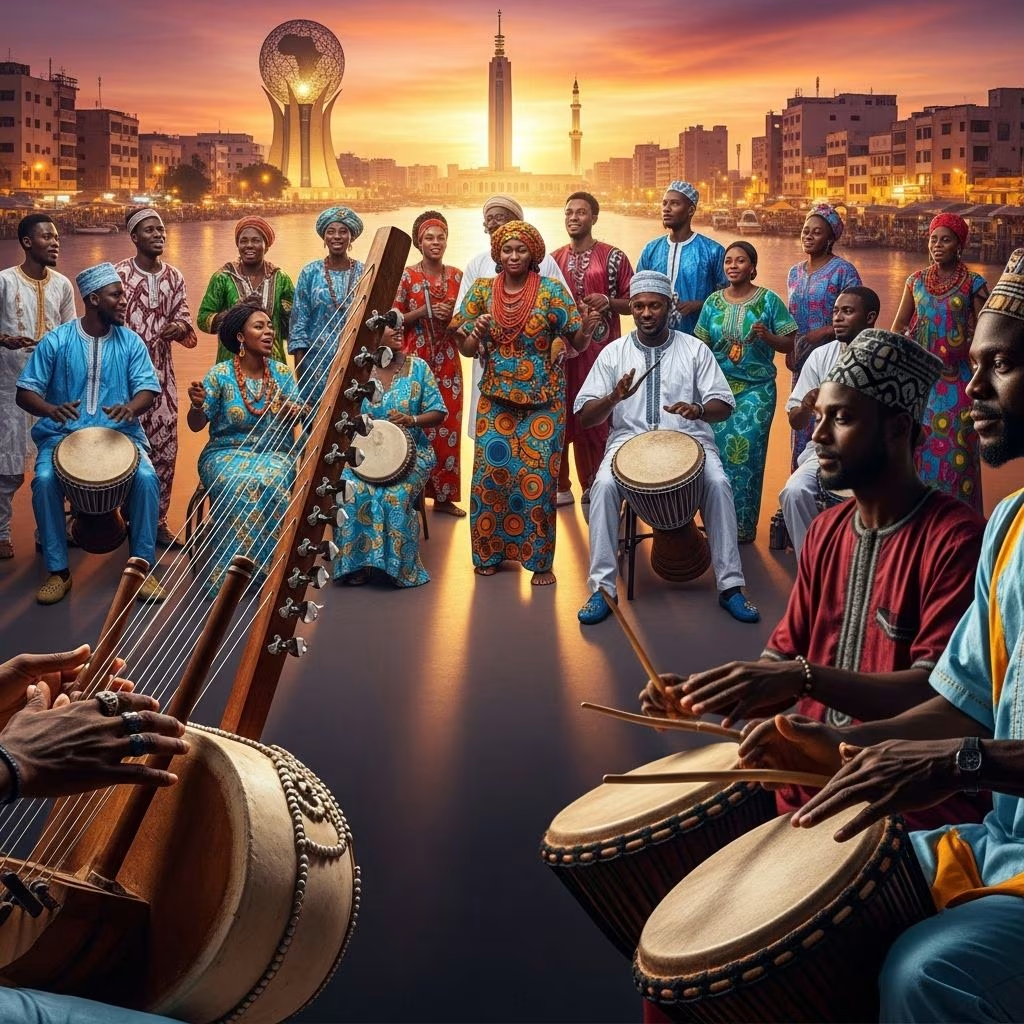
Discover Dakar’s music scene, where mbalax, griot traditions, and vibrant nightlife blend into one of Africa’s most dynamic rhythms.
 Travel Essentials
Dakar, Senegal’s coastal capital, beats with an infectious energy where music permeates every corner of daily life. From street performers to packed nightclubs, the city’s soundscape blends ancient traditions with contemporary global influences, creating one of Africa’s most dynamic music hubs.
Senegalese music draws from a rich tapestry of ethnic traditions, evolving through colonial influences and modern innovations. Central to this is **mbalax**, a high-energy genre rooted in Wolof rhythms that exploded in popularity during the late 20th century. Characterized by fast-paced drumming, intricate guitar lines, and call-and-response vocals, mbalax transformed nightclub salsa into a distinctly local phenomenon.
Traditional instruments like the **djembe** (a goblet-shaped drum), **kora** (a 21-string harp-lute played by griots, or hereditary storytellers), and **sabar** (a set of slender drums used in ceremonies) form the foundation. These sounds echo in everyday settings, from markets to wrestling matches, underscoring music’s role as a cultural lifeline.
Dakar’s music history traces back to the 1960s, when Cuban imports via radio and records inspired local bands. Groups like Star Band de Dakar fused Latin salsa with African percussion, laying groundwork for future stars. By the 1970s, splits from this collective birthed influential outfits such as Orchestra Baobab and Super Star de Dakar, blending Cuban son with Wolof griot traditions.
The 1980s marked mbalax’s rise, spearheaded by Étoile de Dakar, which later became Super Étoile de Dakar under Youssou N’Dour. This era saw traditional elements like tassou (rhythmic chanting) and njuup (Serer trance music) merge with electric guitars and synthesizers, propelling Senegalese sounds worldwide.
| Era | Key Developments | Influential Bands/Artists |
|---|---|---|
| 1960s | Cuban-Latin fusion in nightclubs | Star Band, Super Star de Dakar |
| 1970s | Integration of traditional drums | Orchestra Baobab, Touré Kunda |
| 1980s+ | Mbalax dominance, global export | Youssou N’Dour, Baaba Maal |
**Youssou N’Dour**, often called the king of mbalax, revolutionized the genre by infusing griot storytelling with Western pop. His collaborations, from Peter Gabriel to international tours, elevated Dakar’s profile globally.
**Orchestra Baobab**, formed in 1970, remains a cornerstone with their elegant mix of salsa, mbalax, and Wolof vocals. Revived in the 2000s, they continue drawing crowds worldwide.
Other luminaries include **Baaba Maal**, whose fulani folk-infused world music captivates, and **Omar Pene**, a mbalax veteran known for soulful performances. Emerging hip-hop acts like Daara J add urban grit, reflecting Dakar’s youthful vibe.
Dakar’s nightlife ignites after midnight, with venues hosting live bands from salsa to mbalax. Here’s a curated guide to must-visit spots:
Pro tip: Parties peak around 1 a.m.; arrive early for booths and check schedules for live music.
Beyond clubs, Dakar’s streets hum with impromptu performances. Roadside sabar drummers and balafon players near markets create polyrhythmic backdrops to urban hustle. Kashaka shakers and griot kora recitals add layers, making music inescapable.
Markets like Sandaga and festivals such as the Dakar Festival of Music amplify this. Wrestling events feature bakou trilling, blending sport with sonic spectacle.
Today’s scene mixes mbalax with hip-hop, reggae, and electronic. Venues throb with local rap, jazz interpretations, and Afrobeat. Artists tour internationally, while diaspora communities spread Dakar sounds abroad.
Senegal’s music education thrives via academies teaching kora and djembe, ensuring traditions endure amid globalization.
Mbalax is a Senegalese genre meaning ‘rhythm’ in Wolof, fusing traditional drums with guitar-driven pop and dance beats.
Youssou N’Dour, Orchestra Baobab, Baaba Maal, and Omar Pene lead, with roots in 1970s bands.
Clubs fill post-11 p.m., headliners at 1 a.m., lasting till sunrise.
Yes, street performances and some bar sets; festivals offer open-air shows.
Griot schools and workshops in Dakar teach kora, djembe, and sabar.
Dakar’s music isn’t just entertainment—it’s identity, history, and joy woven into the city’s fabric. Whether swaying to mbalax or savoring griot tales, visitors leave with rhythms echoing in their souls. Plan your trip to immerse in this pulsating paradise.
