

 Travel Essentials
 Travel Essentials

Explore powerful Holocaust exhibits, survivor testimonies, and human rights lessons at this immersive Dallas museum that inspires visitors to become upstanders.
 Travel Essentials
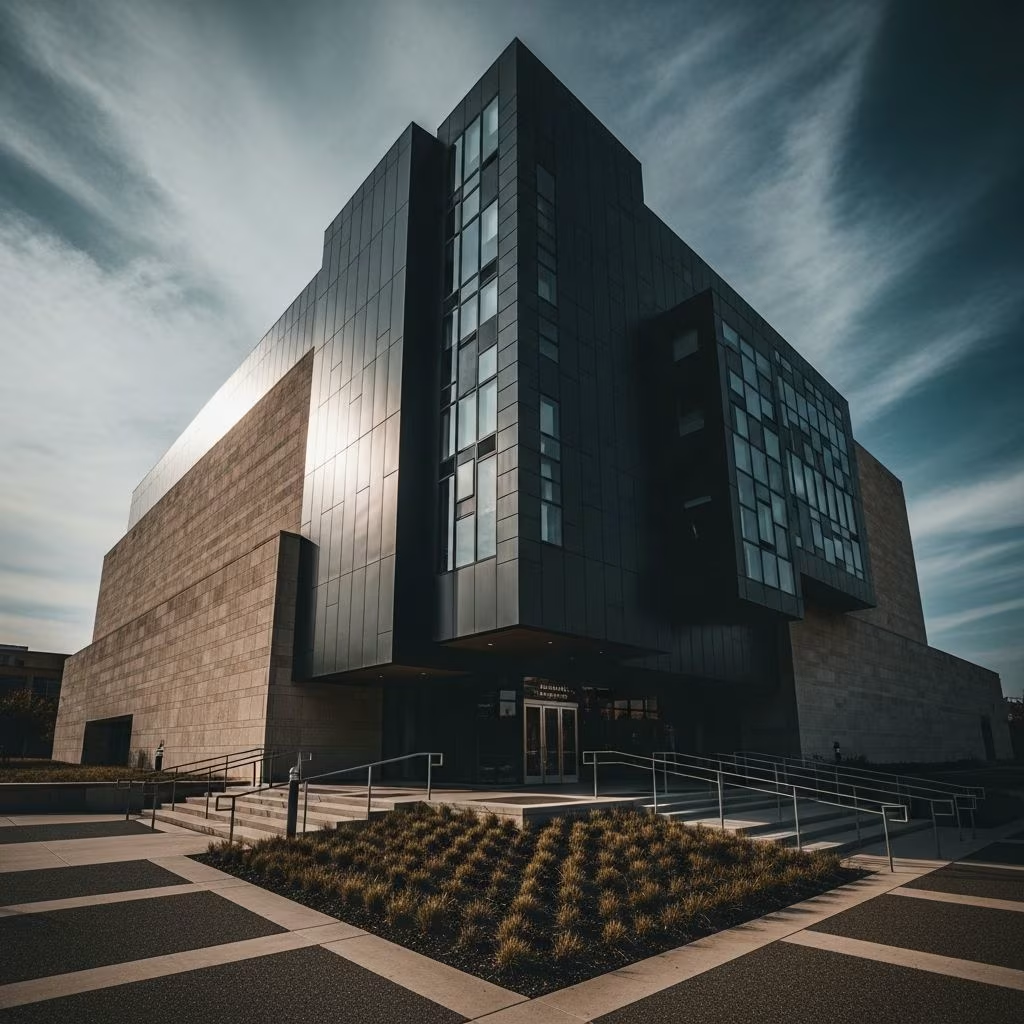
The Dallas Holocaust and Human Rights Museum stands as a vital institution in downtown Dallas, offering visitors a profound exploration of one of history’s darkest chapters while emphasizing the ongoing fight for human dignity worldwide. Housed in a striking 55,000-square-foot facility in the West End Historic District, this museum has evolved from its origins in 1984 as a modest memorial space founded by Holocaust survivors into a dynamic center for education on prejudice prevention and rights advocacy.
Since reopening in its permanent home on Houston Street in 2019, the museum has expanded its scope beyond the Holocaust to encompass broader human rights themes, urging visitors to confront hatred through historical lessons. Its mission centers on transforming passive “upstanders”—individuals who challenge injustice and foster positive change. This approach is woven throughout the exhibits, spotlighting figures like President Lyndon B. Johnson, a Texan who played key roles in civil rights legislation.
The facility’s design facilitates a logical progression through three primary wings, each building on the last to connect past atrocities with present responsibilities. Proximity to landmarks like The Sixth Floor Museum enhances its appeal as part of a deeper historical tour of Dallas’s West End.
The Holocaust/Shoah Wing—where “Shoah” means “catastrophe” in Hebrew—transports visitors across Europe from 1933 to 1945 via a geographically mapped narrative. Heart-wrenching artifacts dominate the space: a preserved Nazi-era boxcar evokes the terror of deportations, while overhead displays of personal belongings from victims create a haunting ceiling installation.
Audio recordings of Adolf Hitler’s speeches echo the rise of Nazi propaganda, complemented by footage from concentration camps and actual uniforms worn by prisoners. Maps pinpoint death camps stretching from Europe into western Russia, alongside stark statistics on lives lost—over six million Jews systematically murdered. Exhibits categorize participants into victims, perpetrators (including the brutal Einsatzgruppen death squads), bystanders whose inaction enabled horrors, and upstanders who risked everything to resist.
Over 120 survivor and liberator testimonies personalize the narrative, making abstract history intimately real. These voices underscore the human cost, often leaving visitors emotionally overwhelmed.
Transitioning from tragedy, the Human Rights Wing examines post-Holocaust advancements and recurring patterns of genocide. A centerpiece is the Universal Declaration of Human Rights, championed by Eleanor Roosevelt, outlining fundamental protections for all people.
The Ten Stages of Genocide model illustrates how atrocities unfold—from classification and symbolization to extermination—drawing parallels to events like the Armenian Genocide, Rwandan massacres, and others. Striking art installations provoke reflection on these cycles, blending aesthetics with stark education.
Interactive elements encourage visitors to identify warning signs in contemporary society, reinforcing the museum’s call to vigilance against rising prejudice.
The Pivot to America Wing shifts focus to the U.S., exploring founding principles of liberty against the realities of discrimination faced by diverse groups. Interactive kiosks and short films cover 12 communities, from Native Americans and African Americans to immigrants and LGBTQ+ individuals, tracing struggles and progress toward equity.
This wing inspires participation, prompting visitors to reflect on their roles in upholding human dignity today.
One of only two such venues worldwide, the museum’s Dimensions in Testimony Theater features holographic projections of Holocaust survivors, developed with the USC Shoah Foundation. Visitors interact in real-time, asking questions answered by pre-recorded responses, preserving eyewitness accounts indefinitely.
This innovation ensures future generations hear directly from survivors, even after they are gone, making history vivid and personal.
Beyond exhibits, the Helen and Frank Risch Family Library & Archives houses over 17,000 items, including rare manuscripts, oral histories, and local Holocaust artifacts. Researchers can schedule appointments to delve into Texas-specific human rights contexts.
The facility also includes a 250-seat auditorium, two 50-seat classrooms for educational programs, and 27 unique exhibits supporting school groups and community events.
| Ticket Type | Price | Details |
|---|---|---|
| Adults | $19 | Includes all exhibits |
| Students | $12 | Valid ID required |
| Seniors (55+), Educators, Military, First Responders, Disabilities | $17 | Discounted access |
Tickets are available online; admission covers special exhibitions. Membership options allow unlimited visits and priority access. Book in advance, especially on weekends when lines form.
In an era of increasing division, the museum’s emphasis on upstanders and human rights education equips visitors with tools to combat indifference. Public statements from the institution condemn local hate incidents, like antisemitic protests near synagogues, reaffirming its commitment to dignity.
Visitors often describe the experience as transformative—maddening in its depiction of evil, yet hopeful in its actionable messages. Families, students, and tourists alike leave inspired to foster tolerance.
The museum’s location in vibrant downtown Dallas pairs well with dining and shopping, making it a seamless addition to any itinerary.
Recommended for ages 11+ due to intense content; family guides available for younger visitors.
Typically 2-3 hours, self-paced.
Tickets online recommended; walk-ins welcome but may wait.
Holographic survivor interactions and human rights focus set it apart globally.
Yes, auditoriums and classrooms available for rent.
The Dallas Holocaust and Human Rights Museum doesn’t end at its doors—it challenges you to apply its lessons daily. Whether through community advocacy or personal reflection, every visitor can contribute to a world free from genocide’s shadow.
