

 Travel Essentials
 Travel Essentials

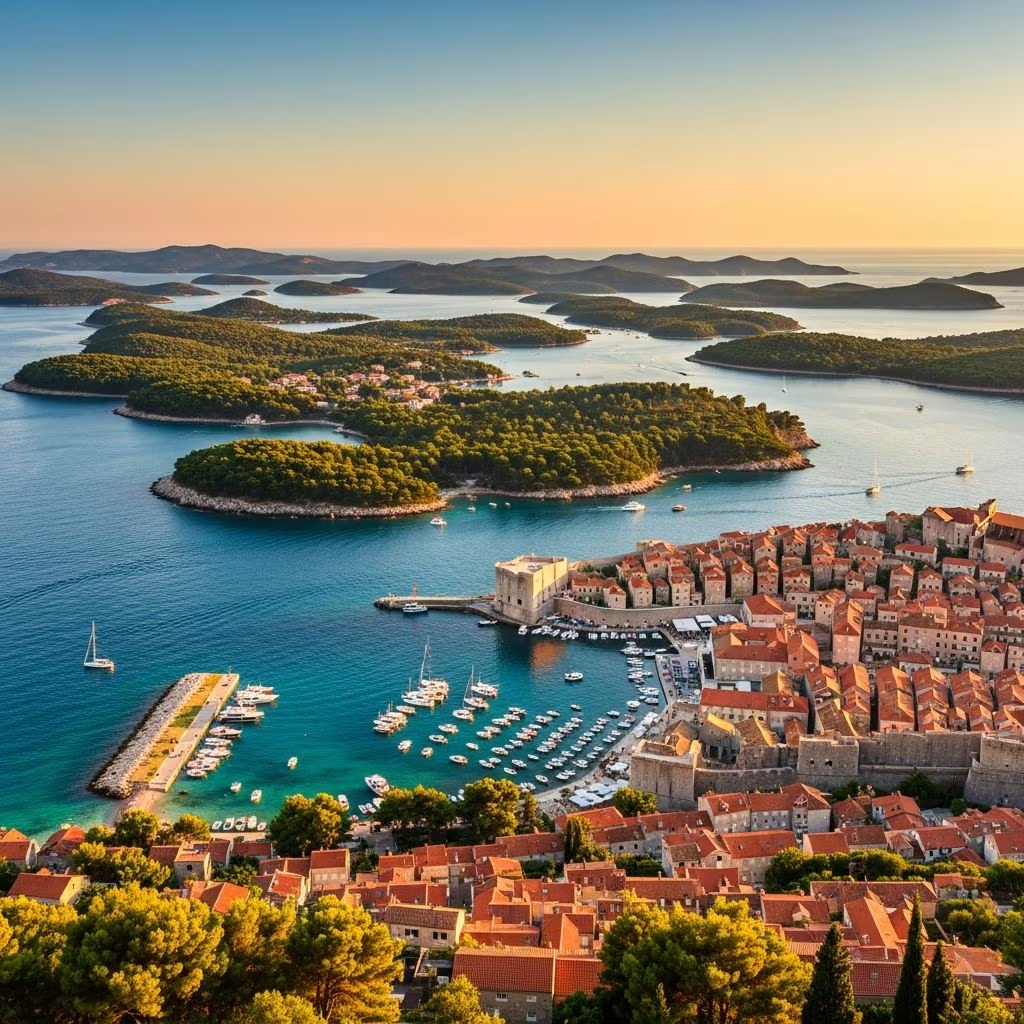
Explore Croatia's Adriatic coast featuring historic gems like Dubrovnik, Split, and islands such as Hvar and Korcula, blending ancient architecture, beaches, and vibrant culture.
 Travel Essentials
Croatia’s Adriatic coastline stretches over a thousand kilometers, dotted with over 1,000 islands and lined with medieval towns that whisper tales of ancient empires. This region, often called the Dalmatian Coast, combines dramatic cliffs, turquoise seas, and well-preserved heritage sites, making it a top destination for travelers seeking both adventure and relaxation.
The Dalmatian Coast is framed by the rugged Dinaric Alps, creating a backdrop of sheer drops into the Adriatic Sea. This geological wonder has shaped a landscape of hidden coves, pebbled beaches, and vibrant marine life, ideal for sailing, snorkeling, and kayaking. Cities here reflect layers of Roman, Venetian, and Ottoman influences, evident in their fortresses, cathedrals, and bustling harbors.
Visitors often start their journey in the south, where the coast’s intensity peaks. The warm Mediterranean climate supports olive groves, vineyards, and lavender fields, contributing to a cuisine rich in fresh seafood, truffles, and local wines like Plavac Mali.
Dubrovnik stands as the crown jewel of Croatia’s coast, its UNESCO-listed Old Town encircled by 2-kilometer-long stone walls built between the 13th and 16th centuries. Walking these ramparts offers panoramic views of terracotta roofs and the shimmering sea. Inside, highlights include the Rector’s Palace, a Gothic-Renaissance gem housing the Cultural History Museum, and the Franciscan Monastery with Europe’s oldest functioning pharmacy, dating to 1391.
Nearby, the Elaphiti Islands provide serene escapes with pine-shaded beaches and hiking trails. Lopud Island, car-free, features sandy shores rare for the region.
Split, Croatia’s second-largest city, revolves around Diocletian’s Palace, a massive Roman complex from 305 AD now blending into the urban fabric. Peristyle Square, with its sphinxes and cathedral tower, buzzes with life. The palace’s cellars host art exhibits, while Riva waterfront teems with yacht-spotters and gelato stands.
Just 30 minutes north, Trogir captivates with its island setting and marble-paved streets. A UNESCO site founded by Greeks in the 3rd century BC, it boasts the Cathedral of St. Lawrence, whose bell tower offers views over the riviera. The Kamerlengo Fortress guards the harbor, perfect for evening strolls.
| Town | Key Attraction | UNESCO Status | Best For |
|---|---|---|---|
| Split | Diocletian’s Palace | Yes | History & Nightlife |
| Trogir | St. Lawrence Cathedral | Yes | Romantic Walks |
| Dubrovnik | City Walls | Yes | Views & Culture |
The Adriatic’s islands are Croatia’s hidden treasures. Hvar Town, on Hvar Island, blends Venetian architecture with a lively port. Climb the Fortica for vistas, or relax on the lavender-scented Pakleni Islands nearby. Known for nightlife, it also offers quiet beaches like Dubovica.
Korcula, dubbed the “birthplace of Marco Polo,” features a fishbone-patterned Old Town with defensive towers. Narrow alleys protect against winds, leading to St. Mark’s Cathedral and wine tastings of Grk varietal. Cycle or kayak around the island’s vineyards and oyster farms.
Further afield, Vis Island remained closed to tourists until 1989, preserving its authenticity. Dive WWII wrecks or hike to the Blue Cave on Bisevo.
Shifting north, Istria offers a gentler coast with Venetian-flavored towns. Rovinj’s colorful facades tumble to the sea, its church tower resembling a lighthouse. Cycle paths link beaches, while truffle hunts in Motovun’s forests delight foodies.
Pula anchors the south with its 1st-century Roman Arena, one of the best-preserved amphitheaters outside Italy, hosting summer concerts. The Temple of Augustus and Triumphal Arch complete the ancient ensemble.
Zadar’s peninsula holds Roman forums, Venetian gates, and modern installations like the Sea Organ, where waves produce music, and Greeting to the Sun, a solar-powered light show. St. Donatus Church, a 9th-century rotunda, dominates the skyline.
Sibenik, often overlooked, features four fortresses and the Cathedral of St. James, a Renaissance marvel carved from local stone. Nearby Krka National Park adds waterfalls to the coastal itinerary.
Best Time to Visit: May-June or September-October for mild weather and fewer crowds. Summers peak with festivals but bring heat and tourists.
Getting Around: Ferries connect islands (Jadrolinija schedules essential). Rent cars for mainland, or join yacht tours for luxury.
Accommodation: Boutique hotels in Old Towns, agritourism in Istria, beach resorts on islands.
Cuisine Highlights: Black risotto, peka (slow-cooked meat/veggies), fresh oysters.
Hvar offers a mix of beaches, history, and nightlife, while Korcula provides a quieter, authentic vibe.
Absolutely—its walls and palaces are unmatched, though book tickets early.
10-14 days to cover key spots without rushing.
Mostly pebbly, but spots like Lopud and Zrce offer sand or fine gravel.
Schengen Area member; check for updates post-EU integration.
Croatia’s coast faces overtourism. Opt for off-season visits, support local eateries, and use reef-safe sunscreen. National parks like Krka limit daily visitors.
