

 Travel Essentials
 Travel Essentials

A vivid journey through Damascus’ ancient streets, souks, cuisine, and hospitality, capturing the city’s enduring spirit before conflict transformed it.
 Travel Essentials
Damascus, one of the world’s oldest continuously inhabited cities, pulses with layers of history etched into its labyrinthine streets and vibrant souks. This article revives the spirit of a journey taken in 2009, capturing the essence of daily life, human connections, and cultural treasures just two years before Syria plunged into turmoil. Through fresh anecdotes and insights, we delve into the city’s soul, offering a window into its enduring allure.
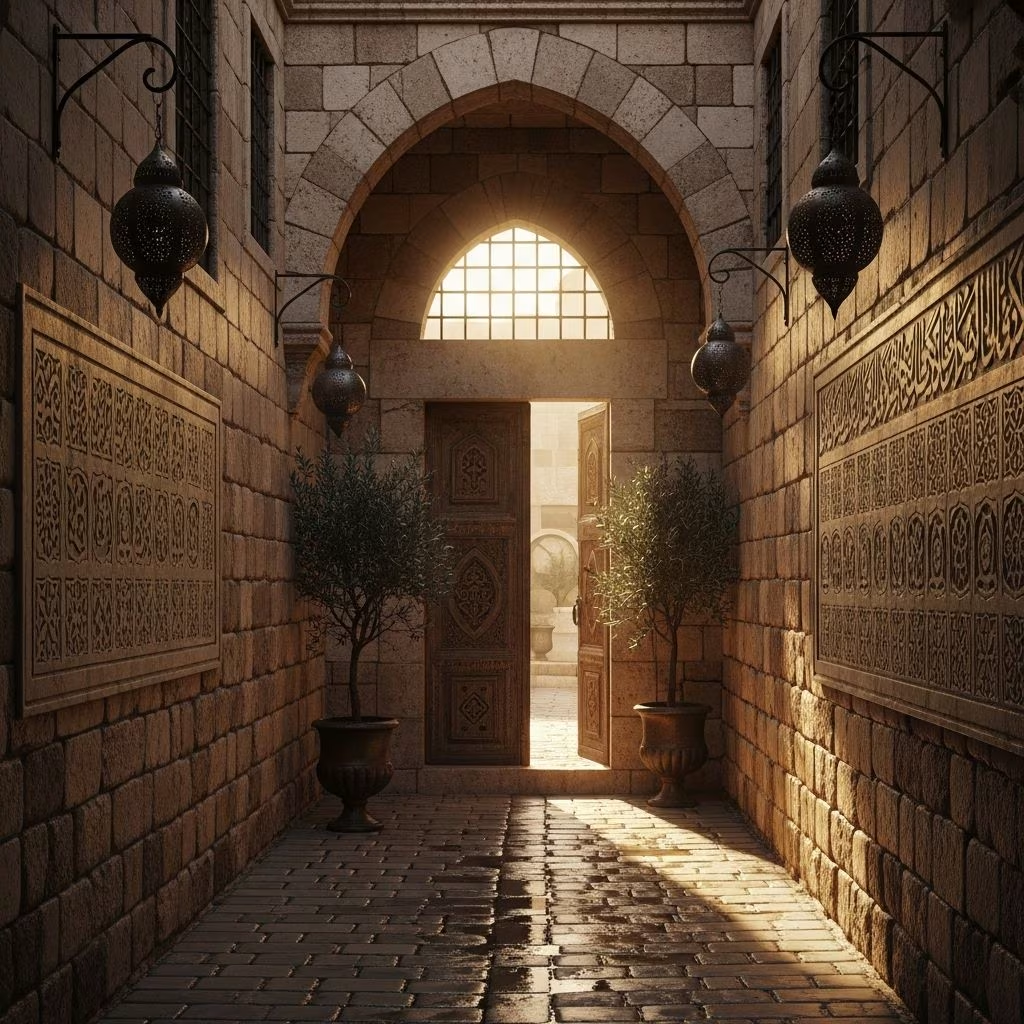
Nestled in the fertile Ghouta oasis, Damascus has thrived for over 11,000 years, blending Assyrian, Roman, Umayyad, and Ottoman influences into a living tapestry. The Old City, encircled by ancient walls, invites wanderers into a maze of narrow alleys where time seems suspended. Stone arches overhead shield pedestrians from the sun, while the air carries scents of jasmine, spices, and baking flatbread.
Entering through the Bab Touma gate feels like stepping into a medieval painting come alive. Minarets pierce the sky, calling the faithful to prayer, as children dart between donkey carts laden with fruits. This quarter, with its Christian heritage, buzzes with a mix of churches and mosques, symbolizing the city’s historical religious harmony.
The souks of Damascus form the commercial and social core, stretching over 10 kilometers of vaulted passages. Souk al-Hamidiyeh, with its towering entrance and bullet-pocked walls from a 1925 revolt, leads to a whirlwind of colors and aromas. Here, silk scarves shimmer under lantern light, while copper artisans hammer intricate patterns onto trays.
Deeper in, Souk al-Bzouriye specializes in sweets—sticky ma’amoul cookies stuffed with dates and pistachios, or glistening trays of baklava. Vendors invite passersby with warm smiles and samples, turning shopping into a ritual of negotiation and camaraderie. A typical exchange might start with tea poured from a samovar, building trust before prices are discussed.
| Souk Name | Specialty Goods | Unique Feature |
|---|---|---|
| Souk al-Hamidiyeh | Textiles, perfumes | Iconic arched entrance |
| Souk al-Bzouriye | Sweets, spices | Perfume fountains |
| Souk al-Hariqa | Books, antiques | Historic bookshops |
| Souk Midhat Pasha | Clothing, jewelry | Modern-vintage mix |
Beyond commerce, these markets are social hubs. Tailors share tales of old trade routes, while goldsmiths recount family legacies spanning centuries. One memorable encounter involved a elderly vendor who, upon learning of a visitor’s distant homeland, gifted a small brass lamp as a token of Syrian hospitality.
The Umayyad Mosque stands as Damascus’s crown jewel, a UNESCO site founded in 715 CE on the site of a Roman temple to Jupiter. Its vast courtyard, ablaze with ablution fountains, hosts worshippers and tourists alike. Mosaics depicting paradisiacal gardens—green landscapes with rivers and trees—evoke the Quran’s descriptions of heaven.
Adjacent, the Mausoleum of Saladin honors the Crusader-defeating sultan, its simple dome contrasting the mosque’s opulence. Venturing off the beaten path reveals serene riads: private houses with central fountains surrounded by orange groves. Peering through half-open doors offers glimpses of family life—women preparing meals, men playing backgammon.
Syrian cuisine in Damascus is a celebration of fresh ingredients and bold flavors. Street stalls brim with shawarma skewers dripping fat onto charcoal grills, wrapped in warm khubz bread with garlic paste and pickles. For a sit-down experience, hole-in-the-wall eateries serve fatteh: layers of yogurt-soaked bread, chickpeas, pine nuts, and lamb.
Hamman al-Jadid, or New Bath Street, teems with casual spots for kibbeh—minced meat and bulgur balls—or muhammara, a fiery dip of walnuts, pomegranate molasses, and chili. Dessert lovers flock to ice cream vendors churning mastic-flavored scoops with pistachios. A pro tip: Pair meals with maté, the bitter herbal tea sipped slowly amid conversations.
Markets overflow with produce: ruby pomegranates, emerald figs, and golden quinces. Home cooks emphasize simplicity—olive oil drizzled over za’atar-dusted flatbread, or lentil soups simmered with cumin.
Damascenes embody warmth, often inviting strangers for tea or a home-cooked meal. A common refrain heard in 2009 was a desire for peace and connection beyond borders. One tailor, mending a shopper’s bag, pleaded to convey that Syrians cherish tranquility and hospitality above all.
Children approach foreigners with curiosity, practicing English phrases learned in school. Elders in qahwa houses (coffee shops) puff nargileh while debating politics or poetry, their faces lined with stories from the French Mandate era to Ba’athist rule. These interactions humanize the city, revealing dreams of stability and cultural pride.
Damascus excels in mother-of-pearl inlay, where craftsmen embed shimmering shells into wooden boxes and furniture. The process, passed down patrilineally, involves precise cutting and gluing, yielding pieces fit for museums. Mother-of-pearl from the city’s workshops once adorned the tomb of Saladin.
Damask fabrics, named after the city, feature intricate weaves of silk and gold thread. Modern artisans blend tradition with innovation, creating scarves dyed in natural hues from saffron and indigo. Woodworkers carve lattice screens (mashrabiya) that filter light into geometric patterns, cooling homes naturally.
While this narrative draws from a serene 2009 visit, subsequent events reshaped Damascus. Conflict displaced millions, damaged heritage sites, and tested resilience. Yet, reports indicate gradual revival: souks reopening, artisans rebuilding, and the Old City’s UNESCO status aiding preservation.
Travelers today must prioritize safety, guided tours, and cultural sensitivity. The essence captured here—resilient spirit, layered history—persists, inviting mindful exploration.
As of recent updates, central areas like the Old City are stabilizing under government control, but consult official travel advisories for real-time status.
Souk al-Hamidiyeh for its grandeur, al-Bzouriye for sweets, and al-Hariqa for books and curiosities.
Constructed in 715 CE, it’s one of the oldest mosques in continuous use.
Shawarma, kibbeh, fatteh, and pistachio-laden desserts like baklava.
Groups or tours recommended, especially for women, to navigate safely.
