

 Travel Essentials
 Travel Essentials

Explore the Danube Delta's extraordinary biodiversity, from migratory birds to rare species. Learn about habitats, best visiting seasons, and wildlife experiences.
 Travel Essentials
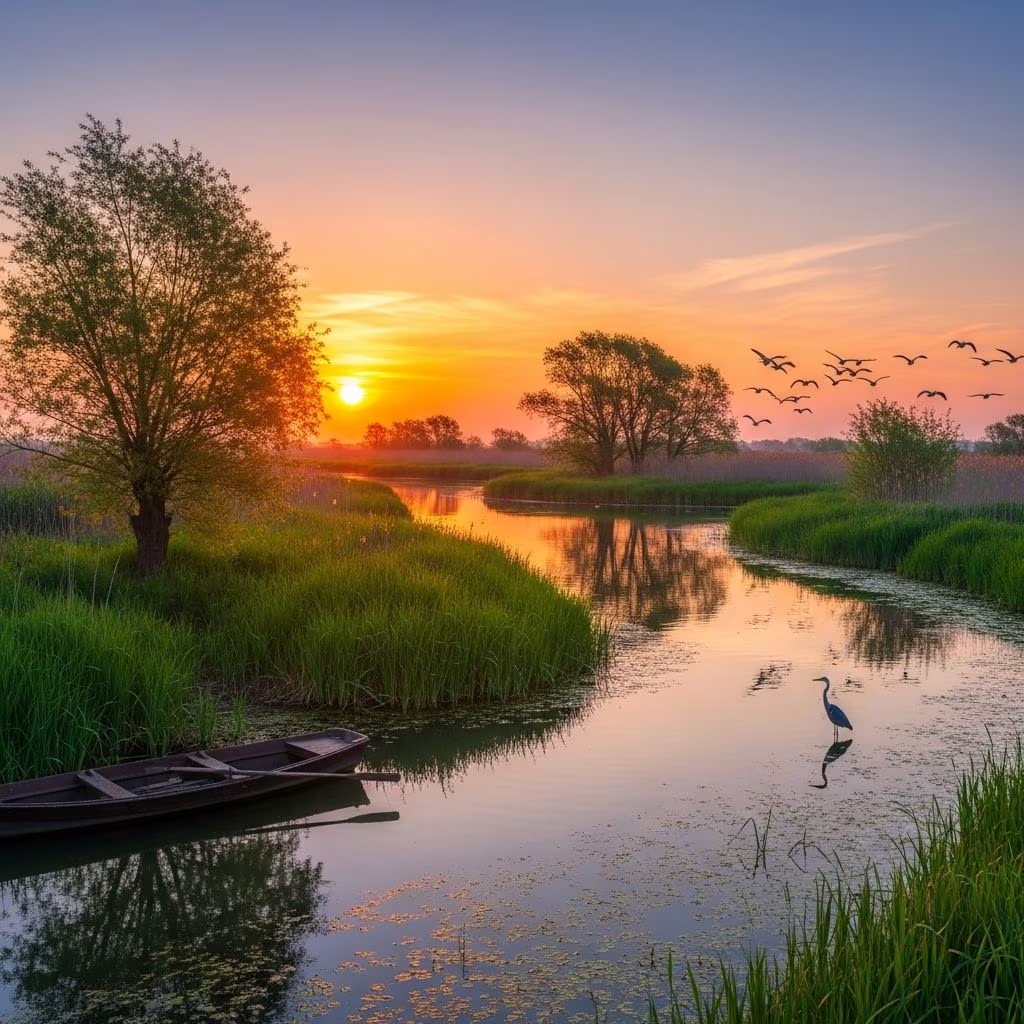
Located where the Danube River meets the Black Sea, the Danube Delta represents one of Europe’s most pristine and biodiverse natural treasures. This expansive wetland ecosystem spans across Romania, Ukraine, and Moldova, creating a dynamic landscape where water, land, and sky converge to support an astonishing array of wildlife. The delta’s unique geographical position makes it a critical corridor for migratory species and a permanent home to countless animals adapted to wetland life.
The Danube Delta’s ecological significance lies in its remarkable habitat diversity. Rather than existing as a uniform wetland, the delta comprises a complex mosaic of distinct environments, each supporting specialized plant and animal communities. This habitat heterogeneity creates ideal conditions for supporting the region’s extraordinary biodiversity.
The delta contains approximately 479 lakes, with an average depth of just one meter, creating shallow waters perfect for wading birds and aquatic vegetation. These freshwater and brackish water systems are connected by intricate networks of channels and tributary systems, forming natural highways for aquatic life and serving as crucial navigation routes for visitors exploring the region.
The dominant vegetation types include extensive reed beds that cover vast areas, providing nesting and feeding grounds for specialized bird species. Marshes and wetland meadows create transitional zones between open water and higher ground, while scattered forests offer shelter for terrestrial mammals. Rocky steppe regions at the delta’s periphery provide additional habitat variety, contributing to the overall ecological richness.
The numbers tell a compelling story about the delta’s biological importance:
This biodiversity extends far beyond birds, though avian species dominate most wildlife-watching experiences. Mammals including wild boar and golden jackal inhabit the delta’s remote areas, while aquatic species including fish, amphibians, and molluscs form the foundation of the ecosystem’s food web.
The Danube Delta experiences dramatic seasonal changes that fundamentally alter its ecological character. These transformations create distinct opportunities for observing different wildlife communities throughout the year.
Summer months bring massive influxes of migratory birds following ancient flyways that connect Arctic breeding grounds with African wintering areas. From June through mid-September, white pelicans arrive in enormous congregations, engaging in spectacular feeding frenzies as they take advantage of abundant fish populations. These large white birds create unforgettable visual experiences, with dozens or hundreds visible at once diving and cooperatively hunting in the shallow waters.
Winter introduces an entirely different cast of characters. The reserve attracts almost the entire global population of red-breasted geese during winter months, transforming the delta into a critical survival zone for this vulnerable species. The concentration of so many individuals in a single location underscores the delta’s irreplaceable ecological role in global wildlife conservation.
Spring and autumn migrations bring waves of smaller songbirds, warblers, and shorebirds, each species timed to arrive when food resources peak. This dynamic seasonal rhythm means that the delta offers different wildlife experiences depending on when visitors choose to explore.
The choice of transportation dramatically affects the wildlife-watching experience in the delta. Large commercial ships that occasionally transit through the delta create significant disturbance, causing wildlife to flee and disrupting natural behaviors. These massive vessels generate noise and waves that frighten sensitive species and destroy the intimate connection between observer and observed.
Small boats offer a fundamentally different experience, enabling visitors to glide silently through narrow channels where the atmosphere becomes truly enchanting. From smaller vessels, it becomes possible to approach bird flocks closely enough to observe detailed behaviors and capture high-quality photographs. The reduced speed and noise of small boats allows wildlife to remain relatively calm and continue natural activities.
Canoe and kayak expeditions provide even greater intimacy with the wetland environment, allowing near-silent movement through shallow waters and narrow reed-lined channels. Floating hotels offering week-long immersive experiences represent another approach, enabling extended explorations from a mobile base that eliminates daily travel fatigue.
Timing significantly influences the quality of a delta visit. April through September represents the prime birdwatching season, when migratory species create the most dramatic displays and resident species engage in breeding activities. During these months, daily boat excursions typically result in dozens of superb sightings, with opportunities to observe multiple species in active feeding, nesting, or territorial displays.
Winter months, while quieter in some respects, concentrate waterfowl populations in smaller areas, sometimes creating easier viewing opportunities. The challenge of winter travel and fewer tour operators make this season less popular, but dedicated birders may find unique species and photography opportunities.
Tulcea serves as the natural base for exploring the delta, with easy access to cruises, guided nature hikes, and organized birdwatching programs. This riverside town provides accommodations, supplies, and services for visitors planning delta explorations.
Sfantu Gheorghe, one of the delta’s most beautiful fishing villages, offers a different perspective on delta life. Located where the Danube enters the Black Sea, this village provides access to Sahalin Island, an important bird reserve hosting white pelicans and fire-bellied toads. The surrounding area supports migrating waders, lesser grey shrikes, and eastern olivaceous warblers, while the beach provides habitat for the specialized steppe runner lizard.
The Carasuhat conservation area represents another important destination, recognized for hosting myriad bird species and providing opportunities to observe the delta’s conservation efforts in action.
Certain species define the Danube Delta experience for many visitors. White pelicans create the most visually dramatic wildlife displays, arriving in huge numbers during summer months to dominate the waterscape. These massive birds present unforgettable scenes, with their coordinated fishing behaviors providing excellent photography opportunities.
Red-breasted geese represent a more subtle but equally significant presence, with their winter congregation representing almost the entire global population of this vulnerable species. Observing such concentrations of rare birds underscores the delta’s conservation importance.
Eagles, particularly white-tailed eagles, can be seen hunting overhead, while diverse heron and egret species constantly populate the shorelines. Bee-eaters, rollers, black woodpeckers, and golden orioles add color and sound to the wetland soundscape. Marsh harriers patrol the reed beds, while various warbler species occupy specific habitat niches.
Multiple tourism operators provide organized experiences catering to different preferences and budgets. Eco-conscious multi-day programmes led by wildlife experts offer comprehensive delta explorations, with some including stays on floating hotels that enable thorough immersion in wetland nature while maintaining the relaxing pace of life on the Danube.
Bespoke birdwatching tours allow travelers to select visiting dates and experiences matching their interests, with daily boat excursions led by expert local guides. Three-day packages combine boat excursions with stays in family-run guesthouses, offering both guided experiences and time for independent exploration. Ethical wildlife expeditions emphasizing small groups, local guides, and slow travel represent another approach, prioritizing sustainable tourism practices.
Pricing varies widely, from day trips to comprehensive multi-day experiences, accommodating different budgets and time constraints. Accommodations range from basic guesthouses to comfortable houseboats equipped with modern amenities and observation decks for evening wildlife viewing.
Successful delta experiences require appropriate preparation. Visitors should bring binoculars, cameras with telephoto lenses, and field guides for species identification. Clothing appropriate for variable weather conditions and protection from insects becomes essential, particularly during warm months when insect populations peak.
Understanding local regulations and respecting wildlife boundaries ensures sustainable tourism that protects sensitive species and habitats. Hiring experienced local guides not only improves sighting opportunities but supports local communities economically and provides cultural insights into delta life.
Physical fitness requirements vary by activity choice, with boat-based observation requiring minimal exertion while hiking or kayaking demands greater endurance. Most visitors benefit from gradual acclimatization to the flat, water-dominated landscape after arriving from mountainous regions.
The Danube Delta’s extraordinary biodiversity creates urgent conservation imperatives. This ecosystem provides critical habitat for migratory species with global ranges, making its protection essential for international conservation efforts. The concentration of red-breasted geese during winter months, for instance, means that any large-scale environmental degradation could threaten the entire global population of this species.
Wetland ecosystems face threats from water extraction, pollution, habitat fragmentation, and climate change. Sustainable tourism that generates economic benefits for local communities while maintaining ecological integrity provides one mechanism for supporting long-term conservation. Visitors who understand the delta’s ecological significance become advocates for its protection, supporting conservation efforts through their travel choices and donations.
The delta demonstrates how intact ecosystems maintain their ability to support extraordinary biodiversity and provide resilience in the face of environmental challenges. Preserving this ecosystem protects not only the countless species inhabiting it but also the ecological processes that benefit human communities, from water purification to climate regulation.
