

 Travel Essentials
 Travel Essentials

Explore Danzhai’s Miao villages, rice terraces, waterfalls, and living traditions in one of Guizhou’s most authentic rural escapes.
 Travel Essentials
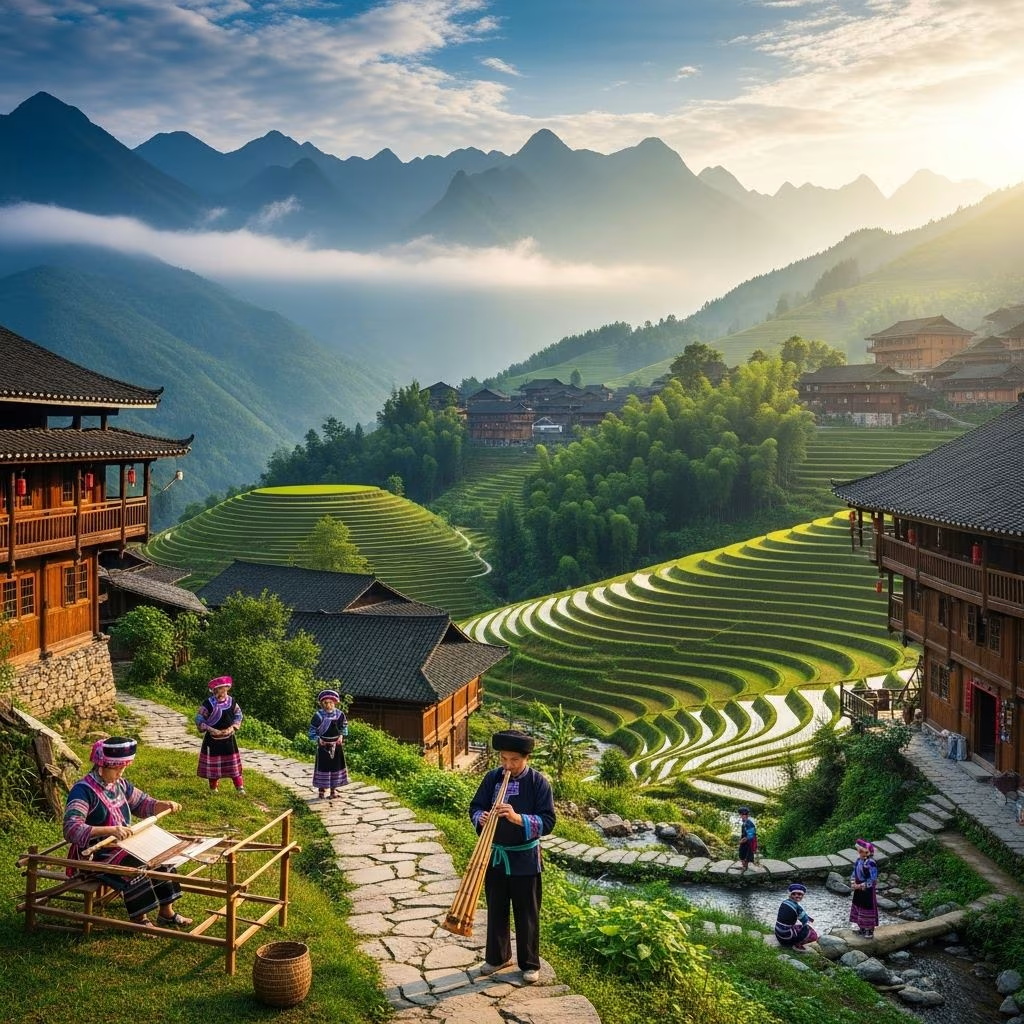
Nestled in the southeastern reaches of Guizhou Province, Danzhai County offers a captivating blend of natural splendor and living cultural heritage. This rural enclave, spanning roughly 350 square miles of rolling hills, lush valleys, and intricate rice terraces, is predominantly inhabited by the Miao people, one of China’s 56 recognized ethnic groups. Far from the bustling tourist circuits, Danzhai invites adventurers to immerse themselves in authentic village life, where age-old traditions coexist with breathtaking landscapes.
Miao villages dot the Danzhai landscape like jewels in a verdant crown, each telling a unique story of resilience and artistry. These settlements, characterized by sturdy wooden homes with sloping tiled roofs perched on stone foundations, evoke a sense of timelessness. Villages like Paimo stand out for their mastery of batik, a labor-intensive technique where artisans apply beeswax to fabric before dyeing it to create intricate patterns symbolizing Miao folklore and nature.
More remote hamlets, such as Fanweng, perched high on mountain slopes, preserve an almost prehistoric ambiance. Here, teetering stilt houses offer panoramic vistas of terraced fields, and daily life unfolds with minimal modern intrusion. The journey to these spots—often via winding, narrow roads—enhances the reward, as harder-to-reach villages tend to retain the purest expressions of Miao customs.
Danzhai’s terrain is a testament to human ingenuity harmonizing with nature. The iconic rice terraces, carved into hillsides over millennia by Miao farmers, transform the landscape into a series of undulating green steps, especially vivid during planting season. These not only sustain agriculture but also serve as scenic backdrops for hikes and photography.
Paiting Waterfall emerges as a hidden gem: a 200-foot-wide, 130-foot-high cascade reached via slippery paths through terraced fields, untouched by commercialization. Nearby, Maobiling Forest Park and the Cha River provide opportunities for birdwatching, picnics, and gentle riverside walks. The Dagu Well and Pumpkin Cave add mystical elements with their colorful formations and folklore associations.
| Attraction | Description | Best Time to Visit | Difficulty |
|---|---|---|---|
| Rice Terraces | Sculpted hillsides for rice cultivation | May-June (planting) | Easy to moderate hikes |
| Paiting Waterfall | Unmarked 200×130 ft falls | Summer (full flow) | Moderate (slippery paths) |
| Maobiling Forest Park | Lush trails and biodiversity | Spring/Fall | Easy walks |
At the heart of Danzhai’s appeal lies its intangible cultural heritage. Artisans preserve techniques like Miao batik, traditional papermaking in Shiqiao—where mulberry bark is pulped under a 100-meter-high stone overhang—and intricate silverwork adorning festive attire. Danzhai Wanda Village, opened in 2017, serves as a cultural hub, showcasing over eight national-level intangible heritages including Miao dance and clothing.
Local cuisine tantalizes with dishes like sour fish soup, sticky rice cakes, and grilled meats seasoned with wild herbs. Meals often feature free-range chicken and river fish, prepared in bamboo tubes over open fires. Festivals bring these elements to life with Lusheng pipe music, vibrant dances, and communal feasts.
Accessibility has improved, making Danzhai viable for independent travelers. Fly into Guiyang Longdongbao International Airport (2 hours by car) or take a high-speed train to Kaili Station (30 miles away), with connections to major cities like Beijing. From there, buses or taxis lead to Danzhai town.
For navigation, download the Danzhai Xing mini-program via WeChat, offering bilingual maps, village guides, cycling routes, and sat-nav integration. Danzhai Wanda Village provides excursion services with local drivers for customized tours: craft workshops, waterfall hikes, or explorations of abandoned sites.
Accommodations range from Wanda Village’s international-standard hotels to homestays in Miao villages. Budget around 480 CNY/night for comfortable stays with cultural experiences.
Future developments promise enhanced exploration. Plans include 60 miles of walking trails linking remote villages via ancient paths and 30 miles of biking routes with electric mountain bikes. Current options already allow serendipitous road trips, yielding encounters with terraced vistas and impromptu craft demos.
For thrill-seekers, abandoned mining towns in hidden valleys offer urban decay amid wilderness, accessible via guided tours starting 2021 onward.
Initiatives like Danzhai Wanda Village blend tourism with poverty alleviation, channeling visitor revenue into community projects while promoting crafts. This model ensures cultural preservation without overwhelming authenticity. Travelers contribute by supporting local artisans, staying in homestays, and respecting customs—no littering terraces or disrupting rituals.
Spring (March-May) and autumn (September-November) offer mild weather and lush scenery; summer brings waterfalls to life but with rain.
Yes—easy trails for families, immersive experiences for solos. Guided options enhance safety in remote areas.
Budget 500-1000 CNY/day including lodging, food, and transport; tours add 200-500 CNY.
Limited; use WeChat’s Danzhai Xing app or Wanda Village guides fluent in Mandarin and basic English.
Hiking shoes, rain gear, insect repellent, cash (limited ATMs), and respect for Miao etiquette like removing shoes indoors.
