

 Travel Essentials
 Travel Essentials

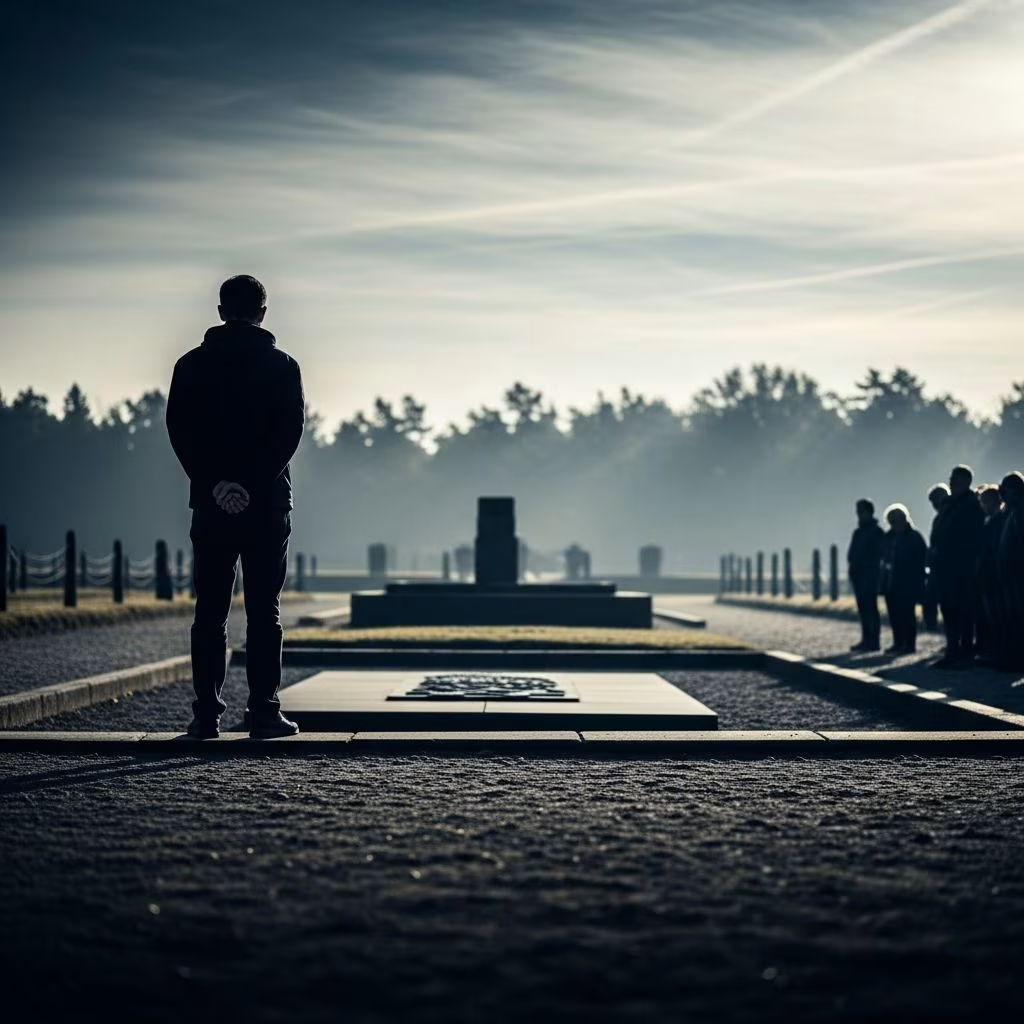
Dark tourism can educate, memorialize, and support healing when visited respectfully, with local voices, safety, and ethical awareness.
 Travel Essentials
Dark tourism involves visiting locations tied to death, tragedy, or suffering, offering profound educational value when approached responsibly. This practice raises complex ethical questions but can promote remembrance, empathy, and community healing if managed with care.
Dark tourism encompasses a wide range of sites, from battlefields and memorials to disaster zones and crime scenes. Scholars categorize these into subsets like cemeteries, exhibitions of tragedy, conflict areas, and genocide sites, each varying in intensity along a ‘light-dark’ spectrum based on visitor motives and site gravity.
At the lighter end, sites like historical cemeteries encourage reflection without morbidity. Darker shades include active conflict zones or recent disaster areas, where ethical lines blur due to ongoing sensitivity.
Travelers seek dark sites for diverse reasons. Some pursue education and historical awareness, gaining insights that prevent future atrocities. Others experience morbid curiosity or thrill-seeking, which can veer into ethical gray areas.
Ethical frameworks emphasize eudaemonic motives—those promoting growth and reflection—over hedonic ones focused on mere entertainment.
Responsibly conducted, dark tourism generates revenue for upkeep, educates visitors, and aids trauma processing. Organizations like the International Coalition of Sites of Conscience train sites to become ‘places of memory,’ enhancing global networks for advocacy and healing.
| Benefit | Impact on Sites/Communities | Example |
|---|---|---|
| Economic Support | Funds preservation and local jobs | Chernobyl tours sustain monitoring efforts |
| Educational Outreach | Spreads awareness to prevent recurrence | Genocide memorials teach tolerance |
| Healing Process | Allows locals to share stories | Post-conflict tours in Syria |
| Infrastructure Boost | Improves access and safety | Battlefield site developments |
These advantages hinge on sustainable practices that prioritize authenticity over commercialization.
Despite upsides, dark tourism risks desensitization, where tragedies become spectacles. Over-commercialization exploits suffering, while insensitive behavior—like selfies at graves—dishonors victims.
Government roles remain ambiguous: should sites be preserved actively, minimally interfered with, or shunned? Public employees grapple with balancing access and sanctity.
To travel responsibly, adopt principles centered on respect, education, and sustainability. Tour operators like Young Pioneer Tours stress avoiding glorification and selfies, focusing on immersion.
These steps transform tourism from voyeurism to meaningful tribute.
Around the world, sites exemplify ethical dark tourism. Auschwitz-Birkenau in Poland integrates survivor testimonies, ensuring authenticity. Chernobyl, Ukraine, offers structured tours with radiation experts, balancing access and safety.
In Cambodia’s Tuol Sleng, guides—often survivors—share unfiltered narratives, fostering empathy without sensationalism. Rwanda’s genocide memorials emphasize reconciliation, involving community input.
Governments must navigate preservation versus promotion. Active involvement can standardize ethics, like training for site staff. NGOs provide frameworks, assessing motives via light-dark spectrums to guide policy.
Interactive tools, such as virtual maps of dark sites, allow remote education, reducing physical strain on locations.
As demand grows, the sector must prioritize ethics. Emerging trends include virtual reality tours for inaccessible sites and AI-guided reflections. Research urges blending economic gains with victim dignity.
Sustainable models could expand, with certifications for ethical operators ensuring long-term viability.
Travel to sites associated with death, suffering, or tragedy for educational or reflective purposes.
It can be when respectful and educational; risks arise from commercialization or insensitivity.
Research, respect rules, support locals, and reflect deeply on experiences.
Chernobyl, Auschwitz, Ground Zero, battlefields like Gettysburg.
Both: aids preservation and awareness but risks exploitation if unmanaged.
| Action | Ethical Check |
|---|---|
| Pre-trip research | Done? Sources verified? |
| On-site behavior | Respectful? No disruptions? |
| Post-visit reflection | Lessons applied? Shared responsibly? |
| Contributions made | Donations or local spending? |
Use this to self-assess and improve future travels.
