

 Travel Essentials
 Travel Essentials

Explore South Africa's Day of Reconciliation on December 16, featuring cultural celebrations, historical commemorations, and community events nationwide.
 Travel Essentials
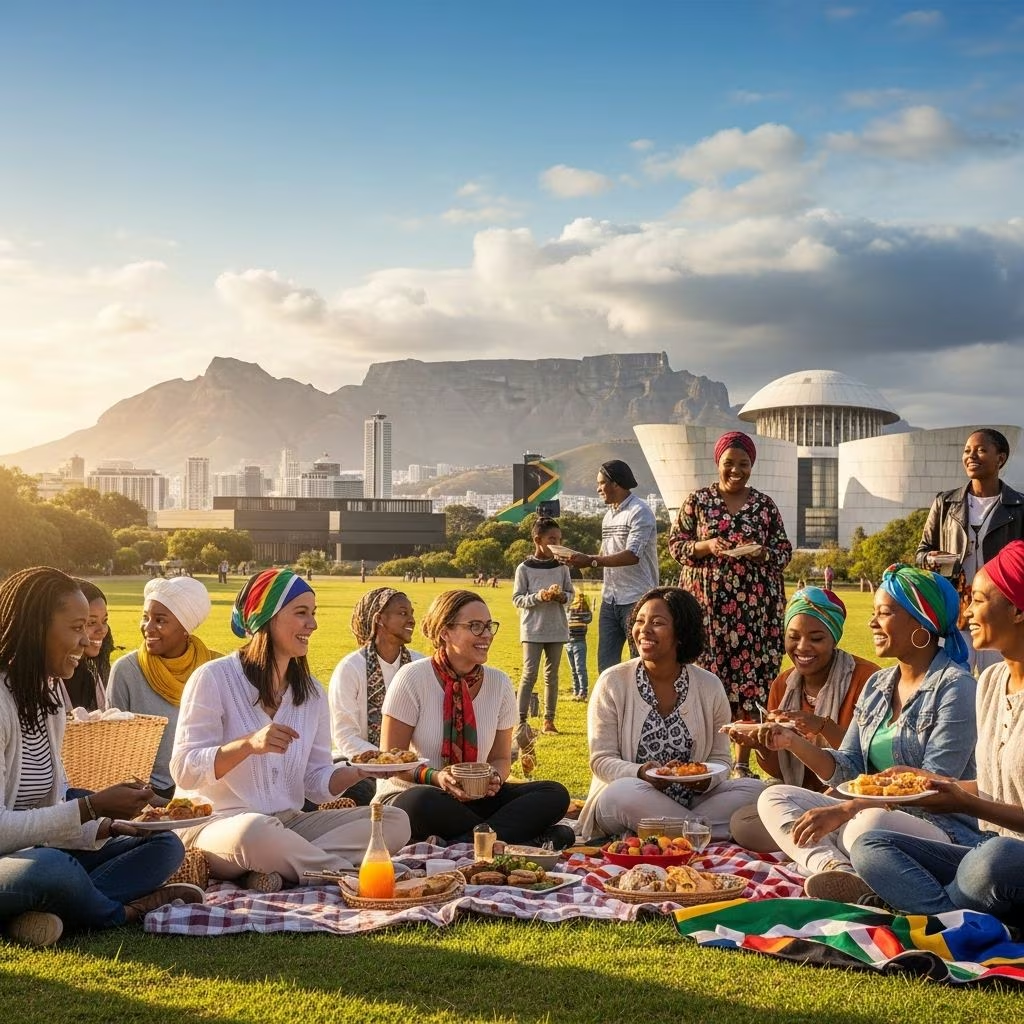
December 16 holds profound meaning for South Africa, representing a pivotal moment in the nation’s journey toward unity and healing. The Day of Reconciliation stands as a public holiday that transcends historical divisions, bringing together South Africans from diverse backgrounds to celebrate progress and commit to continued nation-building. What began as a day steeped in separate cultural traditions has evolved into a powerful symbol of national reconciliation, embodying the country’s transition from apartheid to democracy.
The significance of December 16 in South African history cannot be overstated, as the date encompasses two major historical events that shaped the nation’s trajectory. The first occurred in 1838 when the Battle of Blood River took place between Voortrekkers and Zulu forces. During the Great Trek, when Voortrekkers moved into South Africa’s interior seeking land, tensions escalated into armed conflict. Approximately 470 Voortrekkers, equipped with superior weaponry, faced a Zulu army of around 10,000 warriors. The Voortrekkers’ victory in this battle became a cornerstone of Afrikaner cultural identity, commemorated annually as the Day of the Vow.
More than a century later, on December 16, 1961, the African National Congress established Umkhonto we Sizwe (meaning “Spear of the Nation”), its military wing. This organization marked the beginning of armed resistance against the apartheid regime. For decades, this date represented opposing narratives—one celebrating Afrikaner heritage, the other symbolizing liberation struggle and resistance to racial oppression.
Following South Africa’s first democratic elections in 1994, government officials recognized the necessity of transforming December 16 into a day that could honor both historical traditions while promoting national healing. In 1995, the holiday was officially renamed and celebrated as the Day of Reconciliation for the first time as a public holiday. This symbolic gesture acknowledged the significance of December 16 to both Afrikaner and liberation struggle communities while redirecting the day’s focus toward fostering unity rather than division.
The Day of Reconciliation represents far more than a statutory holiday—it embodies South Africa’s commitment to addressing past injustices and building a cohesive society. The holiday was deliberately established to promote reconciliation and national unity following the end of apartheid. Rather than erasing history, the day acknowledges multiple perspectives and invites South Africans to reflect on their shared humanity and collective future.
Government leaders recognized that moving the nation forward required creating spaces where all communities could feel their historical experiences were valued while working toward common goals. The renaming initiative demonstrated sophisticated understanding that national healing required acknowledging rather than dismissing historical grievances. By choosing a date significant to multiple communities and reframing it through the lens of reconciliation, South Africa created a framework for remembrance that transcends previous divisions.
The Day of Reconciliation manifests differently across South Africa’s various provinces and communities, reflecting the country’s rich cultural diversity and regional identities. Throughout the nation, commemorations take multiple forms, allowing communities to participate in ways meaningful to their local contexts.
Across the country, cultural groups participate in parades and festive celebrations that showcase South African traditions. These events provide platforms for artistic expression and cultural pride while promoting inter-community dialogue. In various locations, traditional music, dance, and performance art feature prominently, allowing communities to celebrate their heritage while gathering alongside neighbors from different backgrounds.
Many communities organize formal commemorative events honoring those who fought for freedom and those who lost their lives during South Africa’s struggle against apartheid. Past celebrations have included significant memorials, such as when President Jacob Zuma honored forgotten heroes in 2009 by inscribing around 100 deceased veterans’ names on the Wall of Names at Freedom Park. Such acts of remembrance ensure that sacrifices are acknowledged and that younger generations understand the human cost of achieving democracy.
In several communities, organized walks and marches serve dual purposes as both celebratory events and memorials. Some communities specifically choose to emphasize the need for racial harmony through these participatory activities, creating opportunities for citizens to visibly demonstrate their commitment to unity. These events strengthen social bonds and create shared experiences that bridge different segments of society.
While celebrations occur throughout South Africa, certain locations host especially significant national events that attract government leaders, international visitors, and thousands of South Africans. These major commemorations often feature addresses from senior government officials and thematic programming that focuses national attention on particular aspects of reconciliation work.
| Year | Theme | Focus Area |
|---|---|---|
| 2013 | Nation Building, Social Cohesion, and Reconciliation | Centenary of Union Buildings; Nelson Mandela statue unveiling |
| 2014 | Social Cohesion, Reconciliation, and National Unity in 20 Years of Democracy | Democratic achievement and ongoing unity efforts |
| 2015 | Bridging the Divide: Building Common South African Nationhood | Shared national identity development |
| 2016 | Bridging the Divide Towards a Non-Racist Society | Addressing racial divisions and inequality |
The 2013 Day of Reconciliation stands out as particularly significant, coinciding with the centenary celebration of the Union Buildings in Pretoria and the unveiling of a statue honoring former President Nelson Mandela. This statue serves as both a monument to Mandela’s contributions to freedom and reconciliation and as a collective memorial to millions of South Africans who struggled and sacrificed for national liberation. Associated with this major event, the South African government declared the Union Buildings as a grade 1 national heritage site and commissioned commemorative coins and stamps, elevating the symbolic importance of the occasion.
Several locations have become established centers for Day of Reconciliation commemorations, attracting visitors and participants from across the nation. The Ncome Museum in northern KwaZulu-Natal hosts major commemorative events that explore the region’s historical significance and contemporary reconciliation efforts. Presidents and government officials frequently deliver keynote addresses at these venues, drawing media attention and emphasizing the national importance of reconciliation work.
The Voortrekker Monument remains another historically important site, particularly significant for Afrikaner communities reflecting on their heritage. The Declaration of the Union Buildings and Freedom Park demonstrates how South Africa has transformed historical sites into spaces promoting broader national narratives of healing and unity.
Over successive years, the themes chosen for Day of Reconciliation celebrations reflect evolving national priorities and ongoing challenges in building social cohesion. Early themes emphasized the basic concepts of reconciliation and unity. As democracy matured, themes became increasingly specific, addressing particular challenges such as racism, economic inequality, and the need to develop a cohesive national identity transcending historical divisions.
This thematic progression reveals that South African leaders view the Day of Reconciliation as an annual opportunity to refocus national attention on specific aspects of nation-building work. Rather than becoming static commemorations, the celebrations serve as annual touchstones for assessing progress and recommitting to particular objectives.
The transformation of December 16 represents one of South Africa’s most successful symbolic interventions in nation-building. Rather than abolishing a date important to one community, the government expanded its meaning to encompass multiple narratives while emphasizing shared commitment to democracy and reconciliation. This approach demonstrates sophisticated understanding of how symbols function in post-conflict societies.
For Afrikaners, the day retains historical significance while being repositioned within a broader national framework. For liberation struggle veterans and their descendants, December 16 acknowledges their sacrifices and continuing role in the democratic nation. By holding both narratives simultaneously, South Africa created a day that can accommodate diverse historical memories while directing focus toward common future goals.
More than two decades after its establishment as a national holiday, the Day of Reconciliation continues evolving as South Africa confronts ongoing challenges in building truly cohesive, equitable society. The day serves as reminder of progress achieved while emphasizing work that remains. Each commemoration provides opportunity for reflection on how effectively the nation addresses racial inequalities, promotes economic justice, and builds genuine social cohesion across historical divides.
The Day of Reconciliation demonstrates that national healing requires deliberate, sustained commitment and creative symbolic action. By transforming a date steeped in conflicting historical narratives into a celebration of shared democratic values and commitment to unity, South Africa created framework for annually renewing national dedication to reconciliation. As communities gather each December 16, they participate in ongoing process of acknowledging past while building future grounded in principles of equality, dignity, and common humanity.
