

 Travel Essentials
 Travel Essentials

A comprehensive guide to visiting Death Valley National Park during spring, featuring seasonal highlights, travel tips, and must-see attractions.
 Travel Essentials
Death Valley National Park transforms into an accessible wonderland when spring arrives, offering visitors the rare combination of comfortable temperatures and dramatic natural beauty. The seasonal shift from winter’s mild conditions to spring’s ideal climate creates a window of opportunity that attracts travelers seeking to experience one of America’s most extreme landscapes without the dangers of summer heat. During this period, daytime temperatures hover between 60 and 75 degrees Fahrenheit, making outdoor exploration not just possible but genuinely enjoyable.
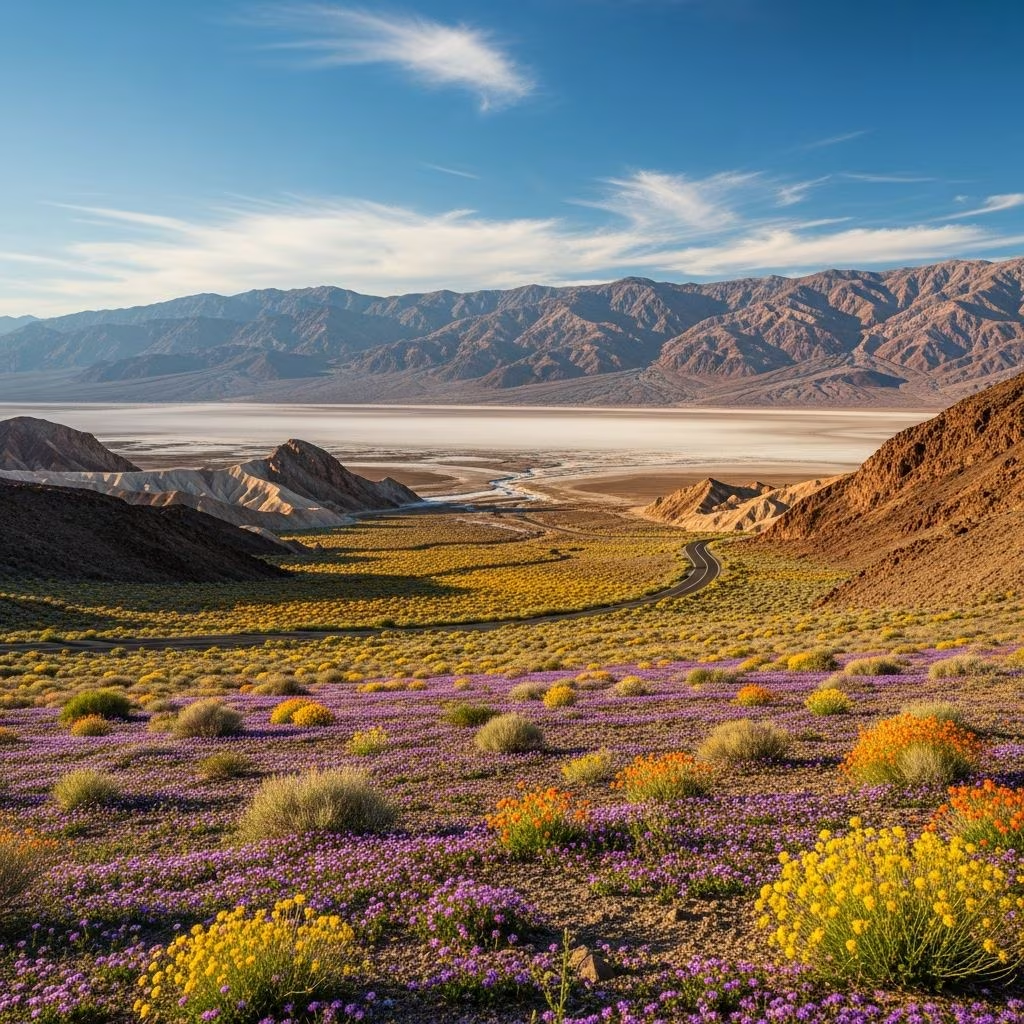
The spring season carries additional significance due to natural phenomena that occur infrequently. Following substantial winter precipitation, the desert floor transforms with vibrant wildflower displays that paint the arid landscape in unexpected colors. These floral spectacles, combined with extended daylight hours that characterize the season, provide photographers and nature enthusiasts with unparalleled opportunities to capture the region’s dramatic contrasts.
Death Valley earned its sobering name through a historical tragedy: pioneers traversing the region during the winter of 1849–1850 became lost in its vast expanse, and the landscape’s harsh reputation solidified from that point forward. Yet this characterization obscures the remarkable diversity the park offers. The basin sits 86 meters below sea level at its lowest point, Badwater Basin, creating atmospheric and temperature conditions unlike anywhere else in North America.
The park’s geography encompasses multiple distinct zones, each with unique geological formations and visual appeal. Golden sand dunes sprawl across sections of the valley floor, while ancient mountain ranges frame the horizons. Salt flats create otherworldly terrain, and colorful rock formations display geological history spanning millions of years. This variety ensures that no two sections of the park present identical experiences, encouraging visitors to explore multiple areas during their stay.
For visitors with limited time, a two-day visit covers Death Valley’s essential attractions while maintaining a comfortable pace that prevents exhaustion in the desert environment. This timeframe allows for both driving tours along scenic highways and selective hiking experiences that penetrate deeper into the landscape than passive observation permits.
Day one should prioritize the visitor infrastructure and major viewpoints accessible via the park’s primary roads. Day two enables exploration of secondary attractions and extended hiking trails. This division ensures that visitors experience the park’s highlights while maintaining energy levels and managing the physical demands of desert travel.
Travelers with three days can venture beyond popular tourist zones into remote areas that reveal Death Valley’s full complexity. Extended hikes become feasible, backcountry dirt road adventures to locations like Racetrack Playa become possible, and the park’s astronomical qualities can be appreciated through dedicated stargazing sessions. The National Park Service designates Death Valley as a Gold-Tier International Dark Sky area, meaning minimal light pollution permits observation of celestial phenomena obscured in most inhabited regions.
The additional day also accommodates participation in ranger-led programs at the Furnace Creek Visitor Center, allowing visitors to gain expert interpretation of geological processes, ecological adaptations, and human history that shaped the region. These programs typically operate daily and provide context that dramatically enhances appreciation for observed landscapes.
Death Valley National Park contains two primary vehicular arteries that provide access to major attractions: Route 190 and the Badwater Road. Understanding these routes’ characteristics helps visitors optimize time allocation and prioritize stops based on personal interests.
Route 190 traverses the park from east to west, covering approximately 80 kilometers and connecting Death Valley Junction to Panamint Springs. This scenic corridor passes through essential hubs including Furnace Creek and Stovepipe Wells, both offering services, accommodations, and visitor facilities. The route essentially bisects the park, making it the logical starting point for initial orientation.
Badwater Road operates as the park’s southern main artery, providing access to some of Death Valley’s most iconic and visually striking attractions. This route should be driven deliberately, with multiple stops for photography, short walks, and observation rather than continuous travel.
This facility serves as the informational and educational hub for Death Valley exploration. Operating daily from 8 a.m. to 5 p.m., the center offers exhibitions, ranger consultations, and a 20-minute orientation film that contextualizes the park’s geological and ecological significance. A visit here should precede other activities, providing foundational knowledge that enriches subsequent experiences.
Located at the park’s lowest point at 86 meters below sea level, Badwater Basin presents an alien terrain of salt flats and mineral deposits. The area’s stark beauty derives from its extreme conditions—heat, aridity, and salinity create an environment where conventional vegetation cannot survive. Despite these hostile parameters, specialized microorganisms thrive in this environment, representing remarkable examples of extremophile biology. Visitors can walk across the salt flats, experiencing firsthand the unusual substrate and appreciating the vast scale of the basin.
This elevated viewpoint showcases Death Valley’s most colorful and dramatically sculpted badlands. The formations display hues ranging from purples and golds to reds and browns, colors derived from various mineral compositions within the rock layers. Sunrise is particularly renowned for photographic potential, though the landscape maintains visual appeal throughout the day as changing light angles reveal different textural qualities in the formations.
The 2.5-mile Badlands Loop Trail provides intimate access to the landscape, descending into the badlands formations and allowing visitors to experience the rugged terrain at ground level. This hike should be undertaken early in the day to minimize heat exposure.
These golden dunes provide contrast to Death Valley’s rocky and salt-based terrain. The dunes shift gradually over years, and visitors can traverse them via multiple routes ranging from short strolls to extended hikes. Early morning or late afternoon light accentuates the dunes’ sculptural qualities, making these times ideal for photography.
Accessed via a winding paved road that prohibits vehicles exceeding 25 feet in length, Dante’s View rises to 1,699 meters above sea level on the Black Mountains’ crest. From this vantage point, visitors can observe vast expanses of Death Valley and surrounding landscape, creating perspective on the park’s immense scale. The panoramic vista encompasses multiple distinct zones simultaneously, from nearby badlands to distant mountains.
Artist’s Drive operates as a scenic loop through colored hillsides, with the 14-kilometer journey showcasing natural pigmentation in rock formations. Devil’s Golf Course presents another distinctive landscape: sharp salt formations carved by wind into jagged spires create an alien terrain unlike conventional desert scenery. This location warrants at least a brief exploration.
This hiking destination features walls displaying golden-hued rock formations that inspired its nomenclature. The full Golden Canyon to Red Cathedral loop extends three miles, offering extended hiking opportunities suitable for more physically active visitors.
This remote location presents Death Valley’s most enigmatic feature: rocks that move across the desert floor, leaving trails in their wake despite no visible movement mechanisms. Accessing Racetrack Playa requires a four-wheel-drive vehicle and careful navigation through 42 kilometers of challenging unpaved roads. This adventure should only be undertaken by experienced drivers prepared for rough terrain and potential mechanical issues.
Death Valley’s scale necessitates personal vehicle transportation; no in-park shuttle service exists. Driving distances between attractions frequently span 30–50 kilometers, requiring adequate fuel reserves and mechanical reliability. Vehicles should be inspected before arrival to verify functionality in extreme conditions.
Las Vegas serves as the nearest major airport, situated 120 miles southeast approximately 2–2.5 hours’ driving distance via Nevada Highway 160 through Panamint Springs. Los Angeles represents an alternative gateway, requiring approximately five hours of driving to the western park entrance.
Gasoline within Death Valley National Park commands premium pricing—$5–6 per gallon—significantly exceeding standard rates. Filling fuel tanks in Panamint before park entry represents essential financial prudence. Park fuel stations occasionally run empty during peak visitation periods, making pre-emptive fueling critical.
Water constitutes a non-negotiable essential item in this desert environment. Visitors should carry minimum one gallon per person daily, with additional reserves for unexpected circumstances. Spring temperatures typically do not necessitate extreme hydration requirements compared to summer conditions, but dehydration risks remain significant in the arid climate.
Park entrance costs $30 per vehicle for seven-day access, with no advance reservations required for general access. However, accommodations within or immediately adjacent to the park require advance booking. Peak season typically extends from November through April, with spring’s particular popularity driven by wildflower displays and moderate temperatures.
Furnace Creek and Stovepipe Wells operate as the primary lodging hubs within Death Valley National Park. Both locations offer hotels, providing varying comfort and amenities levels. Advance reservations 6–12 months before arrival remain advisable for peak season visitation.
Campground options provide budget-conscious alternatives, with many operating first-come-first-served during peak seasons. Winter availability remains excellent, though spring wildflower season drives rapid campground capacity saturation. Budget considerations range from $125–165 daily for budget travelers utilizing campground accommodations to $430–600 for luxury experiences incorporating premium lodging and upscale dining.
Record precipitation during fall 2025 triggered exceptional wildflower superbloom conditions that extend through June 2026 at higher elevations. These displays represent rare occurrences dependent on precipitation timing and quantities. Spring visitors benefit from this unusual phenomenon, with flowering displays creating visual splendor against the stark desert landscape.
Wildflower blooms concentrate at higher elevations where spring temperatures transition later than in lower basin areas. Visitors should inquire at the Furnace Creek Visitor Center regarding current bloom locations and timing, as these phenomena fluctuate based on weather patterns and elevation-dependent temperature variations.
Death Valley National Park remains essentially devoid of cellular service throughout most areas. Visitors should download offline maps prior to arrival using mobile mapping applications or obtain physical maps at the visitor center. This preparation prevents navigation complications and enables emergency communication capability for serious situations.
Spring represents a substantial improvement over summer conditions but still demands respect for desert environments. Temperatures during spring months typically range from 60–75 degrees Fahrenheit during daytime, creating comfortable exploration conditions. However, nighttime temperatures can drop significantly, particularly at higher elevations, necessitating appropriate layered clothing for early morning hikes.
Summer temperatures exceed 120 degrees Fahrenheit, making the season virtually inaccessible for typical visitors except those undertaking very early morning or late evening activities. Winter months provide cooler nighttime temperatures but represent Death Valley’s peak tourist season.
Sunrise and sunset create optimal lighting conditions. Spring’s extended daylight hours provide ample photography time. Zabriskie Point and Artist’s Drive offer particularly rewarding photographic subjects during these periods.
EV chargers exist within Death Valley, though rapid charging infrastructure remains unavailable. Traditional gasoline-powered vehicles remain the most practical option.
Varied hiking options accommodate different fitness levels. Short walks at major viewpoints require minimal experience, while extended backcountry hikes demand experienced hikers with proper preparation.
Limited ranger-guided tours resumed January 2026 following restoration work, with availability on select dates requiring advance booking at $35 per person.
Spring represents Death Valley’s optimal visitation window, combining comfortable temperatures, extended daylight hours, and potential wildflower displays. Thorough preparation—including fuel arrangements, accommodation reservations, offline navigation maps, and adequate water supplies—ensures experiences reflect the park’s magnificence rather than becoming constrained by logistical challenges. Whether pursuing photography, geological education, or simply experiencing extreme landscapes, Death Valley in spring offers unparalleled desert exploration opportunities.
